
Wearable Technology Trends in Personal Fitness Tracking
The New Operating System for the Active Human
Wearable sports technology has evolved from a niche accessory into a pervasive operating system for the active human, quietly orchestrating how individuals train, recover, sleep, and even make healthcare decisions. What began as simple step counters has matured into a sophisticated ecosystem of biometric sensors, AI-driven coaching, and integrated health platforms that connect the gym, the workplace, and the clinic. For the global audience of Sportsyncr-spanning sports enthusiasts, health-conscious professionals, performance-driven executives, and innovation-focused brands-this transformation is reshaping not only how fitness is tracked, but how value is created across the entire sports and wellness economy.
The convergence of miniaturized sensors, cloud computing, and advanced analytics has moved wearables from basic activity logging into continuous insight engines, capable of predicting fatigue, flagging health risks, and optimizing training loads with a level of precision once reserved for elite athletes. As organizations in markets from the United States and United Kingdom to Germany, Japan, and Brazil look to integrate wellness into corporate strategy, and as consumers in regions across Europe, Asia, Africa, and South America demand more personalized, data-driven experiences, wearable fitness technology has become a central pillar of a broader performance and wellbeing culture that Sportsyncr is dedicated to covering across its sports, health, and business verticals.
From Step Counters to Biometric Command Centers
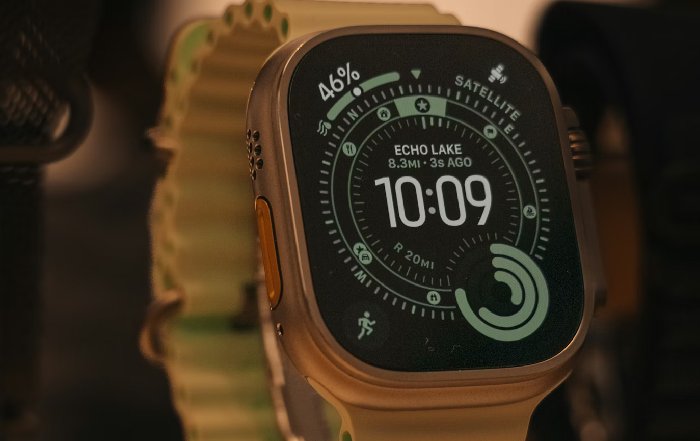
The first major trend defining 2026 is the expansion of wearables from simple motion trackers to multi-sensor biometric command centers, capable of capturing an increasingly rich picture of human physiology in real time. Modern fitness trackers and smartwatches from companies such as Apple, Garmin, Samsung, Fitbit (now part of Google), Huawei, and Whoop now routinely combine accelerometers, gyroscopes, optical heart rate sensors, skin temperature sensors, blood oxygen monitors, and in some cases electrocardiogram (ECG) capabilities, enabling a much deeper analysis of health and performance than was imaginable a decade ago.
This shift has been accelerated by advances in sensor accuracy and algorithmic sophistication, with independent evaluations from organizations like the Mayo Clinic showing how clinical-grade measures can increasingly be approximated in consumer devices, even if they are not full medical replacements. Learn more about how wearable devices are influencing cardiology and remote monitoring at the American Heart Association. At the same time, companies such as Oura have pushed the frontier of ring-based wearables, proving that consumers are willing to embrace new form factors when the trade-off between comfort and insight is compelling.
For Sportsyncr readers focused on fitness and performance, the key implication is that training is no longer guided solely by subjective perception or simple metrics like distance and calories. Instead, it is increasingly informed by continuous heart rate variability analysis, sleep-stage tracking, resting heart rate trends, and stress scores, all of which can be aggregated into readiness indices that help athletes and everyday users decide whether to push harder or prioritize recovery on any given day.
AI Coaching and Hyper-Personalized Training
The second defining trend is the rise of AI-powered coaching, which has transformed wearables from passive recorders of activity into proactive partners in performance. Leveraging advances in machine learning and on-device processing, leading platforms now interpret streams of biometric data to deliver adaptive training plans, micro-adjustments to workouts, and real-time coaching cues that respond to the user's unique physiology and context.
Companies such as Nike, Strava, and Peloton have integrated AI-driven analytics into their ecosystems, while Apple Fitness+ and Samsung Health use wearable data to dynamically recommend workouts and intensity levels. Learn more about how AI is reshaping sports science via resources from the MIT Sports Lab. In parallel, specialized platforms like Whoop and Eight Sleep focus on optimizing recovery and sleep, translating complex biometric signals into simple, actionable readiness and strain scores that resonate with both professional athletes and demanding executives.
For Sportsyncr, which reports across technology, culture, and social dimensions, this AI-driven personalization is particularly significant because it democratizes access to what used to be elite-level coaching. A runner in Canada, a cyclist in Spain, or a fitness enthusiast in Singapore can now receive training guidance informed by data patterns drawn from millions of users worldwide, blended with sports science insights from institutions such as the Gatorade Sports Science Institute and the Australian Institute of Sport. The result is a global feedback loop where individual data contributes to better models, and better models deliver more nuanced, individualized recommendations back to users, reinforcing engagement and loyalty.
The Integration of Health, Fitness, and Clinical Care
A third key trend is the deepening integration between consumer fitness wearables and the broader healthcare ecosystem. While early devices were focused almost exclusively on activity and calorie tracking, the latest generation is increasingly positioned as a bridge between daily life and formal medical care, especially in markets like the United States, United Kingdom, Germany, and Japan, where aging populations and chronic disease burdens are driving demand for remote monitoring solutions.
Major platforms such as Apple Health, Google Fit, and Samsung Health now provide frameworks for securely sharing biometric data with healthcare providers, electronic medical records, and telehealth services. Learn more about the evolution of digital health integration at the World Health Organization and the U.S. National Institutes of Health. Hospitals and insurers in North America, Europe, and Asia are exploring programs in which wearables are used to monitor patients with conditions such as hypertension, atrial fibrillation, diabetes, and obesity, enabling earlier interventions and potentially reducing costly hospitalizations.
For the Sportsyncr audience interested in health and science, this fusion of wellness and clinical care raises both opportunities and responsibilities. On one hand, continuous monitoring can help individuals detect anomalies earlier, understand how lifestyle choices impact long-term health, and collaborate more effectively with physicians. On the other hand, it demands rigorous attention to data accuracy, clinical validation, and ethical use, particularly when algorithms are used to flag potential risks or prioritize patients for follow-up. Regulatory bodies such as the U.S. Food and Drug Administration and the European Medicines Agency are increasingly involved in defining the boundaries between consumer wellness devices and regulated medical devices, a line that is becoming more nuanced as functionality expands. Learn more about regulatory perspectives on digital health at the FDA Digital Health Center of Excellence.
Wearables as a Strategic Lever for Brands and Sponsors
From a business and sponsorship standpoint, wearable fitness technology has become a powerful strategic lever for brands seeking deeper engagement with fans, customers, and employees. As Sportsyncr covers in its brands and sponsorship sections, sportswear companies, technology giants, and even financial institutions are partnering with wearable platforms to create data-enabled experiences that blur the line between marketing, product, and service.
Global sportswear leaders such as Adidas, Puma, and Under Armour have integrated tracking capabilities into footwear and apparel, while digital platforms like Strava and Zwift collaborate with event organizers, federations, and sponsors to deliver virtual races, performance challenges, and loyalty programs. Learn more about the economics of sports sponsorship in the digital era at Deloitte's Sports Business Group. These initiatives enable brands to move beyond static impressions and instead build ongoing relationships grounded in shared goals, measurable progress, and community interaction.
Corporate wellness programs in Canada, Australia, France, Netherlands, and Singapore increasingly rely on wearables to encourage physical activity and reduce healthcare costs, often partnering with insurers and health platforms to reward employees for meeting activity or recovery targets. For organizations, this creates a new layer of workforce analytics, enabling them to understand patterns of wellbeing and burnout, while raising important questions about privacy, consent, and the appropriate use of aggregated health data. Learn more about best practices in workplace health promotion at the World Economic Forum and the International Labour Organization.
Global Adoption Patterns and Cultural Nuances
Although wearable fitness technology has achieved global reach, adoption patterns and usage behaviors vary significantly across regions and cultures, a dynamic that is central to the worldwide coverage that Sportsyncr provides through its world and news reporting. In North America and Western Europe, smartwatches and premium trackers dominate, reflecting higher disposable incomes and strong integration with smartphone ecosystems. In markets such as China, South Korea, and Japan, local champions like Xiaomi, Huawei, and Samsung compete aggressively with global players, often emphasizing value, ecosystem integration, and gamified experiences that resonate with highly connected urban populations.
In Nordic countries such as Sweden, Norway, Denmark, and Finland, outdoor sports and endurance activities drive strong engagement with performance-oriented wearables from brands like Suunto and Polar, while in Brazil, South Africa, and parts of Asia, smartphone penetration and mobile data costs influence the balance between app-based tracking and dedicated devices. Learn more about global digital adoption trends from the International Telecommunication Union and regional insights from the OECD.
Cultural attitudes toward data sharing also shape how wearables are used. In the European Union, strong data protection regulations anchored in the General Data Protection Regulation (GDPR) framework influence how companies design consent flows and data portability features, while in markets such as the United States and Canada, a more fragmented regulatory landscape allows for a wider variety of business models, from subscription-based analytics to employer-sponsored programs. For Sportsyncr readers interested in social dynamics, this underscores the importance of understanding not only the technology itself, but the regulatory, cultural, and ethical contexts in which it operates.
Sustainability, Materials, and the Environmental Footprint
As wearable adoption scales across hundreds of millions of users, the environmental implications of constant hardware refresh cycles, battery usage, and electronic waste have become impossible to ignore. In this context, sustainability has emerged as a critical trend shaping the design, production, and lifecycle management of fitness wearables, aligning closely with the environmental focus of Sportsyncr and its environment coverage.
Leading manufacturers are experimenting with recycled materials, modular designs, and longer product lifespans, while exploring take-back schemes and refurbishment programs to reduce e-waste. Learn more about sustainable electronics practices at the Ellen MacArthur Foundation and environmental guidelines from the United Nations Environment Programme. Battery technology is also evolving, with research into solid-state batteries, energy harvesting, and lower-power chipsets aimed at reducing the frequency of charging and extending device life, thereby lessening environmental impact and improving user experience.
Consumers in markets such as Germany, Netherlands, Switzerland, and New Zealand are particularly attuned to sustainability issues, often favoring brands that transparently communicate their environmental strategies and certifications. For businesses and sponsors, this creates both a risk and an opportunity: those who treat sustainability as a core design principle can differentiate themselves and build trust, while those who ignore it may face reputational challenges as regulators and investors push for more responsible technology practices. Learn more about sustainable business practices from the World Business Council for Sustainable Development.
The Convergence of Sports, Gaming, and Immersive Experiences
Another powerful trend in 2026 is the convergence of wearable fitness tracking with gaming, esports, and immersive media, which is transforming how physical activity is experienced, especially among younger demographics. Motion capture, haptic feedback, and biometric integration are enabling new forms of interactive fitness that blur the boundary between workout and play, a development closely followed by Sportsyncr through its gaming and sports coverage.
Companies such as Meta, Sony, and Valve are integrating heart rate and motion data into virtual reality and mixed reality platforms, while connected fitness brands build game-like environments where users earn rewards, unlock levels, and compete with friends across North America, Europe, and Asia. Learn more about the intersection of gaming and health from research at the Stanford Virtual Human Interaction Lab. These experiences appeal to audiences who might not be drawn to traditional gym routines, offering an alternative pathway to physical activity that is social, narrative-driven, and highly personalized.
Wearables also play a growing role in esports and competitive gaming, where biometric tracking is used to monitor stress, focus, and recovery among professional players. Organizations in South Korea, China, and Sweden are experimenting with performance analytics that combine in-game metrics with physiological data, echoing the sports science approaches used in football, basketball, and cycling. For brands and sponsors, this creates a new category of performance storytelling, where the invisible dimensions of effort and resilience can be surfaced and shared with fans in real time.
Data Privacy, Security, and Trust in a Hyper-Connected World
As wearables become more deeply embedded in daily life, capturing intimate details about heart rhythms, sleep patterns, stress levels, and location, the question of data privacy and security has become central to trust. Users in the United States, United Kingdom, France, Italy, Spain, Singapore, and beyond are increasingly aware that their fitness data can reveal sensitive information about their health status, habits, and even emotional state, raising concerns about misuse by employers, insurers, or third-party data brokers.
For Sportsyncr, whose editorial mission emphasizes trustworthiness and informed analysis across news and business, it is clear that the long-term success of wearable fitness technology hinges on robust governance frameworks, transparent data practices, and meaningful user control. Learn more about global privacy standards from the European Data Protection Board and cybersecurity guidance from the U.S. Cybersecurity and Infrastructure Security Agency.
Leading companies are responding with stronger encryption, on-device processing to minimize data transmission, granular consent tools, and clearer privacy dashboards that allow users to see and manage how their data is shared. However, the rapid pace of innovation, combined with a complex ecosystem of app developers, cloud providers, and data analytics firms, means that vulnerabilities and gray areas persist. For enterprises deploying wearables in employee wellness or customer engagement programs, building trust requires going beyond legal minimums to adopt ethical-by-design principles, independent audits, and clear communication about what data is collected, why, and for how long.
Skills, Jobs, and the Emerging Wearable Economy
The expansion of wearable fitness tracking is not only changing how individuals train and recover; it is also reshaping the labor market and creating new categories of work across data science, product design, coaching, and digital health. For the jobs audience of Sportsyncr, this emerging wearable economy offers both opportunity and complexity, as organizations seek talent that can bridge sports science, software engineering, UX design, and regulatory compliance.
Roles such as biometric data scientist, digital performance coach, health integration architect, and wearable UX researcher are becoming more common in companies from Silicon Valley to Berlin, London, Toronto, Sydney, and Seoul. Learn more about future-of-work skills in the digital health sector from the World Health Organization's digital health workforce initiatives and labor market insights from LinkedIn's Economic Graph. Simultaneously, fitness professionals, physiotherapists, and sports coaches are upskilling to interpret wearable data, integrate it into training plans, and communicate insights to clients in a way that is actionable and psychologically supportive.
Educational institutions and training providers in North America, Europe, and Asia-Pacific are responding with specialized programs in sports analytics, digital health, and human-computer interaction, recognizing that the next generation of leaders in this space will need to be fluent in both quantitative analysis and human-centered design. For businesses, the challenge is not just to recruit these skills, but to create cross-functional teams where data scientists, clinicians, designers, and marketers collaborate effectively to build products and services that are safe, engaging, and commercially viable.
The Track and Field Ahead: From Tracking to Transformation
Looking on the remainder of the decade, the trajectory of wearable technology in personal fitness tracking points toward even deeper integration, intelligence, and impact. Advances in flexible electronics, non-invasive sensing, and edge AI are likely to enable new form factors-such as smart textiles, skin patches, and minimally intrusive implants-that further blur the line between body and device. Learn more about cutting-edge research in bio-integrated electronics from institutions like the John A. Rogers Research Group at Northwestern University and broader materials innovation at Nature Materials.
For Sportsyncr, this evolution reinforces the importance of a holistic, cross-disciplinary lens that connects sports, health, technology, business, and culture into a coherent narrative. The story of wearable fitness tracking is no longer just about counting steps or logging workouts; it is about how data, design, and human ambition intersect to shape new norms of performance, wellbeing, and responsibility across Global, European, Asian, African, and North American societies.
As organizations, policymakers, and individuals navigate this landscape, the central question is shifting from "What can we measure?" to "How should we use what we measure?" The most successful actors in this space will be those who combine technological sophistication with ethical clarity, scientific rigor with empathy, and commercial ambition with a long-term commitment to human flourishing. In that sense, wearable technology is not merely tracking personal fitness; it is quietly rewriting the social contract around health, performance, and data in a connected world-an evolution that Sportsyncr will continue to follow, analyze, and interpret for its global readership.