

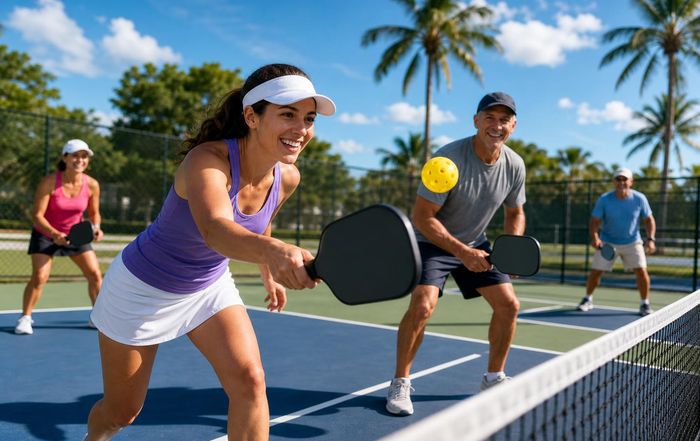
Why Pickleball Is Attracting So Many New Recreational Players
Pickleball's rise from a quirky backyard game to one of the fastest-growing sports in the United States and beyond has been unusually rapid. Public parks are repainting tennis courts, gyms are adding pickleball lines, and community centers are struggling to keep up with demand for court time. For many new recreational players, the sport seems to appear everywhere at once-on social media, in office wellness programs, at local clubs, and even in retirement communities that have now become unlikely talent pipelines. Understanding why this particular game has broken through, when so many other "next big things" in sport have come and gone, means looking at the mix of accessibility, culture, business, and technology that now surrounds it.
At its core, pickleball is a paddle sport that blends elements of tennis, badminton, and table tennis, played on a small court with a perforated plastic ball. But the rules only tell part of the story. The real draw for recreational players is how quickly they can go from never having held a paddle to playing full games with friends, family, or co-workers. Governing bodies such as USA Pickleball and the International Federation of Pickleball have standardized rules and equipment, professional tours have brought visibility, and brands and investors have poured money into facilities and media. Yet for most new players, the appeal is more practical and personal: it fits their bodies, their schedules, and their social lives in a way many other sports do not.
A sport that is genuinely easy to start
One of the most powerful reasons pickleball is attracting new recreational players is that it has a very low barrier to entry. Learning to rally in tennis, squash, or badminton can take multiple sessions and often some form of coaching. By contrast, many first-time pickleball players are able to play a proper game within a single hour. The smaller court, slower ball, and underhand serve collectively reduce the physical and technical demands that typically discourage beginners. For adults who have been away from organized sport since school, that matters: they can show up at a local open play session, borrow a paddle, get a quick explanation of the "kitchen" and scoring, and be genuinely involved almost immediately.
This accessibility is particularly attractive to people who may be wary of looking inexperienced in front of others. The learning curve is gentle enough that a group of mixed-ability players-parents, teenagers, grandparents, and colleagues-can enjoy the same game without anyone feeling like a liability. That combination of inclusivity and low embarrassment risk is rare in recreational sport. It is one reason community centers and municipal parks departments across North America and beyond have embraced pickleball as a programming staple, often listed alongside other accessible activities on sports-focused hubs like the sports section of this site. When a sport is easy to start, it is also easier to promote, schedule, and integrate into broader wellness and recreation offerings.
Multigenerational and low-impact appeal
Pickleball's reputation as a sport that older adults can play has sometimes been used as a punchline, but it is actually central to its growth story. Organizations such as the National Council on Aging and Centers for Disease Control and Prevention (CDC) encourage regular physical activity to reduce the risk of chronic disease, support mental health, and maintain independence. For many people in their 50s, 60s, or 70s, however, high-impact sports such as running or traditional singles tennis can be hard on joints and tendons. Pickleball's smaller court and shorter rallies reduce the need for long sprints and abrupt stops, while still providing meaningful cardiovascular activity and balance challenges.
What has surprised some observers is how strongly younger adults have also embraced the game. University recreation departments in the United States, Canada, and Europe have added intramural pickleball leagues; corporate wellness programs have installed pop-up courts; and boutique fitness studios have experimented with pickleball-plus-training formats that blend gameplay with strength or mobility work. For people already interested in fitness and health, pickleball offers an enjoyable way to accumulate the moderate-intensity exercise minutes recommended by agencies such as the World Health Organization without the monotony some feel on treadmills or stationary bikes.
The result is a rare genuinely multigenerational sport. Families can play doubles across age groups, and community drop-in sessions often feature teenagers sharing courts with retirees. This dynamic not only broadens the player base but also reinforces a sense of social connection that public-health researchers increasingly link to better physical and mental outcomes. In a culture where many activities are segmented by age, pickleball's cross-generational character stands out.
Social connection at the center of the experience
If pickleball were only physically accessible, it might still have remained a niche pastime. What turns casual interest into sustained participation for many new recreational players is the sport's social design. Doubles is the default format, rally lengths are manageable, and most games to 11 points are short enough that players rotate partners and opponents frequently. For newcomers, this means they can meet many people in a single session without the intensity or time commitment of joining a full league or team.
This social structure aligns with broader lifestyle trends in which people seek hybrid experiences that mix activity, community, and culture. In many cities, dedicated pickleball venues now resemble modern bowling alleys or climbing gyms: food and beverage offerings, music, and sometimes even co-working spaces accompany the courts. Investors and operators have tried to position pickleball as a social anchor similar to indoor cycling studios or boutique fitness concepts, but with more emphasis on casual play and less on structured classes. Coverage in major outlets such as The New York Times and BBC Sport has highlighted not just the game itself but the communities forming around it.
The sport's social nature is also a key reason it has spread through workplaces and friend groups. Office leagues or casual after-work games require little equipment and can accommodate players who drop in and out depending on their schedules. Because the skill gap between new and intermediate players is not as punishing as in some other racket sports, teams can be mixed without undermining the experience. For recreational players, this means pickleball can be both a primary social outlet and a complement to other interests like culture, social trends, and live sports fandom.
The business boom around pickleball
Behind the scenes, a rapidly growing business ecosystem has helped bring pickleball to more people, more quickly, than grassroots momentum alone could have achieved. Equipment manufacturers, apparel brands, technology startups, and real-estate developers have all moved into the space. Major sporting-goods companies such as Wilson, HEAD, and Franklin have expanded their pickleball lines, while specialist brands have emerged to focus solely on paddles, balls, and accessories. Retailers like Dick's Sporting Goods and Decathlon now dedicate prominent floor space to the sport, making it easy for newcomers to buy starter sets at relatively low cost.
On the facility side, investors have funded indoor pickleball clubs and multi-court complexes in markets across North America and parts of Europe and Asia. Some projects convert disused retail or warehouse spaces into climate-controlled venues with memberships, coaching, and organized leagues. Others are hybrid entertainment spaces that combine courts with restaurants and bars, targeting the same demographic that has embraced social darts or golf-entertainment concepts. From a business perspective, pickleball courts require less space than tennis courts and can be programmed more densely, increasing potential revenue per square meter.
Media and sponsorship have followed. Professional tours and leagues have attracted backing from well-known athletes and celebrities, and brands in categories such as beverages, financial services, and health products have used pickleball events as platforms to reach active adults. While the professional scene is still small compared with established sports, coverage by outlets like ESPN and Fox Sports has raised awareness among casual viewers who might then try the sport recreationally. For many new players, their first exposure is not local at all but through a broadcast, social-media clip, or branded event that portrays the game as both approachable and aspirational.
Technology, media, and the viral effect
Technology has accelerated pickleball's growth in several ways. Social platforms such as Instagram, TikTok, and YouTube are filled with highlight clips, beginner tutorials, and influencer content that present the game as fun, fast, and friendly. For people who are curious but unsure how to start, short videos explaining rules, scoring, and basic strategy lower the psychological barrier to walking onto a court for the first time. In parallel, location-based apps and platforms help players find nearby courts, open-play sessions, and partners at similar skill levels, addressing one of the biggest practical obstacles in recreational sport: coordinating people and space.
Wearable-fitness ecosystems have also played a subtle role. Users of devices from companies like Apple and Garmin can now track pickleball as a specific activity profile, reinforcing the perception that it provides legitimate exercise rather than just casual recreation. This matters particularly to health-conscious adults trying to balance enjoyment with measurable training outcomes. When a session "counts" in their data, they are more likely to prioritize it in their weekly schedule.
At the elite end, streaming services and niche sports networks have begun carrying professional pickleball events, giving the sport a visibility that earlier racket-sport experiments lacked. The combination of watchable rallies, quick scoring, and relatively short match times suits modern viewing habits. While only a small fraction of recreational players will ever compete at high levels, seeing the sport presented seriously on television or digital platforms can validate their own participation and introduce the game to new audiences worldwide, aligning with broader sports news and highlights coverage patterns.
Affordable equipment and flexible spaces
Cost is another practical factor that helps explain pickleball's appeal. A basic starter set of two paddles and a few balls is often significantly cheaper than entry-level gear for sports such as golf, skiing, or cycling. Even compared with tennis, the upfront investment can be lower, especially when community centers or municipal facilities provide loaner equipment. For families or groups of friends who want to try something new without committing heavily, this affordability is a strong incentive.
The sport is also flexible in terms of where it can be played. Many communities repaint existing tennis or basketball courts with pickleball lines, allowing multiple pickleball courts to fit into the footprint of a single tennis court. Indoors, temporary nets can transform gymnasiums, church halls, and school sports halls into playable spaces within minutes. This adaptability has been crucial in dense urban areas where building new facilities is expensive and politically complicated. By making use of underutilized spaces, local authorities can add pickleball to their program offerings with relatively modest capital outlay, aligning with broader conversations about how cities support world sport and recreation.
For recreational players, the result is simple: there are more places to play, closer to where they live and work. When access improves, participation usually follows. As more players join, demand for coaching, leagues, and equipment increases, creating a reinforcing cycle of growth.
Health, wellness, and the search for sustainable activity
Beyond the fun and social elements, many new players are drawn to pickleball because it fits into a broader personal focus on health and wellness. Public-health guidelines from organizations like the WHO and CDC emphasize at least 150 minutes of moderate-intensity aerobic activity per week, along with muscle-strengthening and balance exercises. For people who struggle to maintain a gym routine or find running monotonous, pickleball offers a way to meet some of these recommendations in a setting that feels more like play than work.
The stop-start nature of rallies provides bursts of movement interspersed with brief rest, approximating interval training at an accessible intensity. Doubles play encourages lateral movement, quick reactions, and rotational stability, all of which are beneficial for everyday physical function. Some studies, including research highlighted by institutions such as the Mayo Clinic and Harvard Medical School (Harvard Health), have begun to explore the cardiovascular and musculoskeletal benefits of racket sports more broadly. While pickleball-specific research is still emerging, many sports scientists expect similar positive patterns, especially when the game is played regularly.
Mental-health benefits are also increasingly recognized. The combination of moderate physical exertion, social interaction, and outdoor (or well-lit indoor) environments aligns with evidence that such factors can help reduce symptoms of anxiety and depression. For people seeking sustainable lifestyle changes rather than short-term fitness challenges, pickleball's blend of enjoyment, community, and measurable activity can be particularly compelling.
Tensions, growing pains, and what comes next
Rapid growth rarely comes without friction, and pickleball is no exception. One of the most visible tensions has been over space and noise. As public parks convert tennis courts to pickleball or stripe additional lines, some tennis players and nearby residents have expressed concerns about reduced access and the distinctive sound of plastic balls hitting paddles. Municipalities in the United States, Canada, and Europe have responded with a mix of dedicated pickleball facilities, sound-dampening measures, and scheduling compromises. These debates highlight a broader issue: how limited urban recreational space should be allocated among different sports and user groups.
There are also questions about injury risk, particularly as participation among older adults rises. Emergency-department data in some countries have shown increases in injuries associated with pickleball, often related to falls, sprains, or overuse. Sports-medicine organizations and orthopedic groups, including resources from bodies like the American Academy of Orthopaedic Surgeons (AAOS), emphasize the importance of proper warm-up, footwear, and progressive training load even in seemingly low-impact sports. For recreational players, understanding that "accessible" does not mean "risk-free" is important to enjoying the game safely over the long term.
Commercialization is another point of discussion. As private clubs, professional leagues, and sponsorships proliferate, some early adopters worry that the sport's inclusive, low-cost roots could be overshadowed by more exclusive, pay-to-play models. Whether pickleball can maintain its community-driven character while accommodating professional ambitions and investor expectations remains an open question. The answer will likely vary by region, depending on local governance structures, public-facility funding, and cultural attitudes toward sport and recreation.
Why the momentum is likely to continue
Taken together, the factors behind pickleball's rise-accessibility, multigenerational appeal, social design, business investment, technological amplification, and health benefits-create a robust foundation for continued growth. Unlike some fitness trends that depend heavily on a single brand or narrow demographic, pickleball is adaptable. It can be played casually in a driveway, competitively in a league, or socially in an entertainment venue. It resonates with older adults seeking low-impact activity, young professionals looking for new ways to connect, and families wanting shared experiences.
For recreational players considering whether to pick up a paddle, the barriers are unusually low: minimal equipment, growing numbers of courts, and abundant beginner resources online and through local programs. For cities, clubs, and schools, the sport offers a relatively efficient way to activate space and engage diverse communities. And for those following broader developments in sport, business, and culture, pickleball provides a case study in how a simple game can scale quickly when it aligns with contemporary lifestyles and is supported by both grassroots enthusiasm and commercial innovation.
Whether the sport ultimately settles into a stable niche or continues its upward trajectory, its current popularity says something clear about what many people now want from recreational activity: movement that feels enjoyable rather than obligatory, communities that are open rather than exclusive, and games that welcome newcomers without requiring them to start young or train like professionals. In that sense, pickleball is less an anomaly than a timely answer to a long-standing demand.