

The Evolution of Smart Gyms and Connected Fitness
A New Era for Performance, Data and the Business of Sport
The global fitness landscape has undergone a structural transformation that extends far beyond the installation of digital screens on treadmills or the proliferation of wearable devices. The concept of the "smart gym" has matured into a fully connected performance ecosystem in which hardware, software, data analytics and human coaching intersect, creating new forms of value for athletes, consumers, brands and operators. For our audience across sports, fitness, health and business, this evolution is not just a technological story; it is a strategic shift that redefines how performance is measured, how communities are built and how trust is established in a data-intensive environment.
From the United States and the United Kingdom to Germany, Singapore and Australia, connected fitness has become embedded in everyday life, driven by advances in sensors, cloud computing, artificial intelligence and high-speed connectivity. At the same time, the sector has been shaped by economic cycles, public health crises, shifting consumer expectations and the rapid professionalisation of digital fitness offerings. To understand where smart gyms are headed, it is necessary to examine how the sector emerged, how leading organizations have built authority in this space, and how operators can design trustworthy, evidence-based experiences that resonate with users from elite athletes to first-time exercisers.
From Iron and Mirrors to Data and Networks
The first generation of modern gyms in the late twentieth century was built around physical infrastructure: free weights, resistance machines and cardio equipment designed primarily to provide access to tools rather than information. Mirrors served as the main feedback mechanism, and expertise was embodied in the personal trainer rather than the device. As networked technologies advanced, particularly after the widespread adoption of smartphones and Wi-Fi, equipment manufacturers began embedding sensors and connectivity into treadmills, bikes and wearables, enabling basic tracking of metrics such as distance, speed and heart rate. Early integrations with platforms like Apple's Health app and Google Fit introduced the idea that data could move seamlessly between devices, creating a personal performance record rather than isolated workout logs.
The breakthrough moment for connected fitness came with the rise of interactive, content-driven platforms such as Peloton, which demonstrated that hardware, software and live instruction could be combined into a subscription model that felt both premium and personal. As streaming infrastructure and video production capabilities improved, consumers grew comfortable with the idea that a high-value fitness experience could occur outside the traditional gym, whether at home, in the workplace or on the move. At the same time, the explosion of affordable wearables from companies such as Garmin, Fitbit (under Google) and Whoop normalized continuous monitoring of heart rate, sleep, recovery and activity, laying the groundwork for the always-connected smart gym.
For a global audience, this evolution has not been uniform. In North America and Western Europe, premium connected equipment and boutique studios accelerated the shift, while in Asia and Latin America, mobile-first solutions and hybrid gym models have been more prominent, reflecting different price points and infrastructure realities. Nonetheless, the common denominator across regions is the expectation that fitness environments should now be intelligent, personalized and seamlessly integrated into broader digital lives. Readers of Sportsyncr who follow developments in technology and world markets will recognize that smart gyms are increasingly evaluated not only on physical assets but on the sophistication of their data ecosystems and the quality of their digital experiences.
Defining the Smart Gym in 2026
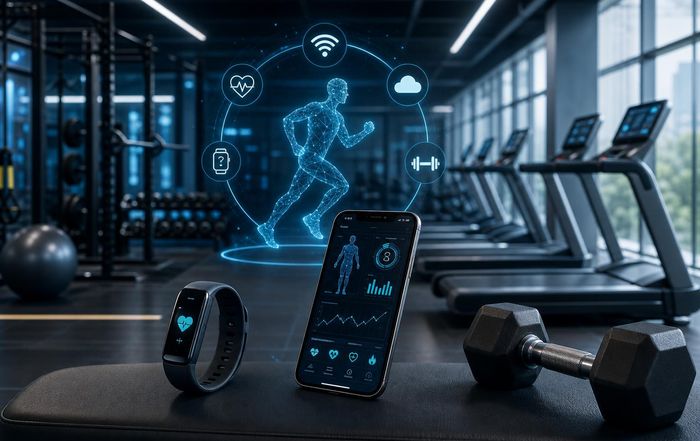
By 2026, a smart gym is best understood as a connected performance hub that combines sensor-rich equipment, interoperable software platforms, AI-driven insights and human coaching into a unified experience that extends beyond the four walls of the facility. Strength machines use computer vision and load-sensing technologies to track form, range of motion and tempo in real time, offering corrective cues similar to those a skilled coach might provide. Cardio equipment integrates with platforms like Strava and TrainingPeaks, allowing outdoor and indoor data to live in the same training history, while wearables from Apple, Samsung and others provide continuous biometric streams that inform training readiness and recovery.
These environments are increasingly cloud-native, with infrastructure supported by providers such as Amazon Web Services and Microsoft Azure, enabling scalable storage and processing of large volumes of performance data. Learn more about how cloud computing is transforming digital services through resources from Amazon Web Services and Microsoft Azure. Advanced analytics, including machine learning models trained on anonymized datasets, help predict injury risk, optimize training loads and personalize session design based on age, training history, sleep quality and stress levels. For athletes and highly engaged enthusiasts, this means that every session becomes part of an evolving performance narrative rather than a disconnected event.
Smart gyms also extend into the home and workplace through connected devices and subscription content, blurring the lines between traditional clubs and digital platforms. Hybrid memberships that combine facility access with on-demand classes, remote coaching and data-driven programming are becoming standard in markets from the United States and Canada to the United Kingdom, Germany and Singapore. For Sportsyncr, whose coverage spans culture and social trends as well as performance and business, this convergence highlights how fitness has become a persistent layer in daily life rather than a discrete appointment.
The Role of AI, Wearables and Performance Analytics
The current wave of innovation in connected fitness is driven by the integration of artificial intelligence, wearables and advanced analytics into coherent, user-centric systems. Wearable devices now capture an expanding range of metrics, from heart rate variability and blood oxygen saturation to estimated VO2 max and sleep stages, with research from organizations such as the Mayo Clinic and Cleveland Clinic helping validate which measures are most relevant for health and performance. Readers interested in the medical context can explore resources from the Mayo Clinic and Cleveland Clinic on exercise physiology and cardiovascular health.
Artificial intelligence models, trained on large, diverse datasets, are increasingly capable of translating raw metrics into actionable guidance. Instead of simply displaying numbers, smart platforms can recommend specific training intensities, recovery strategies and nutritional timing, adjusting in real time as new data arrives. In Europe and Asia, where regulatory frameworks and data privacy expectations vary, leading players have had to demonstrate not only technical sophistication but also responsible data governance, aligning with standards from bodies such as the European Commission and data protection authorities. To understand the regulatory context, readers may consult information from the European Commission on digital and health data initiatives.
Performance analytics has also moved from elite sport into mainstream environments. Techniques once reserved for professional teams, such as load management, GPS-based movement analysis and readiness scoring, are being adapted for everyday users, often in simplified forms. Professional organizations like FIFA, the NBA and the Premier League have invested heavily in tracking technologies and data science, and their practices influence consumer expectations about what is possible in the gym. Those following global sport can review performance and technology initiatives on platforms such as FIFA and the NBA.
This diffusion of elite methodologies into consumer products raises important questions about expertise and trust. Users increasingly expect that recommendations are grounded in credible science rather than marketing claims, which places a premium on partnerships with academic institutions, sports science laboratories and medical organizations. For an audience that also engages with science and health content on Sportsyncr, the credibility of the underlying models is as important as the elegance of the user interface.
Business Models, Brands and the Economics of Connected Fitness
The evolution of smart gyms has reshaped the economics of fitness, creating new revenue streams while challenging traditional membership models. Operators now think in terms of lifetime value across physical and digital channels, with subscription content, data-driven coaching, branded hardware and digital communities generating recurring income that complements or, in some cases, surpasses membership fees. Major brands such as Nike, Adidas and Under Armour have expanded their digital ecosystems with training apps, connected footwear and partnerships with smart gym platforms, turning performance data into a strategic asset that informs product development, marketing and customer engagement. Learn more about global sportswear and performance innovation through resources from Nike and Adidas.
For facility operators, the integration of connected equipment and software platforms has created both opportunities and dependencies. On one hand, smart systems enable more efficient space utilization, targeted programming and differentiated pricing, with data helping to identify high-value segments and optimize class schedules. On the other hand, reliance on proprietary ecosystems from large technology vendors can limit flexibility and increase switching costs. The most forward-looking operators are therefore investing in interoperable platforms and open APIs that allow them to integrate multiple vendors and maintain control over their data and customer relationships.
The role of sponsorship and brand partnerships is also evolving. Rather than simply placing logos in gyms or on digital interfaces, brands increasingly seek to co-create experiences, content and performance challenges that align with their identity and values. For example, collaborations between fitness platforms and health insurers or employers in markets such as the United States, Germany and Singapore reflect a broader recognition of physical activity as a determinant of productivity and long-term healthcare costs. Readers interested in the commercial dimension can explore more on brands and sponsorship strategies within the Sportsyncr ecosystem.
At the macro level, organizations such as the World Health Organization and the OECD have highlighted the economic burden of inactivity and lifestyle-related diseases, reinforcing the case for investment in accessible, engaging fitness solutions. For policymakers and corporate leaders, connected fitness is not merely a consumer trend but a lever that can influence workforce health, healthcare expenditures and social wellbeing. Additional context on global physical activity trends and policy initiatives can be found via the World Health Organization and the OECD.
Culture, Community and the Social Fabric of Smart Gyms
Beyond technology and business models, the evolution of smart gyms is deeply cultural. Connected platforms have redefined what it means to "go to the gym," transforming solitary workouts into social experiences that can span cities, countries and continents. Virtual leaderboards, live classes, community challenges and integrated social features encourage competition and collaboration among users in the United States, Europe, Asia and beyond, reinforcing adherence and creating new forms of identity around training styles, teams and goals.
This social dimension has particular resonance for audiences interested in culture and social dynamics. In many markets, fitness communities have become important spaces for cross-cultural interaction, with global brands and platforms hosting events, challenges and hybrid online-offline experiences that bring together participants from diverse backgrounds. For example, large-scale virtual runs or cycling events, supported by platforms like Zwift and Strava, enable participants in Brazil, South Africa, Japan and Norway to share the same course and metrics, even when training in different time zones and environments. Those curious about the intersection of sport and community can explore initiatives on Strava and Zwift.
At the same time, the growth of connected fitness has raised questions about inclusivity, access and representation. Premium hardware and subscriptions can be prohibitively expensive in many regions, and not all communities have reliable broadband or access to safe physical spaces. As a result, non-profit organizations, public institutions and community-based initiatives have begun experimenting with lower-cost, mobile-first solutions and public-private partnerships to extend the benefits of smart fitness to underserved populations. International development bodies such as the World Bank and regional sports councils in Europe, Asia and Africa are increasingly attentive to how digital fitness can support public health and social cohesion. Resources from the World Bank provide broader context on digital inclusion and health-related development programs.
For Sportsyncr, which serves a global audience with interests spanning world affairs and local community stories, the cultural evolution of smart gyms is as important as the technological one. The platforms and spaces that succeed will be those that recognize the diversity of motivations and constraints across regions, age groups and socio-economic backgrounds, and that design experiences that feel welcoming, relevant and authentic.
Health, Safety and Regulatory Trust in a Data-Driven Environment
As connected fitness becomes more sophisticated and more deeply intertwined with health data, questions of safety, regulation and trust have moved to the foreground. Smart gyms now collect sensitive information related to heart rhythms, blood pressure estimates, stress markers and other physiological signals that, if mishandled, could pose privacy risks or lead to inappropriate decision-making. Regulatory frameworks in North America, Europe and parts of Asia have evolved to address some of these issues, but the pace of technological change often outstrips legislation, placing a premium on self-regulation and industry standards.
Health authorities and medical organizations emphasize the importance of evidence-based practice in digital health and fitness, urging companies to validate their algorithms and claims through rigorous testing and peer-reviewed research. Institutions such as the U.S. Food and Drug Administration and the National Institutes of Health in the United States, as well as equivalent bodies in the United Kingdom, European Union and Asia-Pacific, play a critical role in defining where connected fitness intersects with regulated medical devices. For more detailed insights into digital health regulation, readers can consult the U.S. Food and Drug Administration and the National Institutes of Health.
For operators and brands, building trust requires a transparent approach to data collection, storage and sharing, clear communication about the limitations of recommendations, and robust safeguards against unauthorized access. It also demands a commitment to user education, helping individuals interpret metrics and understand when professional medical advice is necessary. On Sportsyncr, where readers engage deeply with health and news content, the expectation is that any coverage of smart gyms and connected fitness will address not only the promise of technology but also the responsibilities that accompany it.
Sustainability, Environment and the Future Footprint of Fitness
The environmental impact of smart gyms is emerging as a significant consideration for operators, brands and policymakers. Connected equipment, large digital displays, climate-controlled facilities and extensive cloud infrastructure all consume energy and contribute to carbon footprints, while the production and disposal of electronic devices raise questions about resource use and e-waste. As climate commitments tighten in regions such as the European Union, the United Kingdom and parts of Asia-Pacific, the fitness industry is under growing pressure to align with broader sustainability goals.
Forward-thinking operators are exploring energy-efficient equipment, renewable energy sourcing, building certifications and circular economy principles in equipment procurement and disposal. Some innovative facilities experiment with energy-generating cardio machines that feed electricity back into the grid, although the net impact remains modest compared to overall building consumption. International bodies such as the United Nations Environment Programme and regional agencies in Europe and Asia provide guidance on sustainable building practices and corporate responsibility. Those interested in environmental frameworks can explore resources from the United Nations Environment Programme.
For Sportsyncr readers who follow environment and business developments, the most compelling stories will be those that connect performance innovation with responsible resource use. Smart gyms that can demonstrate reductions in energy consumption, responsible e-waste management and alignment with science-based climate targets will be better positioned to attract environmentally conscious consumers, corporate partners and investors across North America, Europe, Asia and beyond.
Talent, Jobs and the Changing Skillset of Fitness Professionals
The rise of smart gyms and connected fitness has also transformed the labour market and skill requirements in the sector. Traditional roles such as personal trainers and group exercise instructors are evolving into hybrid positions that combine coaching expertise with digital fluency, data interpretation and community management. In markets such as the United States, Canada, Germany, the United Kingdom and Singapore, fitness professionals increasingly need to understand how to work with wearable data, interpret readiness scores and adapt programming based on real-time feedback from connected equipment.
At the same time, new roles are emerging in product management, data science, UX design, content production and customer success within fitness technology companies and digitally enabled gym chains. The sector now competes with broader technology and media industries for talent, particularly in areas such as machine learning, cloud architecture and digital storytelling. Educational institutions and certification bodies are responding with specialized programs that blend exercise science, business and technology, although the pace of curriculum development varies by region.
For readers exploring career transitions or opportunities within the sector, Sportsyncr provides insight into the intersection of jobs, technology and performance. The most resilient professionals will be those who can demonstrate both deep domain expertise in physiology, coaching or operations and the ability to work effectively with digital tools, data and distributed communities.
The Next Phase: Integrated Ecosystems and Human-Centric Design
Looking on from today, the trajectory of smart gyms and connected fitness points toward more integrated ecosystems, richer data and a renewed emphasis on human-centric design. As interoperability improves, users will expect their data to move seamlessly between gyms, devices, healthcare providers, employers and sports organizations, creating a continuous, longitudinal record of activity and health. This will open opportunities for more precise, preventative interventions and for personalized experiences that adapt over years rather than weeks, but it will also heighten the importance of governance, consent and ethical data use.
Virtual and augmented reality, already present in segments of the gaming and fitness markets, are likely to become more immersive and more seamlessly embedded in training environments, particularly for younger demographics who move fluidly between digital and physical spaces. For audiences interested in gaming and performance, the convergence of esports-style interfaces with physical training could create entirely new categories of sport and entertainment, with implications for sponsorship, broadcasting and fan engagement.
Amid these technological advances, the most successful smart gyms will be those that keep human experience at the centre, using data and AI not to replace coaches or communities but to enhance them. Whether in New York, London, Berlin, Singapore, Sydney, São Paulo or Johannesburg, users will continue to value authenticity, empathy and expertise alongside convenience and personalization. For the sporty readers across sports, fitness, health, culture and business, the evolution of smart gyms is ultimately a story about how technology can support better performance, deeper community and more sustainable, inclusive participation in physical activity worldwide.
In this context, the role of trusted platforms that can interpret trends, highlight best practices and surface credible voices becomes increasingly important. As connected fitness continues to expand across North America, Europe, Asia, Africa and South America, Sportsyncr is positioned to provide the nuanced, globally aware coverage that decision-makers, practitioners and participants need to navigate a complex, rapidly evolving landscape where experience, expertise, authoritativeness and trustworthiness are the true differentiators.