

Active Cities 2026: How Urban Design is Becoming a Global Performance Strategy
Urban Movement as a Strategic Advantage
By 2026, urban leaders, investors and global brands increasingly view everyday physical activity not as a secondary public health objective but as a primary driver of economic competitiveness, social resilience and environmental performance. From New York and London to Singapore, Copenhagen and rapidly growing hubs in Asia, Africa and South America, the configuration of streets, parks, transit systems, buildings and digital layers has become one of the most powerful levers for shaping active lifestyles at scale. For Sportsyncr, whose readership spans decision-makers in sports, health, fitness, business, technology and culture across regions from North America and Europe to Asia-Pacific and Africa, the central question in 2026 is how to deliberately design cities that hardwire movement into daily life while reinforcing long-term value for citizens, companies and institutions.
Urban planning, transport engineering and public health research have converged over the past decade to demonstrate that the built environment exerts a direct and measurable influence on walking, cycling and recreational sport. Analyses from the World Health Organization show that physical inactivity still contributes substantially to global mortality and to escalating healthcare expenditure, despite growing awareness of its risks. At the same time, urban policy guidance from UN-Habitat highlights that compact, mixed-use, transit-oriented planning can significantly increase active transport while reducing congestion and emissions, particularly in fast-urbanizing regions across Asia and Africa. As cities compete to attract skilled talent, anchor global headquarters and secure tourism and event investment, those that embed movement into the urban fabric are discovering that active design has become a core dimension of their brand, their ability to attract capital and their long-term economic resilience.
The Economic Logic of Activity-Oriented Cities
For a business-focused audience, the financial rationale for investing in active urban design has become clearer and more data-rich by 2026. Evidence synthesized by the World Economic Forum links physically active populations with lower absenteeism, higher productivity and reduced healthcare costs, all of which feed directly into national and city-level GDP performance. Parallel work by McKinsey & Company and other management consultancies has reinforced that walkable, mixed-use districts with high-quality public realm and active mobility options command rental premiums, sustain higher retail turnover and deliver superior long-term asset values compared with car-dominated environments. In global financial centers from Frankfurt to Toronto and Sydney, institutional investors increasingly treat walkability and access to active transport as material factors in real estate and infrastructure strategies.
Cities that prioritize movement-friendly infrastructure are also better positioned to capture the expanding market for sports tourism, wellness travel and live events. Districts that integrate running routes, protected cycleways, waterfront promenades and versatile public spaces with hospitality, retail and cultural venues are becoming preferred locations for global brands seeking to activate sponsorships, launch products and stage immersive experiences. For readers following Sportsyncr's business coverage, this convergence of sport, place-making and commercial innovation is now a structural trend rather than a niche experiment, with cities from Los Angeles to Paris, Tokyo and Doha using active design as a platform for year-round event programming and destination branding.
The labor market implications are equally significant. Research from Brookings and other think tanks has shown that knowledge-intensive, innovation-driven firms cluster in dense, transit-served, walkable neighborhoods where employees can integrate movement into daily routines and enjoy a rich mix of amenities. In 2026, corporate location strategies for sectors such as technology, finance, creative industries and life sciences increasingly prioritize vibrant, active districts in cities across the United States, United Kingdom, Germany, Canada, Australia, Singapore and beyond. For professionals tracking opportunities and workplace trends through Sportsyncr's jobs channel, the message is consistent: active cities are talent magnets, and the micro-geography of movement within those cities is shaping where high-value jobs concentrate.
Streets Designed for Movement Rather Than Throughput
One of the most visible transformations of the past decade is the shift from car-centric to people-centric street design. Transport agencies in leading cities have moved beyond evaluating success purely in terms of vehicle throughput and now adopt frameworks such as Complete Streets, which prioritize safety, accessibility and comfort for pedestrians, cyclists, public transport users and micro-mobility devices. Design guidance from organizations like the National Association of City Transportation Officials (NACTO) has become a de facto standard for municipalities seeking to convert wide, high-speed arterials into multimodal corridors that invite walking, cycling and rolling for all ages and abilities. Learn more about contemporary street design principles through resources from NACTO's online publications.
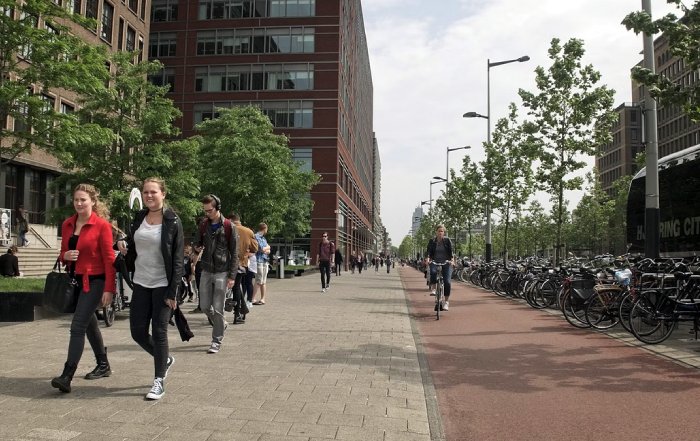
This reorientation of the public right-of-way aligns closely with the interests of the Sportsyncr community, where the boundary between everyday mobility and everyday sport is increasingly blurred. On Sportsyncr's sports section, coverage frequently highlights how redesigned streets double as training routes for running clubs, commuter cycling networks, open-streets festivals and community races, turning infrastructure into a continuous urban playing field. Cities such as Amsterdam, Copenhagen and Seoul have demonstrated that connected networks of protected cycle tracks, widened sidewalks, traffic-calmed intersections and low-speed zones can transform commuting into a daily, health-enhancing routine that supports both amateur and performance-oriented athletes.
Concepts such as the 15-minute city, advanced in places like Paris, Barcelona and increasingly adapted in Milan and Melbourne, further illustrate how integrated land-use and transport planning can reduce car dependency and promote active mobility. Residents in these cities can access most daily needs within a short walk or bike ride, which aligns with public health guidance from the Centers for Disease Control and Prevention on the importance of integrating incidental movement into everyday life to prevent chronic disease. Urban policy resources from the OECD provide additional insight into how such models are being tailored to different regional contexts. For business leaders, investors and policymakers, the implication is straightforward: walkability and safe cycling are no longer lifestyle add-ons but core infrastructure for productive, resilient urban economies.
Parks, Greenways and the Expanded Urban Playing Field
As streets evolve into active corridors, parks and greenways are being reimagined as multi-functional platforms for sport, fitness, culture and social connection. Many cities now invest in continuous linear parks along rivers, former railway lines or waterfronts, creating uninterrupted routes for running, cycling and skating while also providing flexible spaces for informal games, outdoor gyms and structured fitness classes. Projects such as the High Line in New York or the Cheonggyecheon restoration in Seoul, widely analyzed by the American Planning Association, have shown how high-quality public spaces can attract millions of visitors annually, catalyze adjacent real estate development and anchor new cultural districts.
For the global audience of Sportsyncr, these spaces function as open-source infrastructure for community sports ecosystems. Local clubs, federations, brands and event organizers increasingly view parks, plazas and waterfronts as stages for pop-up tournaments, running festivals, yoga gatherings and inclusive wellness events. On Sportsyncr's culture channel, stories from cities in Europe, North America, Asia and Africa illustrate how public spaces shape urban identity and how sport and movement can become central to a city's cultural narrative. Temporary street closures, seasonal programming and tactical urbanism interventions are being used to test new formats of active use before permanent investments are made.
Evidence compiled by the European Environment Agency confirms that access to green and blue spaces is associated with higher levels of physical activity, improved mental health and reduced health inequalities, particularly in underserved neighborhoods. In response, city governments, NGOs and corporate partners are increasingly aligning ESG strategies with the co-creation of inclusive, activity-rich public landscapes. Brands that support the design, maintenance or programming of parks and greenways can simultaneously advance environmental goals, social equity and health outcomes, thereby strengthening their credibility with consumers who expect measurable impact rather than symbolic gestures.
Buildings, Campuses and the Architecture of Everyday Movement
Urban design does not end at the property line; the internal configuration of buildings and campuses exerts a powerful influence on how much people move in the course of a day. In high-density environments, residents and employees spend most of their time indoors, making the integration of stairs, atria, terraces, internal walking loops and rooftop spaces critical for supporting incidental activity. Standards promoted by the U.S. Green Building Council and the International WELL Building Institute encourage architects and developers to design visible, inviting staircases, provide end-of-trip facilities for cyclists, and incorporate flexible spaces that can accommodate exercise, recovery and social interaction.
These principles align closely with the themes explored on Sportsyncr's fitness page, where workplace wellness, architectural innovation and performance coaching intersect. Employers in markets such as the United States, Germany, United Kingdom, Canada, Australia and Singapore increasingly recognize that office layouts, vertical circulation and access to active amenities can either entrench sedentary behavior or nudge employees toward regular movement. Standing collaboration zones, indoor walking routes, on-site gyms, outdoor terraces and shower facilities are no longer perceived merely as perks; they form part of integrated talent strategies aimed at improving health, engagement and retention in competitive labor markets.
Residential development is undergoing a similar shift. Research from the Harvard T.H. Chan School of Public Health has emphasized that homes and neighborhoods designed for active living can significantly influence long-term health trajectories, especially for children, older adults and people managing chronic conditions. Across emerging urban regions in China, India, Brazil, South Africa and Southeast Asia, developers are differentiating projects with shared courts, running loops, rooftop sports fields, play streets and community fitness programming. By embedding these elements into the everyday living environment rather than confining them to distant facilities, urban designers help ensure that movement becomes a default behavior across all life stages.
Technology as the Activity Multiplier in Smart Cities
The rapid maturation of smart city technologies, connected devices and data analytics has added a powerful digital layer to the relationship between design and movement. In 2026, many cities deploy sensor networks, computer vision tools and anonymized mobile data to understand how people use streets, parks and transit nodes, then feed these insights into iterative design processes. Reports from the OECD and other policy bodies on digital innovation in cities highlight how mobility data is being used to prioritize investments in bike lanes, lighting, crosswalks and public space upgrades that most effectively enhance safety and stimulate active use.
For readers following Sportsyncr's technology coverage, the interplay between urban design, sports tech and gaming has become a central narrative. Advances in augmented reality, location-based gaming and connected fitness platforms now turn entire neighborhoods into interactive arenas. The trajectory that began with early successes like Pokémon GO, extensively examined by the Pew Research Center, has evolved into sophisticated city-scale experiences where walking, running and cycling unlock digital rewards, social recognition and sometimes direct financial incentives through partnerships with insurers, retailers and sports brands.
Wearables and health apps, guided by clinical insights from organizations such as the Mayo Clinic, provide real-time feedback on steps, intensity, heart rate variability, sleep and recovery, helping individuals make better use of the movement opportunities that urban design affords. When combined with high-quality infrastructure and clear wayfinding, these tools lower psychological barriers to activity, reveal new routes and facilities, and create social accountability through shared challenges and leaderboards. For brands and rights-holders, this fusion of physical and digital activity offers new sponsorship and activation models, where value is created by encouraging movement in specific districts, along curated routes or within branded experience zones.
Health Systems, Policy and the Cost of Inactivity
The health implications of activity-oriented urban design have moved to the center of policy debate as governments confront the mounting burden of non-communicable diseases. Data from the National Health Service (NHS) in the United Kingdom, the Centers for Disease Control and Prevention in the United States and comparable agencies in Canada, Australia, Japan and European countries consistently show that physical inactivity is a leading risk factor for cardiovascular disease, type 2 diabetes, some cancers and mental health challenges. The associated costs, both direct and indirect, place significant strain on public and private health systems.
On Sportsyncr's health channel, cross-sector collaborations between health ministries, insurers, city planners and private developers are increasingly profiled as models of integrated policy. Some cities now require health impact assessments for major transport, housing and commercial projects, ensuring that potential effects on walking, cycling and access to recreation are evaluated alongside economic and environmental metrics. Others deploy fiscal incentives, zoning bonuses or regulatory frameworks that reward active design in buildings and precincts, recognizing that such investments can reduce long-term healthcare liabilities and increase healthy life expectancy.
International bodies including the World Health Organization and editors of The Lancet have argued that aligning health policy with urban planning is one of the most cost-effective strategies available for preventing chronic disease at population scale. This alignment is particularly critical in rapidly urbanizing regions of Asia, Africa and South America, where decisions about street networks, land-use patterns and public space provision made in the 2020s will shape activity patterns for decades. Learn more about global non-communicable disease strategies through WHO's health promotion resources. For the global audience of Sportsyncr, these developments underscore that health outcomes are increasingly determined not only in clinics and gyms, but on sidewalks, transit platforms and neighborhood parks.
Culture, Equity and the Social Meaning of Movement
Encouraging active lifestyles through urban design is as much a cultural and social challenge as it is a technical one. The way people use streets, parks and facilities is shaped by norms, safety perceptions, gender dynamics, income, disability and historical patterns of exclusion. Studies by UNESCO and the World Bank have highlighted that marginalized communities frequently face inadequate access to safe, high-quality spaces for exercise and play, even when they live close to major urban amenities. Correcting these imbalances requires participatory design processes, inclusive programming and a conscious effort to address both physical and social barriers.
On Sportsyncr's social section, community-led initiatives are a recurring focus, from open-streets programs in Latin America that temporarily convert major avenues into recreational corridors, to women-led running and cycling groups in South Asia, the Middle East and parts of Africa that negotiate cultural norms to claim public space. In European cities, youth-driven street sport movements are transforming underused plazas and parking lots into courts for basketball, street football and skateboarding, often supported by local brands and municipalities. These stories highlight that infrastructure alone does not guarantee participation; representation, storytelling and trusted community leadership are essential to making movement feel welcoming and aspirational for diverse populations.
Urban design also plays a role in bridging generational divides and supporting intergenerational activity. Playable streets, multi-use courts and flexible open spaces enable children, teenagers, adults and older residents to share environments in ways that foster mutual understanding and social cohesion. As many European and Asian countries manage aging populations while others in Africa and South Asia experience youth bulges, creating spaces where all age groups can move, observe and interact becomes a critical element of social policy. Resources from the World Health Organization's Age-friendly Cities initiative provide further guidance on how design can support active aging in different cultural contexts.
Climate, Sustainability and the Active City
The climate emergency has made the environmental dimension of active urban design impossible to ignore. Shifting trips from private vehicles to walking, cycling and public transport is one of the most effective levers for reducing urban greenhouse gas emissions, as emphasized in assessments by the Intergovernmental Panel on Climate Change (IPCC) and energy scenarios from the International Energy Agency (IEA). For readers engaging with Sportsyncr's environment coverage, the connection between active mobility, clean air, reduced congestion and climate resilience is now a central theme.
Green infrastructure-tree-lined boulevards, parks, green roofs, permeable surfaces and restored waterways-not only encourages outdoor activity by creating comfortable, attractive routes and destinations, but also mitigates heat islands, manages stormwater and supports urban biodiversity. This is particularly important in cities across Southern Europe, the United States, Australia, South Asia and parts of Africa, where rising temperatures and extreme heat events threaten to limit safe outdoor exercise. By integrating shade structures, cooling materials, water features and climate-adaptive vegetation into active corridors and public spaces, designers can help ensure that physical activity remains viable and appealing even as climate risks intensify.
For brands, sports organizations and sponsors, the intersection of climate action and active urban design presents an opportunity to align marketing, corporate responsibility and innovation strategies. Companies that support cycling networks, sponsor greenways, invest in low-carbon sports venues or develop climate-resilient recreation facilities can credibly position themselves as partners in building sustainable, healthy cities. On Sportsyncr's sponsorship page, case studies increasingly showcase integrated initiatives where environmental impact, health promotion and urban design are woven into a single narrative that resonates with policymakers, fans and consumers.
Sportsyncr's Role in a Global Active City Conversation
As experimentation with active urban design accelerates across continents, specialized media platforms play a crucial role in connecting lessons, amplifying successes and scrutinizing failures. Sportsyncr occupies a distinctive position at the intersection of sports, health, fitness, business, technology and culture, enabling it to weave together stories that might otherwise remain siloed. Through its coverage of sports, health, technology, business and world affairs, Sportsyncr can highlight how design decisions in cities are reshaping patterns of movement and, with them, economic and social outcomes.
By profiling mayors, transport commissioners, urban designers, health officials, entrepreneurs and community organizers, Sportsyncr can foster a global dialogue in which practitioners from North America, Europe, Asia, Africa and South America learn from each other's successes and constraints. Interviews that unpack the political, financial and cultural dimensions of active design help practitioners understand not only what works, but how it can be implemented in different governance systems and market conditions. This approach strengthens Sportsyncr's own authoritativeness and trustworthiness as a reference point for professionals who must navigate complex trade-offs between mobility, development, equity and climate objectives.
At the same time, Sportsyncr's engagement with gaming, e-sports and connected fitness through channels such as gaming positions the platform to explore how virtual and physical activity spaces are converging. As e-sports arenas integrate physical training zones, location-based games incentivize real-world movement and hybrid events blend digital participation with on-the-ground races or challenges, the boundary between traditional sport, urban design and digital culture continues to blur. Sportsyncr is well placed to document and analyze how these trends reshape expectations of what an "active city" looks like for younger generations in the United States, United Kingdom, Germany, Japan, South Korea, Brazil, South Africa and beyond.
From Isolated Projects to Integrated Systems
By 2026, the global shift toward urban design that encourages active lifestyles has progressed beyond pilot projects and demonstration corridors in many leading cities. Yet the transition remains incomplete, and the gap between best practice and everyday reality is still wide in numerous regions. To fully realize the potential of activity-oriented design, cities, businesses and civil society must move from isolated interventions to coherent systems that align transport, land use, health, environment, technology and culture.
This systems perspective demands new governance models that break down silos between departments and levels of government, as well as data-sharing frameworks that allow public agencies, researchers and private partners to collaborate while protecting privacy. It requires investment approaches that account for the long-term economic value of reduced healthcare costs, increased productivity and avoided emissions, rather than focusing solely on short-term financial returns. It calls for inclusive participation processes that ensure marginalized communities are not only consulted but empowered to shape the spaces where they live, work and move.
For platforms like Sportsyncr, the emerging challenge is to track and interpret this systemic evolution, connecting stories from business, science, social and news into a coherent narrative about how active cities are built and governed. As urbanization continues across continents and climate pressures intensify, the design choices made in the coming years will determine whether cities become engines of wellbeing or amplifiers of sedentary, high-carbon lifestyles. For the global audience that turns to Sportsyncr for insight across sports, health, fitness, culture, business, technology and sponsorship, one conclusion is increasingly inescapable: urban design is now a primary arena in which the future of active living, competitive economies and resilient societies will be decided.