

Virtual Experiences Redefining Fan Engagement in 2026
A Mature Era for Digital-First Fandom
By 2026, virtual experiences have moved decisively from experimental add-ons to the central nervous system of global fan engagement, reshaping how audiences discover, follow, and emotionally invest in sports, health, fitness, culture, gaming, and entertainment. What began as a crisis response during the pandemic has matured into an integrated, data-rich engagement layer that operates alongside physical venues and, in many cases, outperforms them in terms of reach, personalization, and commercial impact. For Sportsyncr, which sits at the intersection of these domains and connects readers across North America, Europe, Asia-Pacific, Africa, and South America, this transformation is not an abstract trend; it is the lived environment in which its community trains, competes, socializes, and makes business decisions.
Across priority markets such as the United States, United Kingdom, Germany, Canada, Australia, France, Italy, Spain, the Netherlands, Switzerland, China, South Korea, Japan, Singapore, and the Nordic countries, fans now expect virtual experiences that blend ultra-high-definition streaming, real-time data overlays, interactive storytelling, social co-viewing, and commerce into coherent, always-available ecosystems. These expectations extend from elite competitions to grassroots events, from professional leagues to creator-led communities, and from mainstream sports to emerging disciplines. For decision-makers following the evolution of sport and entertainment through Sportsyncr Sports, it is increasingly clear that engagement, retention, trust, and lifetime value are now determined as much by virtual touchpoints as by what happens inside stadiums, arenas, and fitness studios.
From Linear Broadcasts to Immersive, Data-Driven Ecosystems
The traditional linear broadcast model has been supplanted by flexible, user-directed ecosystems in which the fan is an active participant, shaping their own journey through layers of content, data, and interaction. Major rights holders such as the National Football League (NFL), the National Basketball Association (NBA), and the English Premier League (EPL) have moved far beyond simple streaming, offering customizable camera angles, tactical views, real-time analytics, and integrated fantasy or betting interfaces that respond to individual preferences and behaviors. Fans in the United States or Canada can now experience a match in a fundamentally different way from their counterparts in Germany or Brazil, even while watching the same live feed, because the digital environment adapts dynamically to their interests and engagement history.
This evolution is powered by converging infrastructure and cloud capabilities. The global rollout of 5G and edge computing, tracked by organizations such as GSMA, has lowered latency to the point where interactive features feel instantaneous, while hyperscale platforms from Amazon Web Services (AWS), Microsoft Azure, and Google Cloud provide the elasticity required to serve millions of concurrent users across continents. At the same time, advanced video codecs and content delivery networks, explained in resources from entities like Akamai, have enabled higher quality streams on a wider range of devices, from large-format smart TVs to mid-range smartphones in emerging markets. For readers of Sportsyncr Technology, these developments underscore how deeply technology architecture now shapes the fan experience and the business models built on top of it.
Virtual Venues, Persistent Worlds, and Metaverse-Style Arenas
One of the most visible shifts in the past few years has been the normalization of virtual venues and persistent digital worlds that function as arenas, fan zones, and commercial districts combined. Inspired by large-scale events in Epic Games' Fortnite, Roblox experiences, and social gaming platforms in Asia, sports and entertainment organizations now operate their own branded virtual spaces where fans can gather irrespective of geography, time zone, or physical capacity constraints. Early experiments with one-off virtual stadiums have evolved into always-on environments where match-day viewing, training simulations, sponsor activations, and community gatherings coexist.
Industry coverage from outlets such as VentureBeat has documented how these spaces integrate digital merchandise, collectibles, and loyalty mechanics that reward participation with status, access, and occasionally real-world benefits. For clubs and leagues in Europe and North America, virtual ticketing has introduced new tiers of access, ranging from free, ad-supported experiences to ultra-premium digital hospitality that includes private virtual suites, direct Q&A sessions with athletes or coaches, and exclusive behind-the-scenes content. For a platform like Sportsyncr, this shift aligns with its own multi-vertical mission: readers who come for sports analysis on Sportsyncr Sports increasingly expect coverage of how these virtual arenas intersect with brand strategy, fan psychology, and broader cultural trends.
Health, Fitness, and the Deep Integration of Virtual Training
The virtual revolution is not confined to spectatorship; it has transformed how individuals and teams approach health, fitness, and performance. Connected fitness platforms that gained prominence during lockdowns have matured into comprehensive ecosystems, with companies such as Peloton, WHOOP, Garmin, and Strava offering integrated hardware, software, and community layers that support training, recovery, and lifestyle management. The novelty of participating in virtual classes has given way to habitual routines in which live and on-demand sessions, remote coaching, and digital challenges are embedded in daily life across markets from the United States and United Kingdom to Singapore, Japan, and Australia.
Wearable adoption has accelerated, and data has become more actionable. Market analysis from organizations like IDC shows growth in multi-sensor devices that track heart rate variability, sleep quality, movement patterns, and even stress indicators, feeding into platforms that can personalize training plans and flag potential health risks. Elite teams and performance labs, drawing on research shared by bodies such as the American College of Sports Medicine, now leverage virtual consultations, remote monitoring, and AI-driven insights to support athletes who may be competing in different countries or leagues. For readers of Sportsyncr Health and Sportsyncr Fitness, this integration of sports science, digital health, and immersive tools is redefining what it means to train intelligently and sustainably, whether for professional competition or personal wellbeing.
Cultural Transformation: Digital Communities, Identity, and Belonging
Virtual fan experiences have also catalyzed deep cultural shifts in how identity, community, and belonging are constructed. Younger audiences, particularly Gen Z and Gen Alpha across Europe, Asia, and the Americas, increasingly form their primary affiliations through digital communities rather than local geography. Influencers, streamers, and content creators on platforms such as TikTok, YouTube, and Twitch play a central role in shaping narratives around teams, athletes, and competitions, often reaching audiences that traditional broadcasters struggle to engage. In some cases, a creator's watch-along stream or tactical breakdown has more impact on fan sentiment than official league coverage.
Persistent digital spaces-from Discord servers and subreddit communities to dedicated fan hubs in virtual worlds-function as modern clubhouses where supporters can interact in real time. Research from organizations like the Pew Research Center has highlighted how these communities can generate strong senses of belonging and shared identity, even among individuals who have never met offline. For Sportsyncr, which examines the intersection of sport, culture, and society via Sportsyncr Culture and Sportsyncr Social, these dynamics underscore the need to understand fandom not merely as consumption but as a form of cultural participation that blends memes, activism, lifestyle choices, and collective storytelling.
Evolving Business Models, Sponsorship, and Commercial Innovation
The economic implications of virtual fan engagement are far-reaching. Traditional revenue pillars-ticket sales, linear broadcast rights, and physical merchandise-now coexist with and are increasingly complemented by virtual tickets, subscription-based digital memberships, in-experience advertising, digital collectibles, and data-driven sponsorship packages. Global consultancies such as McKinsey & Company and Deloitte, whose sports and media analyses can be explored through McKinsey's technology, media, and telecommunications insights and Deloitte's sports business research, have emphasized that rights holders who treat virtual channels as core assets rather than secondary distribution layers are realizing higher margins and more resilient revenue streams.
Sponsors and brands are migrating from passive visibility to measurable interaction. Instead of simply placing logos on jerseys or perimeter boards, they are investing in branded mini-games, interactive product experiences, and contextual offers triggered by in-game events or user behavior. These activations can be personalized at scale, with AI systems adjusting creative elements and messaging based on fan profiles, location, and engagement history. For business leaders and marketers who follow Sportsyncr Business and Sportsyncr Sponsorship, this shift demands new capabilities in data analytics, content production, and partnership design, as well as a more nuanced understanding of how to balance commercial objectives with authentic fan value.
Technology Foundations: AI, XR, and Data Infrastructure in 2026
By 2026, the technological stack underpinning virtual experiences has become significantly more sophisticated, integrating artificial intelligence, extended reality (XR), and robust data infrastructure into cohesive platforms. AI systems, discussed in depth by sources like MIT Sloan Management Review, now drive personalization engines that tailor content feeds, recommend interactive features, and optimize user interfaces in real time. They also power automated highlights, generative commentary, and advanced analytics overlays that transform raw data into accessible insights for casual and expert fans alike.
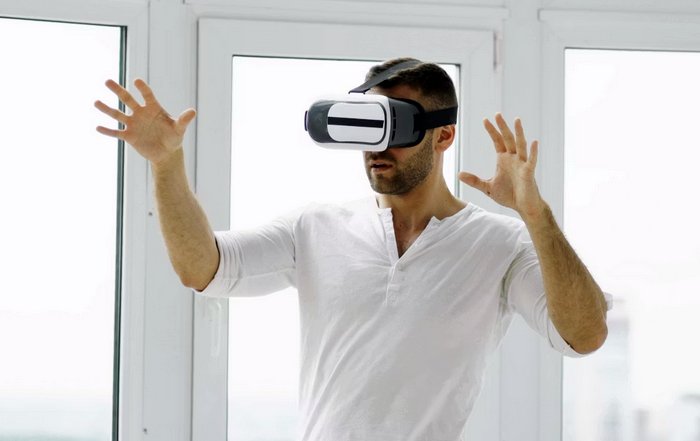
XR technologies-encompassing virtual reality (VR), augmented reality (AR), and mixed reality-have evolved beyond novelty to become practical tools for fan engagement, athlete training, and event operations. Hardware advances from Meta, Apple, Sony, and leading Asian manufacturers have delivered lighter, more comfortable headsets and AR glasses, while software ecosystems built on Unity and Unreal Engine enable developers to create high-fidelity, cross-platform experiences more efficiently. Industry bodies such as the XR Association highlight growing adoption in both consumer and enterprise contexts, from immersive replays and virtual hospitality to referee training and venue design. Underpinning all of this is a complex data environment that must comply with diverse regulatory frameworks, including guidance from the European Commission and standards promoted by the National Institute of Standards and Technology (NIST), making data governance and cybersecurity essential components of fan experience strategy.
Global and Regional Nuances in Adoption
Although virtual experiences are now a global norm, regional differences remain pronounced and strategically important. In North America, particularly the United States and Canada, mature media markets and high broadband penetration have supported rapid growth in direct-to-consumer platforms and second-screen companion apps, with fans accustomed to integrating statistics, betting, and social chat into their viewing habits. In Europe, football remains the primary engine of innovation, with clubs and leagues in the United Kingdom, Germany, Spain, Italy, France, and the Netherlands using virtual tools to expand global reach while respecting local supporter traditions and regulatory constraints.
In Asia, convergence between gaming and sports fandom is especially advanced. Markets such as South Korea, Japan, China, Singapore, and Thailand have embraced interactive formats that blend esports-style overlays, influencer commentary, and in-game rewards with traditional sports broadcasts. Mobile-first consumption patterns in Southeast Asia, Africa, and parts of South America, including Brazil and South Africa, have spurred innovations in lightweight, bandwidth-efficient experiences that can operate on mid-tier devices and variable networks. For readers tracking these developments via Sportsyncr World and Sportsyncr News, understanding regional nuances is essential to evaluating where new models are emerging, how regulatory environments are evolving, and which best practices are transferable across borders.
Esports, Gaming, and the Blueprint for Virtual Engagement
Esports and gaming continue to serve as a laboratory for virtual fan engagement models that are now being adopted by traditional sports. Publishers such as Riot Games, Valve, and Activision Blizzard have spent more than a decade refining digital-first tournament formats, spectator modes, and monetization systems that rely almost entirely on virtual environments. Platforms like Twitch and YouTube Gaming normalized interactive chat, streamer-centric storytelling, and community-driven moderation, demonstrating the power of parasocial relationships between creators and fans. Industry intelligence from firms like Newzoo has consistently shown that younger audiences treat gaming, esports, and traditional sports as overlapping rather than separate categories of entertainment.
Traditional sports organizations have responded by launching esports divisions, co-branded tournaments, and cross-overs that allow fans to engage with their favorite clubs or athletes in-game as well as on the field. Football clubs in the Premier League, La Liga, and Bundesliga, NBA franchises, and organizations in South Korea, Japan, and Brazil now operate integrated digital ecosystems that span physical competitions, esports teams, and creator partnerships. For the community that follows Sportsyncr Gaming, this convergence is not speculative; it is the new normal, reshaping how loyalty is formed and how rights holders think about intellectual property, content pipelines, and fan lifetime value.
Trust, Safety, and Governance as Competitive Advantages
As virtual fan spaces have expanded in scale and complexity, issues of trust, safety, and governance have become central strategic concerns. Data breaches, harassment, match-fixing scandals, and misinformation can rapidly erode confidence, especially in an environment where fans have abundant alternatives and limited patience for opaque practices. Regulatory regimes such as the European Union's General Data Protection Regulation (GDPR), emerging privacy laws in the United States, Canada, and Asia, and evolving content standards in markets like the United Kingdom and Australia impose stringent requirements on data handling, transparency, and user rights.
Digital rights organizations, including the Electronic Frontier Foundation and regional advocacy groups, have stressed the importance of user control, meaningful consent, and algorithmic accountability in large-scale virtual environments. For rights holders, leagues, and platforms, this translates into investments in robust moderation tools, clear community guidelines, independent oversight mechanisms, and responsive support structures. Coverage on Sportsyncr Social often highlights that trustworthiness is no longer a soft, reputational concern but a measurable differentiator that influences user acquisition, retention, and sponsor confidence. In a landscape where fans and partners can quickly shift allegiance, organizations that demonstrate consistent ethical stewardship gain a tangible competitive edge.
Environmental and Sustainability Dimensions of Virtual Engagement
The rapid expansion of virtual experiences intersects with growing scrutiny of environmental impact and sustainability. On one side, digital events can significantly reduce emissions associated with travel, large-scale venue operations, and physical production, a point emphasized in reports from bodies such as the United Nations Environment Programme. Hybrid formats that combine smaller, more sustainable in-person gatherings with high-quality virtual extensions have become more common, especially for global tournaments, conferences, and brand activations that previously required extensive international travel.
On the other side, the energy consumption of data centers, networks, and devices that power immersive experiences cannot be ignored. Technology companies and cloud providers have responded with commitments to renewable energy, carbon-neutral operations, and efficiency improvements, while sports organizations and event operators are beginning to include digital infrastructure in their sustainability audits and reporting. For stakeholders who follow environmental and scientific perspectives through Sportsyncr Environment and Sportsyncr Science, the key question is how to balance the benefits of dematerialization with the hidden costs of digital scale, and how to design virtual strategies that align with broader climate and ESG objectives.
Talent, Jobs, and the New Workforce Powering Virtual Experiences
Behind the seamless experiences enjoyed by fans lies a rapidly evolving workforce that blends expertise in sport, media, technology, and data. New roles have emerged across North America, Europe, Asia, and beyond, including virtual venue architects, XR experience designers, AI product managers, fan data strategists, interactive sponsorship leads, and community operations specialists. Traditional roles in broadcasting, marketing, and event operations have been redefined to incorporate digital-first responsibilities, such as managing multi-platform content flows, overseeing cross-border virtual events, and interpreting real-time engagement analytics.
Educational institutions and training providers are responding with interdisciplinary programs that integrate sports management, computer science, design, and business analytics, while professional associations develop standards for skills, ethics, and career progression in this new landscape. For professionals and students exploring career paths through Sportsyncr Jobs, virtual experiences are not just a topic of interest but a source of opportunity, offering roles that can be performed from London, Berlin, Toronto, Singapore, or Cape Town while serving global audiences. The organizations that succeed in this environment are those that invest in continuous learning, cross-functional collaboration, and inclusive hiring practices that reflect the diversity of their fan bases.
The Road Ahead: Experience, Expertise, and Trust as Strategic Imperatives
As 2026 unfolds, virtual experiences are firmly established as a foundational layer of fan engagement rather than an optional enhancement. The next phase will be defined less by technological possibility and more by strategic clarity, execution quality, and ethical responsibility. Leagues, clubs, brands, and platforms will need to make deliberate choices about how they design virtual journeys, how they balance personalization with privacy, and how they ensure that immersive features enhance rather than fragment the core emotional connection between fans and the sports, athletes, and communities they care about.
For Sportsyncr, whose mission spans sports, health, fitness, culture, business, technology, and global perspectives from its home at Sportsyncr.com, this environment reinforces the importance of experience, expertise, authoritativeness, and trustworthiness in every piece of coverage and analysis. The platform's audience is composed not only of fans but of practitioners, executives, creators, and innovators who are actively shaping the future of virtual engagement in their own organizations and communities. They look for insight that connects technological trends with human behavior, commercial realities with cultural nuance, and global developments with local implications.
In this context, the most successful virtual experiences will be those that combine robust technological foundations with a deep understanding of fan motivations and societal dynamics, that treat data as a tool for service rather than exploitation, and that recognize the enduring value of authenticity in an era of algorithmic abundance. As new formats emerge-from AI-personalized broadcasts and mixed reality training fields to global virtual tournaments and socially responsible digital campaigns-stakeholders who prioritize long-term trust, transparent governance, and meaningful participation will be best positioned to create sustainable value. Virtual experiences may be mediated through screens and headsets, but at their core they remain about connection, identity, and shared stories-the same forces that have always defined sport and culture, now expressed through the powerful, evolving lens of digital technology.