

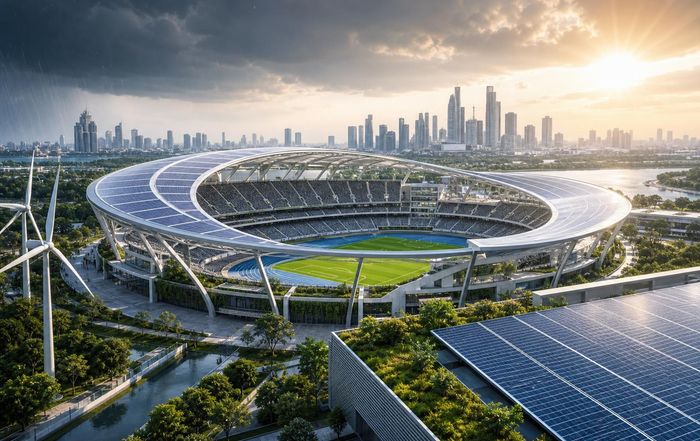
The Future of Resilient Sports Infrastructure
Resilience as the New Competitive Advantage in Global Sport
The global sports industry has entered a period in which the resilience of stadiums, arenas, training centers, and community facilities is no longer a technical afterthought but a strategic imperative that determines competitive advantage, financial stability, and long-term brand equity. As climate volatility intensifies, digital expectations accelerate, and public scrutiny of safety and sustainability increases, sports organizations, cities, and investors are reassessing what it means to design, finance, operate, and protect the built environment of sport. In this context, Sportsyncr has positioned itself as a sports syncing news website dedicated to decoding how sport, business, technology, health, and culture intersect, and why the next generation of resilient sports infrastructure will define the future of leagues, clubs, and brands across North America, Europe, Asia, Africa, and South America.
Resilience in sports infrastructure now encompasses physical robustness against extreme weather, cyber resilience for connected venues, operational continuity for global events, and social resilience that ensures facilities remain inclusive, safe, and community-centric. While elite competitions capture the headlines, the same forces shaping billion-dollar stadiums also influence local fields, university complexes, high-performance training centers, and urban multi-sport hubs. For stakeholders seeking to understand how these shifts will transform performance, fan experience, sponsorship, and employment, exploring the broader sports ecosystem through resources such as the Sportsyncr sports and business hubs offers a holistic vantage point on this evolving landscape.
Climate Risk, Extreme Weather, and the New Design Baseline
The most immediate driver of resilient sports infrastructure is the accelerating impact of climate change on venues and event operations. From heatwaves in Europe and North America to flooding in Asia and Africa, governing bodies and city planners increasingly rely on climate projections from organizations such as the Intergovernmental Panel on Climate Change and the World Meteorological Organization to set new design baselines for facilities that must operate reliably over the next 30 to 50 years. Stadiums in coastal cities like Miami, Rotterdam, and Singapore are incorporating flood defenses, elevated concourses, and water management systems, while venues in Southern Europe, Australia, and the Middle East are reconsidering surface materials, shading, and ventilation to mitigate heat stress for athletes and spectators.
This redefinition of design norms is not limited to flagship arenas; community pitches, training grounds, and university facilities are also being reimagined to withstand more frequent storms, higher temperatures, and shifting seasonal patterns. Synthetic turf fields are being scrutinized for heat retention and microplastic runoff, prompting innovation in natural hybrid systems and advanced drainage, supported by research from institutions such as the International Olympic Committee and the FIFA quality programme. As Sportsyncr continues to cover these developments across its environment and world channels, it becomes clear that climate resilience is no longer a niche design feature but a core requirement for safeguarding schedules, revenues, and community access.
Health, Safety, and Human Performance in Resilient Venues
Resilient infrastructure is not only about protecting buildings; it is fundamentally about protecting people. In the wake of the COVID-19 pandemic and rising awareness of heat illness, air quality, and mental health, facility operators are rethinking how stadiums, arenas, and training centers influence athlete performance and spectator wellbeing. Guidelines from organizations such as the World Health Organization and the Centers for Disease Control and Prevention have accelerated investments in air filtration, ventilation, crowd flow design, and hygiene protocols that are now being integrated into the permanent architecture of venues rather than treated as temporary emergency measures.
Elite training environments are increasingly designed as integrated performance ecosystems, combining sports science, recovery, nutrition, and psychological support. Clubs in the English Premier League, Bundesliga, NBA, and NFL are collaborating with performance institutes and universities to create training centers that manage load, monitor biometrics, and optimize sleep and recovery through built-in technology and specialized spaces. For readers tracking the intersection of infrastructure and human performance, Sportsyncr's focus on health and fitness provides a lens on how facility design is being reframed as a performance variable rather than a neutral backdrop.
At the community level, resilient sports infrastructure is also being evaluated for its capacity to promote long-term physical activity, reduce injury risk, and provide safe environments for youth and older adults. Evidence from organizations such as Sport England and ParticipACTION Canada underscores how well-designed, accessible facilities can increase participation, support public health objectives, and reduce healthcare costs. As cities in the United Kingdom, Germany, Canada, and Australia invest in multi-use community hubs, the health dimension of resilience becomes a critical justification for public funding and cross-sector partnerships.
Digital, Data, and Cyber Resilience in Smart Stadiums
The rapid evolution of smart stadiums and connected training facilities has created a new layer of risk and opportunity. Venues across the United States, Europe, and Asia are now equipped with high-density Wi-Fi, IoT sensors, facial recognition, mobile ticketing, and advanced broadcast capabilities, transforming them into data-rich environments that support personalized fan experiences, operational efficiency, and new commercial models. However, this digital transformation also demands robust cyber resilience to protect critical systems, sensitive data, and event continuity.
High-profile cyber incidents in other sectors have prompted leagues, clubs, and venue operators to adopt frameworks from organizations such as the National Institute of Standards and Technology and guidance from cybersecurity leaders like ENISA in Europe. Resilient sports infrastructure in 2026 therefore includes redundant network architecture, segmented operational technology systems, incident response plans, and continuous monitoring for threats that could disrupt ticketing, access control, broadcast feeds, or payment systems on match day. As Sportsyncr expands its coverage of sports technology, it highlights how cyber resilience has become inseparable from the fan experience, especially in markets like the United States, Japan, South Korea, and Singapore where digital expectations are highest.
Beyond security, data resilience ensures that performance databases, video archives, and analytics platforms remain available and accurate for teams and federations that increasingly rely on machine learning and AI to inform tactical decisions, scouting, and injury prevention. Partnerships between clubs and technology firms such as Microsoft, Amazon Web Services, and Google Cloud are redefining how data is stored, processed, and protected across global training networks, youth academies, and satellite facilities. This convergence of digital infrastructure and sporting operations underscores why resilient design must now account for both physical and virtual assets.
Financial Models, Risk Management, and Insurance Innovation
The financial implications of resilient sports infrastructure are profound. Traditional stadium financing models that relied on optimistic attendance projections and static risk assumptions are being challenged by the realities of climate risk, extreme weather disruptions, and evolving fan behavior. Insurers and reinsurers, informed by data from organizations like Swiss Re and Munich Re, are recalibrating premiums, exclusions, and coverage terms for sports facilities exposed to flood, wind, heat, and seismic risks, particularly in coastal and riverine regions of the United States, Europe, and Asia.
This shift is driving innovation in risk-sharing models, including parametric insurance products that trigger payouts based on predefined weather or seismic thresholds, and resilience-linked financing where the cost of capital is reduced if facilities meet specific sustainability and resilience benchmarks. Municipalities and clubs in countries such as the Netherlands, Denmark, and Japan are exploring public-private partnerships that embed resilience objectives into concession agreements, lease structures, and naming rights deals. Investors are increasingly referencing frameworks from the Task Force on Climate-related Financial Disclosures to evaluate the long-term viability of sports infrastructure assets, especially those forming part of mixed-use districts with hotels, retail, and residential components.
For brands and rights holders, resilient infrastructure is also a reputational and commercial asset. Sponsors and partners are more likely to align with venues and organizations that can demonstrate robust continuity planning, sustainable construction, and a commitment to community safety. Readers interested in how these financial and risk dynamics intersect with brand strategy can explore the Sportsyncr brands and sponsorship sections, which track how resilience is becoming a key narrative in commercial negotiations and long-term strategic partnerships.
Global Case Studies and Regional Approaches to Resilience
Around the world, leading sports markets are experimenting with different approaches to resilient infrastructure that reflect local climate realities, regulatory environments, and cultural expectations. In the United States, new stadiums in cities like Las Vegas and Minneapolis have integrated advanced roofing, snow management, and energy systems, drawing on guidance from organizations such as the U.S. Green Building Council to achieve LEED certification and demonstrate environmental responsibility. In Europe, clubs in Germany, the United Kingdom, and the Netherlands have invested in district heating, renewable energy integration, and public transport connectivity to reduce emissions and enhance operational continuity.
Asian markets offer a different perspective, with Japan and South Korea emphasizing seismic resilience, modular construction, and disaster preparedness, informed by decades of experience with earthquakes and typhoons. Singapore and Thailand, facing heat and humidity, are adopting innovative cooling technologies, shading solutions, and water-sensitive urban design in and around sports venues. In Africa and South America, where infrastructure gaps remain significant, there is growing interest in scalable, cost-effective models that can deliver resilience without imposing unsustainable capital burdens, often supported by development agencies and NGOs that recognize the role of sport in community resilience and social cohesion.
Global events such as the Olympic Games, FIFA World Cup, and continental championships have become laboratories for resilient design and operations. Host cities are increasingly required to demonstrate how venues will withstand climate risks, support public health, and deliver long-term legacy benefits. Organizations like the United Nations Environment Programme and the Global Alliance for Buildings and Construction are working with sports bodies to align mega-event infrastructure with broader sustainable development and resilience goals. By chronicling these regional approaches across its news and world coverage, Sportsyncr provides business leaders and policymakers with comparative insights that can inform local decision-making.
Brands, Culture, and the Social License to Operate
Resilient sports infrastructure is deeply intertwined with culture, identity, and the social license to operate. Stadiums and arenas are not merely commercial assets; they are civic landmarks and cultural symbols that shape how communities in cities from London and Berlin to São Paulo and Johannesburg see themselves. As expectations around social responsibility and environmental stewardship rise, fans, citizens, and advocacy groups are scrutinizing whether new or renovated venues genuinely contribute to community resilience or simply displace risk and cost onto vulnerable populations.
Brands that associate themselves with sports infrastructure must therefore navigate a complex cultural landscape. Partnerships that emphasize community access, youth development, and inclusive design can enhance trust and deepen engagement, while those perceived as extractive or short-term can trigger backlash. Organizations like FC Barcelona, Liverpool FC, Bayern Munich, and LAFC are increasingly framing their stadium projects as community hubs with education, health, and cultural programming built into the fabric of the venue, often in collaboration with local authorities and NGOs. For readers interested in how these dynamics intersect with identity, inclusion, and fan communities, the Sportsyncr culture and social sections offer ongoing analysis of how infrastructure decisions shape the broader narrative of sport in society.
Resilience also has a social dimension in terms of who benefits from access to facilities before, during, and after major events. Questions of affordability, transport connectivity, disability access, and gender safety are now central to infrastructure planning, with guidelines from organizations such as UN Women and the International Paralympic Committee influencing design and operational policies. In many markets, especially across Europe and North America, failure to address these issues can jeopardize planning approvals, public funding, and long-term fan loyalty.
Technology, Science, and Innovation in Materials and Design
Scientific and technological innovation is reshaping what is possible in resilient sports infrastructure, from advanced materials and modular construction to digital twins and predictive analytics. Research institutions and engineering firms are experimenting with low-carbon concrete, recycled steel, and bio-based materials that can reduce environmental impact while enhancing structural performance. Organizations such as the Ellen MacArthur Foundation are promoting circular economy principles that encourage reuse, adaptation, and deconstruction rather than demolition, with direct implications for stadium renovation and temporary event structures.
Digital twins, supported by building information modeling and sensor networks, allow operators to simulate crowd flows, energy usage, and emergency scenarios, improving preparedness and operational resilience. Clubs and venue managers are increasingly collaborating with universities and technology partners to test new approaches to pitch management, roofing systems, and acoustics, drawing on sports science insights from bodies like the American College of Sports Medicine and engineering best practices from organizations such as Arup. The Sportsyncr science and technology channels follow these developments closely, connecting breakthroughs in research and engineering to tangible changes in how venues are planned, built, and operated.
In parallel, gaming and virtual environments are influencing how fans experience infrastructure. Esports arenas and hybrid venues are being designed with flexible seating, high-spec connectivity, and immersive audiovisual systems that can accommodate both physical and digital audiences. This convergence of sport and gaming, covered within Sportsyncr's gaming coverage, further underscores the need for resilient digital infrastructure that can support high-bandwidth, low-latency experiences at scale.
Jobs, Skills, and the Emerging Workforce of Resilient Sport
The shift toward resilient sports infrastructure is generating new demand for specialized skills across architecture, engineering, operations, technology, and community engagement. Facility operators now require professionals who understand climate risk modeling, cybersecurity, data analytics, and stakeholder consultation, alongside traditional expertise in construction and venue management. Universities and professional bodies in the United States, United Kingdom, Germany, and beyond are adapting curricula to reflect this interdisciplinary reality, while global organizations such as the International Facility Management Association are updating certification frameworks to include resilience competencies.
For professionals and students, this transformation represents both opportunity and challenge. Roles in sustainability, risk management, and smart building operations are expanding, but they demand continuous learning and cross-sector collaboration. The Sportsyncr jobs section reflects this evolving talent landscape, highlighting how careers in sport now intersect with climate science, data engineering, urban planning, and social impact. As infrastructure projects increasingly span multiple countries and regions, familiarity with international standards, local regulations, and cultural contexts becomes a key differentiator for professionals seeking to contribute to resilient sports ecosystems.
Major Activity Imperatives for Sports Stakeholders Ahead
Looking ahead, the future of resilient sports infrastructure will be shaped by how effectively stakeholders align strategic intent, technical innovation, and cultural sensitivity. Leagues and governing bodies must continue to raise minimum standards for venue resilience, integrating climate scenarios, public health considerations, and digital security into licensing and hosting criteria. Clubs and franchise owners will need to view resilience not as a regulatory burden but as a source of long-term value, supporting stable revenues, sponsor confidence, and community trust.
Cities and national governments, faced with constrained budgets and competing priorities, will be challenged to ensure that sports infrastructure investments deliver genuine resilience dividends for broader urban systems, including transport, housing, and public health. This will require transparent cost-benefit analysis, inclusive stakeholder engagement, and a willingness to experiment with new financing and governance models. Brands and broadcasters, whose reputations are closely linked to the safety and continuity of events, will increasingly use their influence to push for resilient design and operations as a condition of partnership.
For its global audience spanning the United States, United Kingdom, Germany, Canada, Australia, France, Italy, Spain, the Netherlands, Switzerland, China, Sweden, Norway, Singapore, Denmark, South Korea, Japan, Thailand, Finland, South Africa, Brazil, Malaysia, New Zealand, and beyond, Sportsyncr will continue to serve as a hopefully trusted hub for expert insights at the intersection of sport, business, technology, health, and culture. By connecting developments across sports, health, business, technology, environment, and more on its homepage, the platform aims to equip decision-makers with the information and context they need to navigate a future in which resilient sports infrastructure is not optional but foundational.
Really today the organizations that recognize resilience as a strategic pillar rather than a compliance exercise will be best positioned to thrive in an era defined by uncertainty, innovation, and heightened expectations. Their stadiums and training centers will not merely withstand shocks; they will enable sport to continue performing its unique role in society: inspiring, connecting, and mobilizing people across borders and generations.