

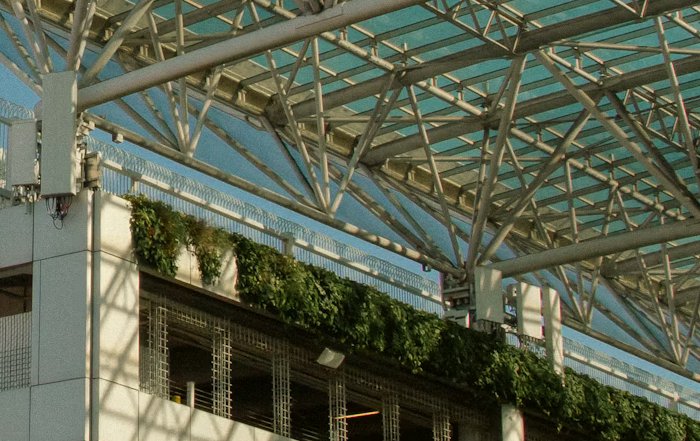
Sustainable Stadiums Redefining the Future of Sports Infrastructure
The New Economics of Green Arenas
Sustainable stadiums have moved from experimental showcase projects to central assets in global sports strategy, reshaping how leagues, clubs, cities, and brands think about infrastructure, fan experience, and long-term value creation. Across North America, Europe, Asia, Africa, and South America, leading venues are no longer judged solely on capacity, hospitality, and broadcast readiness; they are increasingly assessed on energy performance, carbon intensity, community impact, and resilience to climate risk. For a platform like Sportsyncr, which sits at the intersection of sports, business, and environment, this transformation is not a niche sustainability story but a core business narrative that touches every stakeholder in the sports ecosystem.
The economics underpinning this shift are compelling. According to analyses from organizations such as the International Energy Agency, energy efficiency measures in large venues can reduce consumption by double-digit percentages over a stadium's lifecycle, while on-site renewable generation and advanced building management systems can mitigate exposure to volatile energy markets. When combined with evolving carbon pricing mechanisms in regions such as the European Union and emerging regulatory frameworks in markets like the United States and Canada, the financial case for green stadiums increasingly aligns with the moral and reputational imperative to act on climate change. Learn more about the global trajectory of clean energy transitions at iea.org.
At the same time, fans, particularly younger demographics in the United States, the United Kingdom, Germany, and across the Nordic countries, are demonstrating a growing preference for brands and organizations that demonstrate credible environmental responsibility. Research from bodies such as the Pew Research Center and Deloitte indicates that climate and sustainability concerns are now material to consumer loyalty and employer choice, which means that clubs, leagues, and venue operators are not merely building greener stadiums; they are shaping the future of their fan base and workforce. Insights into changing generational attitudes can be explored further at pewresearch.org and deloitte.com.
From Iconic Structures to Climate-Responsive Systems
Traditional stadium development focused heavily on architectural spectacle, capacity, and broadcast visibility, often resulting in energy-intensive structures that were underutilized for much of the year. The contemporary sustainable stadium, by contrast, is conceived as a climate-responsive system that integrates architecture, engineering, technology, and operations into a single performance-driven platform. Pioneering venues such as Allianz Arena in Germany, Tottenham Hotspur Stadium in the United Kingdom, Mercedes-Benz Stadium in the United States, and Johan Cruijff ArenA in the Netherlands have helped redefine what a stadium can be when sustainability is embedded from the earliest design stages.
Organizations such as the U.S. Green Building Council and the World Green Building Council have provided frameworks and benchmarks that guide this evolution, with certifications like LEED and BREEAM now widely recognized by investors and municipal planners as indicators of long-term asset quality. Learn more about green building standards at usgbc.org and worldgbc.org. In parallel, sports governing bodies, including FIFA, the International Olympic Committee, and major leagues such as the NFL, NBA, Premier League, and Bundesliga, have begun to incorporate sustainability criteria into bidding processes and event guidelines, raising expectations for host cities from Europe to Asia and North America. Further information on sport and sustainability commitments is available at olympics.com and fifa.com.
For Sportsyncr, which covers news across global sports and technology, the shift from static structures to adaptive systems is a defining narrative. It reflects a broader trend in infrastructure where data, automation, and environmental performance converge, positioning stadiums as living laboratories for innovation rather than fixed monuments of concrete and steel.
Energy, Water, and Materials: Engineering for Net Zero
The technical backbone of sustainable stadiums is built around three critical resource domains: energy, water, and materials. In energy, venues in the United States, United Kingdom, Germany, and Scandinavia are increasingly deploying large-scale solar arrays on roofs and adjacent parking structures, integrating battery storage systems, and optimizing HVAC and lighting through intelligent building management. The Johan Cruijff ArenA in Amsterdam, for example, has become a reference point for stadium energy innovation, with its integration of second-life electric vehicle batteries and smart grid connectivity frequently cited in studies by institutions such as the Rocky Mountain Institute and Fraunhofer Institute. Learn more about advanced energy storage and grid integration at rmi.org and fraunhofer.de.
Water management has also become a strategic priority, particularly in markets facing water stress such as parts of the United States, Australia, South Africa, Brazil, and Southern Europe. Rainwater harvesting, greywater recycling, and precision irrigation for natural pitches are now seen as baseline features for new or renovated venues. Organizations including the World Resources Institute and UN Environment Programme provide guidance on water risk and resilience that stadium developers increasingly use in feasibility and design phases; further background can be found at wri.org and unep.org. For Sportsyncr readers focused on science and environment, the integration of hydrological modeling into stadium design exemplifies how sports infrastructure is intersecting with climate science and urban planning.
Materials represent another decisive frontier. Life-cycle assessments, circular design principles, and low-carbon materials such as green concrete and cross-laminated timber are now part of mainstream conversations in stadium projects from Canada and the Netherlands to Japan and Singapore. Guidance from the Ellen MacArthur Foundation and the World Economic Forum on circular economy strategies and industrial decarbonization is informing procurement policies and tender specifications for major venues; further reading is available at ellenmacarthurfoundation.org and weforum.org. These shifts are not purely technical; they reshape supply chains, create new jobs, and open opportunities for regional manufacturing clusters, which has direct relevance for Sportsyncr's audience interested in jobs, brands, and sponsorship dynamics.
Fan Experience, Health, and the Sustainable Matchday
Sustainable stadiums are not only engineering achievements; they are also reimagining the fan experience around health, wellbeing, and responsible consumption. Air quality monitoring and filtration, natural daylighting, and biophilic design elements are increasingly integrated to enhance spectator comfort and reduce fatigue for both fans and athletes. Public health organizations, including the World Health Organization, have stressed the importance of air quality and active mobility for population wellbeing, and these priorities now manifest in stadium access strategies that emphasize public transit, cycling, and pedestrian routes. Learn more about health and environmental determinants at who.int.
From a nutrition perspective, leading venues in markets such as the United States, United Kingdom, Germany, Sweden, and Japan are reshaping concessions to include healthier, locally sourced options, plant-based menus, and transparent nutritional information, aligning with broader trends in sports performance and everyday wellness. For Sportsyncr, which covers health and fitness alongside sports, this convergence of stadium food ecosystems with performance nutrition and sustainable agriculture is a fertile area of analysis, linking matchday experiences to long-term lifestyle choices among fans.
Digital ticketing, contactless payments, and mobile-first engagement platforms have reduced paper waste and streamlined entry flows, while also enabling real-time communication about transport options, queue times, and sustainability initiatives. Technology providers and consultancies, including Accenture, IBM, and Cisco, are working with clubs and venue operators to integrate data from turnstiles, sensors, and apps into unified platforms that optimize both environmental performance and fan satisfaction; more on digital transformation in sports can be explored at accenture.com and ibm.com. For a technology and gaming aware audience, the gamification of sustainable behaviors-such as rewarding fans for using public transit, recycling, or choosing plant-based options-represents a natural evolution of engagement strategies.
Global Case Studies: Regional Approaches to Sustainable Stadiums
Different regions are approaching sustainable stadium development through distinct regulatory, cultural, and climatic lenses, creating a diverse landscape of best practices that Sportsyncr is well placed to track and interpret for a global readership.
In Europe, strong regulatory frameworks, ambitious climate targets, and high public awareness have made countries such as Germany, the Netherlands, the United Kingdom, the Nordics, and France early leaders in stadium decarbonization. Projects like Allianz Arena's energy-efficient façade, Tottenham Hotspur Stadium's multi-use design and transport integration, and Parken Stadium in Denmark's renewable energy initiatives demonstrate how clubs and national associations are aligning with European Green Deal objectives and national climate laws. The European Commission's climate and energy policy resources at ec.europa.eu provide context for these developments.
In North America, the United States and Canada have seen a mix of public-private partnerships and franchise-driven initiatives, with venues such as Climate Pledge Arena in Seattle, Mercedes-Benz Stadium in Atlanta, and Rogers Place in Edmonton positioning themselves as climate-conscious hubs that also anchor broader urban regeneration projects. The role of corporate partners like Amazon, Coca-Cola, and Bank of America in underwriting sustainability features through naming rights and sponsorship deals illustrates how brands are using stadiums as high-visibility platforms for environmental commitments. Learn more about corporate climate strategies at cdp.net and sciencebasedtargets.org.
In Asia, rapid urbanization and ambitious mega-event strategies have driven large-scale investments in stadium infrastructure across China, Japan, South Korea, Singapore, and Thailand, with sustainability increasingly embedded as a requirement rather than an optional enhancement. The Tokyo 2020 and Beijing 2022 Games accelerated regional expertise in low-carbon construction, smart mobility, and temporary venue design, with lessons captured by institutions such as the Asian Development Bank and UN-Habitat; further background is available at adb.org and unhabitat.org. For Sportsyncr's world and culture coverage, the interplay between traditional architectural forms, high-density urban contexts, and climate adaptation in Asian stadium projects offers rich ground for analysis.
In Africa and South America, countries such as South Africa, Brazil, and increasingly nations like Kenya and Colombia are grappling with the legacy of past mega-events and the need to align new investments with social inclusion, community benefit, and climate resilience. Organizations like C40 Cities and the World Bank are working with municipalities to ensure that stadium projects contribute to broader sustainable urban development goals, rather than becoming isolated, underused assets; more can be explored at c40.org and worldbank.org. For Sportsyncr readers interested in social impact and equity, these regions illustrate both the risks of unsustainable stadium development and the opportunities for more inclusive, climate-conscious models.
Brands, Sponsorship, and the ESG Imperative
Sustainable stadiums are reshaping the sponsorship landscape, turning venues into physical manifestations of environmental, social, and governance (ESG) narratives that brands can credibly align with. Global companies such as Adidas, Nike, Puma, Visa, Mastercard, and Heineken are increasingly seeking partnerships that demonstrate tangible sustainability outcomes, from renewable energy installations and plastic-free concessions to inclusive community programs and accessible design. For Sportsyncr, whose readers follow brands and sponsorship trends closely, the stadium has become a stage not only for athletic performance but for ESG storytelling and stakeholder engagement.
Investment analysts and rating agencies are scrutinizing the environmental performance of sports assets as part of broader ESG assessments, which affects club valuations, bond pricing, and access to green finance. Institutions like the Principles for Responsible Investment and the Task Force on Climate-related Financial Disclosures have influenced how investors evaluate climate risk and opportunity in infrastructure portfolios, with stadiums and arenas now regularly featuring in sustainability-linked financing structures; more information is available at unpri.org and fsb-tcfd.org. As a result, clubs and venue operators in markets from the United States and United Kingdom to France, Italy, Spain, and Australia are increasingly sophisticated in articulating how their sustainable stadium strategies align with investor expectations.
The commercial opportunity is not limited to headline sponsors. A growing ecosystem of technology providers, construction firms, materials innovators, and data analytics companies is emerging around sustainable sports infrastructure, creating new business models and revenue streams. For example, energy-as-a-service agreements, performance-based contracts for efficiency upgrades, and data monetization arrangements tied to stadium operations are becoming more common, especially in technologically advanced markets such as Germany, the Netherlands, Singapore, and South Korea. This expanding value chain is a natural focus for Sportsyncr's technology and business coverage, as it intersects with innovation, entrepreneurship, and the future of work in sports.
Data, Digital Twins, and Operational Excellence
The most advanced sustainable stadiums are increasingly managed as data-rich, cyber-physical systems, where sensors, analytics, and automation are deployed to continuously optimize performance. Digital twins-virtual replicas of physical venues that simulate and predict behavior under varying conditions-are being used to refine energy use, crowd flows, pitch maintenance, and even acoustic performance. Technology leaders such as Microsoft, Siemens, and Schneider Electric are at the forefront of providing these platforms, often in partnership with clubs and city authorities; further exploration of digital twin applications can be found at microsoft.com and siemens.com.
Operational excellence in sustainable stadiums goes beyond energy dashboards. It encompasses integrated security and safety systems, real-time monitoring of structural health, predictive maintenance for mechanical and electrical equipment, and advanced waste management solutions that track and reduce landfill contributions. For a data-informed platform like Sportsyncr, which covers news and technology trends, the emergence of stadiums as complex, continuously optimized systems exemplifies the convergence of physical infrastructure and digital intelligence that is reshaping industries worldwide.
Moreover, the data generated by sustainable stadium operations is increasingly valuable for broader urban planning and climate adaptation strategies. Cities in Europe, North America, and Asia are exploring how insights from stadium energy use, mobility patterns, and microclimate monitoring can inform district-level planning, transport policy, and resilience measures. In this sense, stadiums are not isolated nodes but integral components of smart city ecosystems, providing a testbed for innovations that can scale beyond sports.
Community, Culture, and Year-Round Activation
Sustainable stadiums are also redefining their role in community and cultural life, moving away from the model of single-purpose, event-driven venues toward multipurpose, year-round hubs that support local economies, social programs, and cultural expression. In cities from London and Manchester to Munich, Barcelona, Toronto, Melbourne, and Seoul, stadium precincts are increasingly integrated with mixed-use developments that include housing, retail, offices, green spaces, and community facilities, many of which are designed with environmental performance and social inclusion in mind.
This shift aligns with a broader recognition, championed by organizations such as UNESCO and OECD, that cultural and sports infrastructure can play a pivotal role in sustainable urban development and social cohesion; further resources are available at unesco.org and oecd.org. For Sportsyncr, which explores culture and social impact alongside sports, the sustainable stadium becomes a lens through which to examine changing patterns of urban life, identity, and community engagement in diverse contexts from Europe and North America to Asia, Africa, and South America.
Year-round activation strategies also help address one of the central critiques of past stadium investments: underutilization and poor return on public funds. By hosting concerts, conferences, esports events, health and fitness programs, and educational initiatives, sustainable stadiums generate more consistent revenue and provide broader benefits to local residents. The integration of esports and gaming arenas within or adjacent to traditional stadiums, particularly in markets like the United States, South Korea, China, and the Nordics, illustrates how digital culture and physical infrastructure are converging, a trend that resonates strongly with Sportsyncr's gaming and youth-oriented readership.
Challenges, Trade-offs, and the Road Ahead
Despite the progress made by 2026, the path toward truly sustainable sports infrastructure is neither linear nor universally accessible. High capital costs, complex stakeholder landscapes, and varying regulatory environments mean that not all clubs or cities can easily pursue state-of-the-art green stadiums, particularly in emerging markets or lower-tier leagues. There is also a risk of "greenwashing" when sustainability features are marketed aggressively without corresponding depth in design, operations, or community impact, which can erode trust among fans, sponsors, and regulators.
Organizations such as Transparency International and Global Reporting Initiative have highlighted the importance of robust governance, disclosure, and accountability mechanisms to ensure that sustainability claims are credible and verifiable; further information is available at transparency.org and globalreporting.org. For Sportsyncr, which values trust and analytical rigor across its coverage areas, scrutinizing the gap between rhetoric and reality in sustainable stadium projects will remain a critical editorial responsibility.
Moreover, the pursuit of net-zero and climate-positive stadiums must be contextualized within broader decarbonization pathways for transport, supply chains, and digital infrastructure. A highly efficient venue that is primarily accessed by private cars or that relies on carbon-intensive supply chains for construction and catering cannot be considered fully sustainable. This systemic perspective is increasingly reflected in guidance from the Intergovernmental Panel on Climate Change, whose assessments underscore the need for cross-sectoral coordination and just transitions; more can be learned at ipcc.ch.
Looking ahead, emerging technologies such as advanced bio-based materials, next-generation batteries, hydrogen-ready systems, and AI-driven optimization are likely to further enhance the performance and resilience of stadiums, while evolving fan expectations around inclusivity, accessibility, and digital immersion will shape how sustainable design translates into lived experience. For a global, cross-disciplinary platform like Sportsyncr, which connects sports, business, technology, and environment, sustainable stadiums will remain a central narrative thread, illustrating how the sports industry can act as both a mirror and a catalyst for broader societal change.
In this evolving landscape, the most successful organizations will be those that treat sustainability not as a compliance exercise or marketing slogan but as a strategic, data-driven, and community-centered approach to value creation. Stadiums, once viewed primarily as cost centers or prestige projects, are becoming critical platforms for innovation, resilience, and shared prosperity. As the world navigates the intertwined challenges of climate change, urbanization, and shifting cultural expectations, the redefinition of sports infrastructure through sustainability is poised to be one of the defining stories of the next decade, and Sportsyncr will continue to chronicle how this transformation unfolds across regions, leagues, and generations.