

How Fitness Apps Encourage Healthy Daily Habits
The New Everyday Athlete: How Digital Fitness Became Daily Life
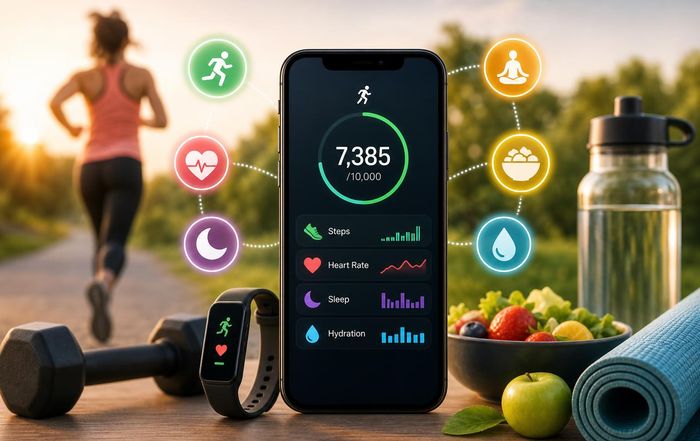
Fitness applications have shifted from being niche tools for gym enthusiasts to becoming quiet companions in the pockets and on the wrists of hundreds of millions of people worldwide, subtly shaping how they move, eat, sleep and recover each day. What began as simple step counters on early smartphones has evolved into a sophisticated, data-driven ecosystem that blends behavioral science, sports performance insights and preventive health strategies into daily routines across the United States, United Kingdom, Germany, Canada, Australia and far beyond, influencing lifestyles from urban Singapore to rural Brazil. On Sportsyncr and across its verticals such as sports, fitness and health, this transformation is not observed from the sidelines but examined as a central force that is reshaping how individuals define performance, wellbeing and even identity.
This evolution is not simply about tracking more data or adding more features. It is about how fitness apps are systematically engineering healthy daily habits through personalization, gamification, community-building, and deep integration with healthcare and sports science. As organizations from Apple and Google to Nike, Adidas and Peloton compete and collaborate in this space, and as regulators and researchers from institutions such as Harvard T.H. Chan School of Public Health and the World Health Organization scrutinize the implications, the fitness app has become a powerful behavioral platform with real consequences for public health, sports performance and business strategy.
From Tracking to Coaching: The Behavioral Science Inside Fitness Apps
The most significant transformation in fitness apps over the past decade has been the shift from passive tracking to active coaching. Early apps simply recorded steps or logged workouts; in 2026, leading platforms use behavioral science to shape micro-decisions throughout the day, from taking the stairs to going to bed on time. Research on habit formation from sources such as University College London has shown that consistent repetition in a stable context is key to turning actions into automatic behaviors, and app designers have systematically embedded this insight into daily nudges, streaks and routines that encourage users to repeat small, achievable actions until they become second nature. Readers can explore how habit loops work and why small cues matter by reviewing resources on behavior change from organizations such as Verywell Mind.
Many of the most successful apps now function less like tools and more like digital coaches, using adaptive algorithms to provide context-aware prompts that feel timely rather than intrusive. When a user in Sweden misses a planned morning run, for example, the app may propose a shorter workout at lunchtime instead of simply flagging a failure, tapping into research on self-compassion and relapse recovery in behavior change. The American Council on Exercise and similar bodies have long emphasized the importance of progressive overload and realistic goal-setting, and the best apps translate these principles into personalized daily plans that adjust automatically to performance, recovery and user feedback. For readers looking to understand the science behind these coaching approaches, resources from ACE Fitness offer accessible overviews of evidence-based training methodologies.
Personalization at Scale: Data, AI and the Daily Routine
In 2026, personalization is no longer a premium feature; it is the default expectation. Fitness apps ingest data from smartphones, wearables, connected gym equipment and even smart home devices to tailor activity recommendations, nutrition guidance and recovery strategies to each individual's physiology, preferences and environment. Heart rate variability, sleep staging, menstrual cycle data, environmental conditions and stress indicators are combined to produce a dynamic picture of readiness that informs daily suggestions, from recommending a low-intensity walk in Tokyo after a poor night's sleep to encouraging a higher-intensity interval session in New York when recovery scores are strong.
Major technology platforms such as Apple Health, Google Fit and Samsung Health have become central data hubs, integrating information from third-party apps and devices, while specialized performance platforms like WHOOP and Oura focus on deep recovery and strain analytics. Readers can learn how these ecosystems interconnect by exploring overviews from The Verge on wearable and health-tech platforms. On Sportsyncr, especially in the technology and science sections, this integration is covered not only as a user convenience story but as a strategic battleground where data ownership, interoperability and trust are decisive factors.
Artificial intelligence models now sit behind many of the micro-recommendations users receive, predicting which type of prompt is most likely to lead to action and which training load is most likely to be sustainable. While the term "AI coach" is often overused in marketing, there is genuine sophistication in how leading apps forecast adherence, estimate injury risk and adjust plans accordingly. Organizations such as MIT and Stanford University continue to publish research on predictive modeling in human performance, and readers can review some of the broader AI health implications through resources from Stanford Medicine. For everyday users, the impact is felt not in the complexity of the algorithms but in the simplicity of the daily experience: open the app and see a realistic, tailored suggestion that fits both the body's condition and the day's schedule.
Gamification, Streaks and the Psychology of Motivation
One of the most visible ways fitness apps encourage healthy daily habits is through gamification, yet the psychological mechanics behind these features are often misunderstood. Streaks, badges, leaderboards and virtual rewards are not mere gimmicks; they are carefully tuned motivational levers rooted in research on intrinsic and extrinsic motivation, commitment devices and social comparison. Duolingo popularized the streak as a habit-forming tool in language learning, and fitness platforms rapidly adopted similar mechanisms, from step streaks in Fitbit to move rings in Apple Watch.
In sports and fitness contexts, gamification harnesses competitive instincts and the desire for progress, but it can also create pressure and anxiety if poorly designed. Behavioral economists and psychologists, including researchers summarized by organizations such as the American Psychological Association, have warned that fragile streaks can backfire when users feel they have "failed" and drop out entirely. To mitigate this, many leading apps now incorporate recovery days into streak logic, offer "streak freezes" for travel or illness and emphasize cumulative progress over perfection. Readers interested in the broader science of motivation can explore resources from APA on habit formation and reinforcement.
On Sportsyncr, particularly across gaming and social coverage, gamification is examined through the lens of digital culture and community dynamics, not just as a product feature. The convergence of gaming mechanics and fitness has also opened up new forms of engagement, from virtual cycling races on platforms like Zwift to location-based running challenges in cities from London to Bangkok, where users compete asynchronously while still training in their local environments. This has turned everyday workouts into shared experiences that blend the virtual and physical worlds.
Communities, Culture and the Social Dimension of Daily Movement
While data and algorithms drive personalization, it is community that often sustains long-term engagement. Fitness apps have increasingly become social platforms in their own right, enabling users to follow friends, join challenges, share achievements and participate in virtual clubs that cross borders from Europe to Asia and Africa. The rise of social fitness has mirrored broader digital trends, but it has also reshaped the culture of sport and exercise, making it more inclusive, conversational and visible.
Platforms like Strava exemplify this shift, with millions of runners, cyclists and walkers sharing routes and performances, turning city maps in places like Berlin, Paris and San Francisco into living archives of collective movement. Readers can explore how social mapping and segments evolved by reviewing analyses from outlets such as Wired. Meanwhile, group-based apps like Peloton and Les Mills+ have cultivated global communities around live and on-demand classes, where leaderboards and instructor shout-outs create a sense of presence even when participants are training alone at home.
For Sportsyncr, the cultural implications of these communities are as important as the technical ones, and the platform's culture and world sections frequently highlight how digital fitness tribes are influencing fashion, music, travel and even urban planning. In Seoul, Copenhagen and Amsterdam, for example, the popularity of app-driven running and cycling has intersected with investments in active transport infrastructure, as policymakers recognize that digital motivation must be matched by safe, accessible physical spaces. Organizations such as World Economic Forum and OECD have documented the economic and social benefits of active cities, and readers can learn more about these broader trends through resources like World Economic Forum's health and wellness insights.
Health, Prevention and the Quiet Integration with Healthcare
Beyond sports and performance, fitness apps have become important tools in preventive health, especially as healthcare systems in North America, Europe and parts of Asia-Pacific grapple with chronic disease burdens related to inactivity, obesity and stress. The World Health Organization has repeatedly emphasized that insufficient physical activity is a major risk factor for noncommunicable diseases, and its recommendations for weekly activity levels are now embedded in the design of many mainstream apps. Readers can review these guidelines and the evidence behind them via WHO's physical activity resources.
In 2026, the line between consumer fitness and formal healthcare is increasingly blurred. Many apps now integrate with electronic health records through standardized APIs, enabling clinicians to view summarized activity and sleep trends for patients managing conditions such as type 2 diabetes, hypertension or depression. Some health systems in countries like Canada, Denmark and Singapore have piloted programs where patients are prescribed app-based activity interventions alongside medication or therapy, with incentives linked to adherence. Organizations such as the National Health Service in the United Kingdom have launched digital health libraries that evaluate and recommend vetted apps, and readers can explore the NHS approach through NHS digital health information.
This integration raises complex questions about data governance, equity and clinical validity, which Sportsyncr examines not only in health coverage but also through its business and news reporting. As insurers and employers in Germany, United States and Japan offer incentives for app-tracked activity, debates intensify over who benefits most, how to avoid penalizing those with disabilities or chronic conditions, and how to ensure that algorithms do not reinforce existing health disparities. Public health organizations, including the Centers for Disease Control and Prevention, continue to publish guidance on physical activity promotion and digital health tools, and readers can explore more about evidence-based approaches through CDC physical activity resources.
Brands, Business Models and the Global Fitness Economy
The rise of fitness apps has also reshaped the global sports and wellness economy, creating new business models, partnerships and revenue streams that extend far beyond subscription fees. Athletic brands like Nike, Adidas and Under Armour have invested heavily in digital platforms that link footwear, apparel and equipment to training plans and communities, using data to refine product design and personalize marketing. Learn more about how global sports brands leverage digital ecosystems by exploring industry analysis from McKinsey & Company.
At the same time, pure-play digital fitness companies such as Peloton, Zwift and Freeletics have had to adapt to post-pandemic realities, balancing at-home engagement with the resurgence of gyms, studios and outdoor sports. Hybrid models that blend in-person coaching, connected equipment and app-based guidance are emerging in markets from Italy and Spain to South Korea and New Zealand, as consumers seek flexibility and variety rather than committing exclusively to one format. The International Health, Racquet & Sportsclub Association (IHRSA) has documented how clubs worldwide are integrating digital offerings, and readers can explore broader industry trends via resources from IHRSA.
On Sportsyncr, the brands and sponsorship verticals track how partnerships between fitness apps, sports leagues, events and corporate wellness programs are shaping fan engagement and workplace culture. Major marathons in cities like Boston, Berlin and Tokyo now integrate app-based training programs and virtual participation options, extending their reach to runners who may never travel to the physical race but still identify with its brand. Corporate wellness platforms in Switzerland, France and Malaysia increasingly rely on app-based challenges to encourage daily movement among employees, tying participation to rewards, charitable donations or team-building initiatives that align with broader ESG and sustainability goals. Readers interested in how these dynamics intersect with sustainable business practices can explore analyses from Harvard Business Review.
Technology Frontiers: Wearables, Sensors and the Next Layer of Insight
As fitness apps evolve, they are being powered by an expanding array of sensors and wearables that capture more granular and continuous data about the human body and environment. From advanced optical heart rate monitors and ECG-capable watches to smart rings, connected insoles and even sensor-embedded clothing, the hardware landscape has diversified, giving users in regions from Norway and Finland to South Africa and Thailand multiple entry points into the digital fitness ecosystem. The Consumer Technology Association and similar bodies regularly showcase these innovations at global events, and readers can stay informed about emerging devices through coverage on CNET Health & Fitness Tech.
In elite and professional sports, technologies such as GPS tracking, inertial measurement units and force sensors have long been used to monitor training load and biomechanics, and these capabilities are gradually filtering into consumer-facing apps. Runners can receive stride analysis and injury risk warnings; cyclists can monitor power output and cadence; strength trainees can track barbell velocity and form consistency. Sports science organizations like Gatorade Sports Science Institute and academic institutions across Europe and North America continue to translate high-performance research into practical guidance, and readers can explore these performance insights via resources from GSSI.
For Sportsyncr, particularly its sports and technology coverage, the critical question is not only what can be measured, but what should be measured to meaningfully encourage healthy daily habits. More data does not automatically translate into better decisions, and there is a growing emphasis on interpretability and simplicity in user interfaces, ensuring that complex analytics are distilled into clear, actionable recommendations that support, rather than overwhelm, users navigating busy lives from Los Angeles to Zurich.
Trust, Privacy and the Ethics of Everyday Data
As fitness apps become more embedded in daily life and more tightly connected to health systems and employers, questions of trust, privacy and ethics have moved to the forefront. Users are increasingly aware that their activity, location, heart rate and sleep patterns constitute sensitive health-related data that could be misused if not properly protected. Regulatory frameworks such as GDPR in Europe and evolving privacy laws in California, Canada and other jurisdictions have forced app providers to be more transparent about data collection, storage and sharing practices, but enforcement and user understanding remain uneven.
High-profile incidents, such as earlier cases where public fitness heatmaps inadvertently revealed military bases, have underscored the potential for unintended consequences when aggregated data is not carefully anonymized. Cybersecurity organizations and digital rights advocates, including Electronic Frontier Foundation, have called for stronger safeguards and user control over data, and readers can explore these perspectives through resources from EFF. At the same time, healthcare regulators and professional associations stress the need for robust validation of algorithms that make health-related recommendations, to avoid harm from inaccurate or biased guidance.
On Sportsyncr, trust is treated as a core pillar of coverage across business, news and environment, recognizing that sustainable digital fitness ecosystems must balance innovation with accountability. As more organizations link app-based metrics to insurance premiums, workplace rewards or even recruitment in sectors like the military or emergency services, the platform examines how to ensure that digital fitness does not become a new axis of discrimination or exclusion, particularly for those with limited access to technology or safe spaces for activity.
The Future of Daily Fitness: Integration, Inclusion and Impact!!
Moving ahead, the trajectory of fitness apps suggests deeper integration into the fabric of everyday life across North America, Europe, Asia-Pacific, Africa and South America, but also a maturing understanding of their limits and responsibilities. The next wave of innovation is likely to focus less on adding features and more on refining experiences: making guidance more context-aware, interfaces more accessible, communities more inclusive and partnerships more aligned with long-term health outcomes rather than short-term engagement metrics.
There is growing recognition that encouraging healthy daily habits is not solely a matter of individual willpower or app design, but of broader social, economic and environmental conditions. Fitness apps can nudge users to walk more, but urban planning, transport systems and workplace cultures in cities from Chicago to Shanghai must support those choices. Digital platforms can promote mindfulness and recovery, but broader societal pressures and inequalities influence stress and sleep. Public health organizations, urban planners and corporate leaders are increasingly collaborating with app providers to create environments where healthy choices are easier, and readers can learn more about these integrated approaches to wellbeing through resources from World Health Organization's healthy cities initiatives.
For Sportsyncr, this convergence of sports, fitness, health, brands, culture, technology and business is not an abstract trend but a daily editorial reality, shaping stories across fitness, health, culture and the broader Sportsyncr homepage. As the platform continues to chronicle how people from Japan to South Africa, Norway to Argentina are reimagining what it means to be active, it views fitness apps not as the ultimate answer, but as powerful tools that, when designed and governed responsibly, can help transform occasional intentions into sustainable, healthy daily habits that endure long after the novelty of a new download fades.