

How the Sports Streaming Boom Is Rewriting Fan Habits
Sports used to be simple: a cable subscription, a fixed channel, and a set kickoff time. Over the past five years, that structure has been dismantled and rebuilt around streaming. From the NFL's deals with Amazon and YouTube, to regional football leagues launching their own apps, to TikTok-length highlights dominating social feeds, the way fans find, watch, and talk about sport is being reshaped in real time.
This shift is not just about swapping a satellite dish for an app. It is changing when fans watch, how long they watch, who they follow, what they pay for, and even which sports they discover. It is also redrawing the business map for leagues, broadcasters, tech platforms, and sponsors.
This article looks at the main ways the sports streaming market is changing fan habits worldwide, what is driving those changes, and what they might mean for the future of live sport.
From one TV to many screens: how viewing behavior has fragmented
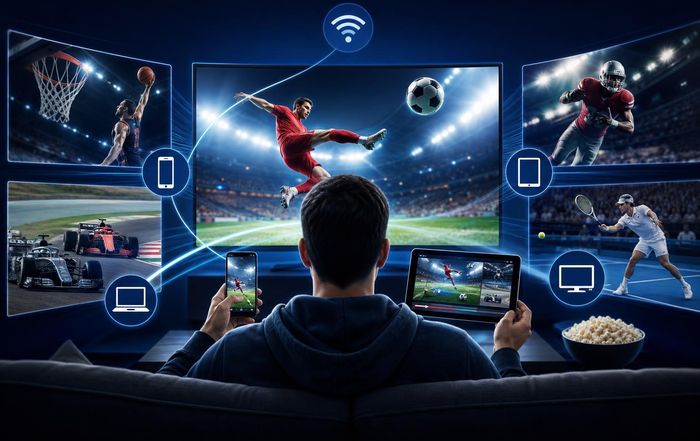
One of the clearest changes is the move from appointment viewing on a living-room TV to a fragmented, multi-device experience. Fans now mix full live games on connected TVs with second-screen stats on tablets, quick highlights on phones, and social clips on platforms like YouTube, TikTok, and Instagram.
Major leagues have leaned into this shift. The NFL's exclusive "Thursday Night Football" deal with Amazon Prime Video and its Sunday Ticket move to YouTube have pushed more fans toward streaming-native experiences, complete with alternate commentary feeds and integrated stats. Internationally, platforms such as DAZN and Viaplay (in selected markets) have normalized watching top-tier football, combat sports, and motorsport entirely over the internet rather than through traditional pay-TV bundles.
Fans, especially younger ones, now expect to be able to:
Start a match on a smart TV, continue on a phone while commuting, and catch the final minutes on a laptop.
Watch multiple games simultaneously via split-screen or picture-in-picture.
Jump instantly to key moments rather than sitting through long pre-game shows or halftime segments.
This multi-screen reality is altering attention patterns. Many fans no longer treat a game as a single, uninterrupted event; instead, they dip in and out, surf between contests, and rely on real-time notifications or social chatter to tell them when to tune back in. For time-poor viewers, that flexibility is a benefit. For leagues and broadcasters, it is a challenge to keep engagement high over the full length of a match.
For readers interested in the broader evolution of live sports coverage and how it intersects with other forms of entertainment, our sports hub and culture coverage explore these crossovers in more depth.
Cord-cutting, unbundling, and the new subscription puzzle
The streaming era was supposed to free fans from expensive cable bundles. In practice, it has replaced one bundle with many separate subscriptions. A single fan might now need a combination of a generalist service like Disney+ (for ESPN-linked content in some markets), a specialist sports streamer like DAZN, a domestic broadcaster's app, and perhaps Amazon Prime Video to see all of their favorite teams.
Research by organizations such as Nielsen and Deloitte has highlighted how cord-cutting has accelerated in North America and parts of Europe as consumers abandon traditional pay-TV. Yet the total monthly cost of stacking multiple sports apps can rival or exceed a legacy cable bill. Fans increasingly face choices like:
Paying for a full season pass to follow one league.
Taking a short-term monthly subscription for a particular tournament.
Relying on free-to-air highlights, social clips, or illegal streams when rights are fragmented.
This unbundling is teaching fans to be more tactical with their spending. Many now subscribe only during peak seasons-say, for the NBA playoffs or a specific football league-and cancel in the off-season. Some services have responded with flexible monthly passes, event-based pricing, or discounted annual bundles to reduce churn. Others experiment with free tiers supported by advertising, especially for less mainstream competitions.
From a business perspective, this trend is changing how rights are valued and packaged. The NBA, Premier League, and UEFA have all explored more granular digital rights structures, while regulators such as the European Commission and the U.S. Department of Justice continue to monitor how exclusive streaming deals affect competition and consumer access. Fans, meanwhile, are becoming more aware of the trade-offs between breadth of coverage, price, and convenience.
For those weighing the health and wellness side of increased screen time and late-night games, our health and fitness sections often touch on how to balance fandom with sleep, exercise, and mental wellbeing.
Live, near-live, or just the highlights: changing expectations of time
Another major shift is how fans think about "live." For decades, live was binary: you watched in real time, or you caught a replay later. Streaming has introduced more nuanced options, and fans are adapting their habits around them.
Time-shifted viewing-starting a game late and skipping breaks-is now common on apps from major broadcasters like BBC iPlayer, ITV, ESPN+, and Sky Sports' streaming platforms. Many fans join 30-60 minutes after kickoff, skip halftime, and catch up to live speed by the final quarter. Others rely almost entirely on near-live highlights packages, such as condensed games on NFL Game Pass or short recap shows on YouTube.
Short-form highlight consumption has exploded. Platforms like TikTok and Instagram Reels have conditioned viewers to expect instant access to key plays within minutes. Clubs and leagues push out goals, dunks, knockouts, and behind-the-scenes clips to reach global audiences who may never watch a full match. For younger fans, this highlight-first relationship can be the primary way they follow a sport.
Data from organizations such as Ofcom in the UK and Pew Research Center in the U.S. suggest that younger demographics are comfortable with this shift, seeing full matches as optional rather than essential. For older viewers, the ritual of watching live from start to finish still carries strong appeal, especially for major events like the Olympics, World Cup, or Super Bowl.
These diverging habits force rights holders to balance live coverage with robust highlight strategies. Overly strict takedowns of unofficial clips can frustrate fans and limit organic reach, while overly generous sharing can erode the perceived value of paid live access. Many leagues now strike partnerships with platforms such as YouTube, Meta, and X (formerly Twitter) to distribute official snippets while steering serious fans toward paid services.
Personalization, data, and the rise of the "custom" match feed
Streaming has also made it possible to personalize the viewing experience in ways that traditional TV never could. Advanced platforms can use data to recommend matches, tailor highlight reels, and overlay statistics based on a viewer's preferences and history.
Services like ESPN+, Paramount+, and Amazon Prime Video increasingly offer:
Personalized home screens that prioritize a viewer's favorite teams and leagues.
Alternate commentary feeds, such as analytics-heavy broadcasts or fan-driven watch-along shows.
Integrated live stats, heat maps, expected goals (xG), and betting odds.
Language customization and region-specific commentary teams.
In some markets, leagues and clubs themselves have launched direct-to-consumer platforms-such as NBA League Pass, MLB.TV, or club-run OTT apps-that go further, offering multiple camera angles, team-specific commentary, or dedicated feeds for international audiences. These features encourage fans to construct their own version of the match, focusing on particular players, tactics, or narratives.
The data behind these experiences is valuable in its own right. Leagues, broadcasters, and advertisers can see not just how many people watched, but which moments caused spikes or drop-offs in attention. This insight informs scheduling, production choices, and sponsorship strategies. It also raises questions about privacy, data ownership, and the extent to which algorithms should shape what fans see.
For readers interested in the business and technology layer behind these changes, our business and technology verticals regularly examine streaming economics, data analytics, and emerging fan-engagement tools.
Social, second-screen, and community: fandom beyond the broadcast
The streaming revolution is tightly intertwined with social media. Fans rarely watch in isolation: they chat in group messages, follow live commentary on X, react to memes on Reddit, and join fan communities on Discord or team-specific apps. For many, these parallel conversations are as important as the broadcast itself.
Broadcasters and leagues are adapting by:
Integrating live social feeds, polls, and chat into their apps.
Offering companion shows designed for second-screen viewing, such as watch-along streams hosted by influencers.
Encouraging players and coaches to share behind-the-scenes content on platforms like Instagram and TikTok to humanize the on-field action.
This social layer changes the rhythm of fandom. Instead of consuming sport once or twice a week in long blocks, fans engage in smaller, more frequent bursts throughout the day-watching a training clip, reacting to a transfer rumor, or debating a controversial call. It blurs the line between sports media, entertainment, and social interaction.
At the same time, some fans report fatigue from constant connectivity and algorithmic feeds. There is a tension between the intimacy and immediacy that social platforms offer and the risk of toxicity, misinformation, or abuse directed at athletes and fellow fans. Governing bodies like FIFA, the IOC, and national associations have begun working with platforms to address online abuse and protect players, though progress remains uneven.
Our social coverage often explores how digital communities are reshaping not just how fans watch, but how they interact with each other and with athletes.
Global access, local identities: how geography matters less-and more
Streaming has made it easier than ever for fans to follow teams and leagues far from home. A supporter in Singapore can watch La Liga, the NFL, or the NBA with relatively little friction. This global reach is central to the strategies of organizations like the NBA, Premier League, UFC, and Formula 1, all of which invest heavily in international streaming partnerships and localized content.
This global accessibility is changing fan identities. Many younger fans support a mix of local and global teams, follow individual athletes across leagues, and sample niche sports that would never have appeared on traditional local TV. The rise of women's sport on streaming-such as the NWSL, WNBA, and major women's football leagues-has also allowed new audiences to discover competitions that were historically under-served by broadcasters.
At the same time, streaming can intensify local fragmentation. Domestic rights deals may mean that fans in one country can watch a league on a free-to-air app, while those in another must pay for a premium subscription. Blackouts and geo-blocking still frustrate supporters who travel or live abroad. Regulatory approaches differ as well: some countries maintain "crown jewel" lists of events that must be available free-to-air, while others allow more extensive exclusive pay-walling.
Fans are learning to navigate VPNs, international subscriptions, and unofficial streams to bypass these barriers-raising legal and ethical questions, but also revealing a clear appetite for more consistent global access. Rights holders must weigh the short-term revenue of exclusive deals against the long-term value of building worldwide fan bases.
For broader context on how sport sits within global media and politics, our world and news sections frequently examine the international dimensions of broadcast rights and major events.
New sports, new formats, new fans
Streaming has lowered the barriers to entry for emerging sports and alternative formats. Without the constraints of linear schedules, platforms can host everything from niche endurance events to virtual competitions and creator-driven leagues.
Examples include:
Esports tournaments broadcast on Twitch and YouTube, attracting global audiences that rival traditional sports. Governing bodies such as the International Esports Federation and publishers like Riot Games and Valve use streaming as their primary distribution channel.
Short-form or franchise-style competitions-like The Hundred in cricket or new T20 leagues-designed with TV and mobile audiences in mind, emphasizing pace, clarity, and snackable highlights.
Creator-led events and crossover contests, where influencers or retired athletes compete in one-off spectacles that stream on platforms like DAZN, YouTube, or bespoke pay-per-view sites.
These formats often appeal to fans who value entertainment, personality, and interactivity as much as sporting tradition. They blur lines between sport, gaming, and social content, and they can be more agile in experimenting with camera work, on-field audio, and real-time fan participation.
Traditional governing bodies and federations-from the IOC to national associations-are watching closely, sometimes partnering with or licensing these new formats, sometimes competing with them for attention. Fans, meanwhile, gain more choice but also face a more crowded landscape where discovering and prioritizing what to watch becomes a challenge.
Our gaming coverage tracks many of these overlaps between esports, interactive entertainment, and conventional sport.
Advertising, sponsorship, and how brands chase fragmented attention
As fan habits shift, advertisers and sponsors are rethinking how to reach them. Traditional broadcast models relied heavily on 30-second TV spots and in-stadium signage. Streaming opens up more targeted, dynamic options-but also fragments audiences across platforms and devices.
Major brands now use a mix of:
In-stream ads tailored to individual viewers based on demographics and behavior, enabled by ad-tech from companies like Google, Amazon, and The Trade Desk.
Branded content segments, such as sponsored halftime shows, data visualizations, or behind-the-scenes series on YouTube and Netflix.
Social campaigns that run alongside live events, using hashtags, challenges, or interactive polls to drive engagement.
In-app integrations, including virtual perimeter boards, augmented-reality graphics, or sponsored statistics overlays.
For fans, this can mean fewer generic ads and more relevant messaging-but also a sense of being constantly marketed to, especially when betting and fantasy sports brands are involved. Regulators in markets such as the UK and parts of Europe have tightened rules around gambling advertising in sport, and discussions continue in other regions over how to protect younger viewers.
Brands and rights holders are also under growing pressure to align with social and environmental values. Organizations like the UNFCCC and initiatives such as Sports for Climate Action encourage leagues and sponsors to address sustainability and climate impact, including the carbon footprint of digital infrastructure. Our sponsorship and environment sections often examine how these pressures influence commercial deals and broadcast practices.
Accessibility, inclusion, and the risk of leaving some fans behind
While streaming has expanded access in many ways, it also risks excluding certain groups. Reliable broadband and modern devices remain unevenly distributed across and within countries. Older fans may struggle with app interfaces, account management, or frequent changes in rights holders. Those on lower incomes can find the cumulative cost of multiple subscriptions prohibitive.
Accessibility features are improving-closed captions, audio description, multiple language options-but implementation is inconsistent. Organizations such as the World Wide Web Consortium (W3C) promote standards for accessible digital design, and broadcasters increasingly recognize that inclusive platforms can reach larger, more diverse audiences. Yet not every league or app meets these benchmarks.
There is also a cultural dimension. As more sport moves behind paywalls, the shared experience of big events on free-to-air TV can diminish. In some countries, public service broadcasters like the BBC, ARD/ZDF, or ABC in Australia still play a key role in keeping certain events widely accessible. Elsewhere, the balance has tipped further toward subscription-only models.
Fans, policymakers, and rights holders will continue to debate where that balance should sit. The choices made now will shape not just who watches sport, but who feels that major competitions belong to them.
Where fan habits may be heading next
The sports streaming market is still evolving, and so are fan behaviors. Several trends are worth watching:
Further personalization, including AI-driven highlight reels and predictive alerts for "must-see" moments.
More experimentation with interactive features, from live stats overlays to real-time polls, watch-parties, and potentially low-latency two-way video with commentators or creators.
Continued growth of women's sport and emerging leagues, helped by lower distribution barriers and targeted digital marketing.
Ongoing consolidation and re-bundling, as media companies seek to offer simplified packages that reduce subscription fatigue.
Regulatory scrutiny around data use, competition, and consumer protection, especially as tech giants deepen their involvement in live sports.
For fans, the practical question is how to navigate this landscape in a way that suits their time, budget, and interests. Some will remain devoted full-match viewers, others will live mostly on highlights and social clips, and many will mix modes depending on the sport and occasion.
What is clear is that streaming has turned sports fandom into a more flexible, personalized, and globally connected experience-while also making it more complex. Understanding that trade-off is essential for leagues, broadcasters, brands, and, ultimately, for the supporters whose habits are driving the change.