

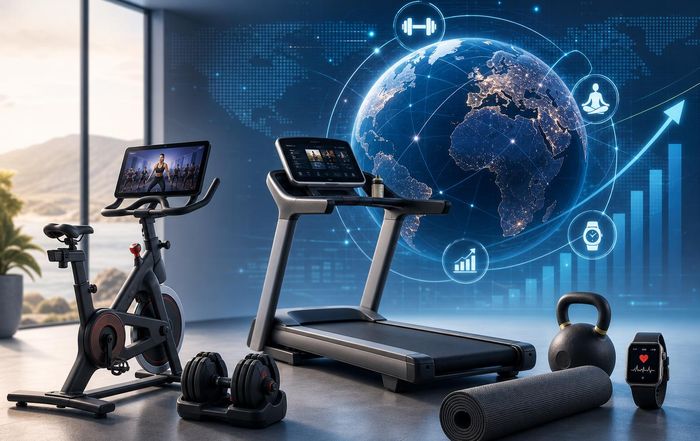
The Global Market for Home Fitness Innovation in 2026
Introduction: A New Era for At-Home Performance
By 2026, the global market for home fitness innovation has evolved from a pandemic-era necessity into a durable, strategically important sector that sits at the intersection of sports, health, technology, and consumer culture. What began as an emergency response to closed gyms and canceled leagues has matured into a sophisticated ecosystem of connected hardware, advanced software, data-driven coaching, and lifestyle brands that now compete directly with traditional fitness and sports providers. For Sportsyncr and its audience across sports, fitness, health, and business, understanding this market is no longer optional; it is central to anticipating how athletes, fans, and active consumers will train, recover, and engage with performance in the coming decade.
Home fitness innovation now touches professional athletes in the United States, recreational runners in Germany, yoga practitioners in India, esports competitors in South Korea, and aging populations in Japan and Italy, all of whom are integrating connected devices, digital coaching, and performance analytics into their daily routines. As organizations from Apple and Nike to Peloton, Adidas, and emerging regional platforms in China, Brazil, and Africa reshape the market, the lines between home, gym, and stadium are blurring. This article examines the global market for home fitness innovation through the lenses of experience, expertise, authoritativeness, and trustworthiness, with a particular focus on what this transformation means for the communities that rely on Sportsyncr for insight at the intersection of sport, culture, and business.
Market Size, Growth, and Structural Shifts
The home fitness market has transitioned from a cyclical niche to a structural pillar of the global sports and wellness economy. Industry analyses from organizations such as the World Economic Forum and McKinsey & Company have consistently highlighted the long-term shift toward hybrid and at-home wellness models, noting that consumer expectations have been permanently altered by the convergence of digital convenience and personalized performance. Learn more about broader wellness trends through the World Health Organization.
Between 2020 and 2025, connected fitness hardware, subscription content, and digital coaching platforms experienced double-digit annual growth in many regions, with especially strong adoption in North America, Western Europe, and parts of Asia-Pacific such as South Korea, Japan, and Singapore. While early pandemic surges in equipment sales normalized, recurring revenue from subscriptions, digital memberships, and performance analytics has become the core driver of value. Reports from firms such as Deloitte and PwC have underscored that the sports industry's future growth will increasingly derive from digital and direct-to-consumer models, many of which are anchored in the home environment. For a deeper view of sports business transformation, readers can explore the sports industry outlooks published by PwC.
At the same time, the market has become more segmented and sophisticated. Entry-level consumers are served by affordable smart bands, streaming workouts, and minimal-equipment training, while high-performance segments invest in advanced connected equipment, AI-enabled coaching, and integrated recovery ecosystems. This stratification is visible across United States, United Kingdom, Germany, Canada, Australia, and France, where both budget and premium offerings coexist, but it is also emerging in Brazil, South Africa, Malaysia, and Thailand, where mobile-first platforms and local content are lowering barriers to entry. For Sportsyncr, which tracks global sports and fitness trends, the key insight is that home fitness is no longer a single category; it is a layered marketplace with distinct propositions for casual users, committed enthusiasts, and elite performers.
Technology as the Engine of Home Fitness Innovation
The most visible driver of home fitness innovation is technology, particularly the integration of sensors, connectivity, and intelligent software into equipment and wearables. Smartwatches and trackers from Apple, Garmin, Samsung, Fitbit (under Google), and Huawei have evolved from step counters into multi-sensor health and performance platforms capable of monitoring heart rate variability, blood oxygen levels, sleep stages, training load, and even early signs of overtraining or illness. For readers interested in the broader role of wearables in health, the U.S. National Institutes of Health provides extensive resources on digital health research.
In the home, connected bikes, treadmills, rowers, strength systems, and compact functional trainers now incorporate cameras, force sensors, motion tracking, and real-time feedback, transforming static workouts into interactive coaching experiences. Companies such as Peloton, Technogym, NordicTrack (via iFit), and Tonal have set expectations for immersive, data-rich sessions that rival or exceed traditional gym training, while emerging platforms in China, Japan, and Europe are adapting these models to local preferences and regulatory environments. The integration of AI and machine learning enables these systems to adjust resistance, pacing, and programming dynamically based on user performance, recovery metrics, and long-term goals, creating a feedback loop that supports continuous improvement.
Beyond hardware, software ecosystems have become the true battleground. Training apps, nutrition trackers, meditation platforms, and recovery tools are increasingly interoperable, allowing users to build personalized performance stacks that span strength, endurance, mobility, mental health, and sleep. Open APIs and standards encouraged by technology alliances and health data frameworks are enabling this integration, although significant fragmentation remains. For a broader perspective on digital health interoperability and standards, readers may consult resources from HealthIT.gov and the OECD.
For Sportsyncr, which covers technology's impact on sport and fitness, the critical development is that home fitness is no longer defined by a single device or app but by a connected ecosystem in which data flows across platforms and contexts. Athletes and active consumers can now transition from home sessions to club training, outdoor activity, and workplace wellness programs without losing continuity in their performance data or coaching guidance.
Regional Dynamics: Global Convergence, Local Nuance
While the home fitness innovation story is global, regional differences in infrastructure, culture, regulation, and income levels have produced distinct market patterns. In the United States and Canada, high broadband penetration, strong e-commerce logistics, and a culture of individual fitness investment have supported robust adoption of premium connected equipment and subscription services. In the United Kingdom, Germany, France, Netherlands, Sweden, Denmark, and Norway, hybrid models that combine home training with club membership, outdoor sports, and cycling culture have proven particularly resilient, with many consumers using home workouts to complement rather than replace traditional sport.
In Asia, the picture is more varied but equally dynamic. China has seen rapid growth in mobile-first fitness platforms, social fitness communities, and compact equipment designed for urban apartments, with domestic players competing alongside global brands. Japan and South Korea have embraced high-tech, design-focused solutions and gamified experiences that align with broader digital lifestyles, while Singapore and Thailand have leveraged government-backed health campaigns and corporate wellness programs to encourage home-based activity. Readers can explore regional health and activity initiatives through organizations such as the World Bank and OECD health statistics.
In Europe, policy frameworks supporting active lifestyles, such as those promoted by the European Commission's sport and physical activity policies, are intersecting with private-sector innovation to create a supportive environment for home fitness solutions that emphasize inclusivity, sustainability, and long-term wellness. Meanwhile, in South America and Africa, including markets such as Brazil, South Africa, and Nigeria, mobile connectivity and social platforms are enabling low-cost, community-driven fitness experiences that rely more on content and coaching than on expensive hardware, highlighting the importance of adaptable, culturally relevant models.
For Sportsyncr, whose readership spans worldwide regions and cultures, these regional nuances underscore that successful home fitness innovation must balance global best practices with local realities, from language and pricing to sport preferences and living spaces.
Consumer Behavior, Experience, and the Hybrid Athlete
The most profound shift in the home fitness market is behavioral. Consumers in 2026 no longer see training at home as a compromise; they see it as a core component of a flexible, hybrid performance lifestyle that integrates home sessions, gym visits, outdoor sport, and digital communities. This hybrid athlete mindset is particularly evident among younger demographics in the United States, United Kingdom, Germany, Netherlands, and Australia, who move fluidly between digital and physical environments and expect seamless experiences, instant feedback, and social validation.
Research from organizations such as Nielsen Sports and Kantar shows that consumers now prioritize personalization, convenience, and measurable progress over brand loyalty to any single gym or equipment provider. They are willing to mix and match platforms, coaches, and devices to achieve specific goals, whether that is marathon preparation, strength building, mobility, or mental resilience. This shift places a premium on user experience design, intuitive interfaces, and clear value communication, all areas where leading digital-native brands have an advantage. For a broader understanding of changing consumer expectations in digital services, readers can review insights from McKinsey on consumer behavior.
The experience dimension also extends beyond training to encompass recovery, nutrition, and mental well-being. Sleep tracking, mindfulness sessions, breathwork, and stress management are now embedded in many home fitness platforms, reflecting evidence from institutions such as the Mayo Clinic and Harvard T.H. Chan School of Public Health on the interconnectedness of physical and mental health. This holistic approach aligns closely with Sportsyncr's coverage of health and performance, emphasizing that home fitness innovation is as much about sustainable habits and long-term resilience as it is about immediate gains.
Brands, Culture, and the New Fitness Identity
Brands operating in the home fitness space are no longer just selling equipment or subscriptions; they are curating identities, communities, and cultural narratives. Companies such as Nike, Adidas, Lululemon, Under Armour, and Decathlon have expanded their digital ecosystems to include training apps, virtual events, and integrated wearables, blurring the boundaries between apparel, hardware, and content. Meanwhile, tech giants like Apple, Google, and Amazon are embedding fitness deeply into their broader consumer ecosystems, linking workouts with music, entertainment, smart home devices, and health records.
This convergence has given rise to powerful brand communities that exist primarily online but manifest in physical behaviors, from coordinated virtual races and global challenges to shared recovery protocols and nutrition strategies. The cultural dimension is particularly visible on platforms like YouTube, Instagram, and TikTok, where trainers, athletes, and micro-influencers from United States, UK, Spain, Italy, Brazil, and South Korea create localized content that resonates with specific subcultures, body types, and performance goals. For insights into how digital culture shapes physical activity, readers may explore analyses from the Pew Research Center.
For Sportsyncr, which explores sport, culture, and social dynamics, the key implication is that home fitness innovation is as much a cultural phenomenon as a technological one. The way consumers in Germany adopt connected cycling, or in Japan embrace gamified wellness, reflects deeper social values around work-life balance, community, and self-expression. Brands that understand and authentically engage with these cultural nuances build trust and long-term loyalty, while those that impose one-size-fits-all narratives risk rapid churn in an increasingly competitive market.
Business Models, Monetization, and Sponsorship
From a business perspective, home fitness innovation has catalyzed a shift toward recurring revenue, data-driven personalization, and multi-layered monetization strategies. Subscription models, freemium tiers, premium coaching, and content bundles have become standard, with companies seeking to balance accessibility with sustainable unit economics. Leading players analyze engagement, retention, and lifetime value at granular levels, using this data to refine product roadmaps, pricing strategies, and partnership structures.
Corporate wellness and B2B offerings have also grown in importance. Employers in North America, Europe, and Asia-Pacific increasingly subsidize or integrate home fitness platforms into benefits packages, recognizing the link between physical activity, mental health, productivity, and healthcare costs. Insurers and healthcare providers are experimenting with incentives tied to verified activity data, a trend supported by research from organizations such as the World Health Organization and OECD. These models raise complex questions about data privacy, equity, and long-term efficacy but also create new revenue streams and distribution channels for home fitness innovators.
Sponsorship and brand partnerships are evolving as well. Traditional sports sponsors are increasingly interested in digital fitness platforms that provide rich data, targeted reach, and year-round engagement, rather than exposure limited to live events. For example, collaborations between sportswear brands, nutrition companies, and connected fitness platforms allow sponsors to integrate products into training programs, challenges, and recovery protocols, creating value beyond logo placement. For readers following the commercial side of sport, Sportsyncr's coverage of brands and sponsorship and sponsorship strategy highlights how these partnerships are reshaping the economics of performance.
In parallel, emerging markets in Africa, South America, and parts of Asia are fostering innovative business models tailored to local realities, such as low-cost subscription tiers, mobile payment integration, and community-based coaching networks. These models demonstrate that profitability and impact can coexist when companies design with local constraints and opportunities in mind.
Health, Safety, and Trust in a Data-Rich Environment
As home fitness innovation deepens its integration into daily life, questions of safety, efficacy, and trust become central. Consumers are increasingly aware that while data and AI-driven recommendations can enhance performance, they can also mislead or overwhelm if not grounded in robust science and transparent communication. Regulatory bodies in the United States, European Union, and Asia-Pacific have begun to scrutinize claims made by fitness and wellness apps, particularly when they border on medical advice, and to establish clearer frameworks for health data protection. For an overview of health data regulation, readers may consult resources from the European Data Protection Board and the U.S. Department of Health & Human Services.
Trustworthiness in this context hinges on several factors: the quality and validation of algorithms, the credentials and oversight of human coaches and experts, the transparency of data usage, and the responsiveness of companies to user feedback and emerging evidence. Reputable organizations increasingly collaborate with universities, sports science institutes, and medical centers to validate training protocols and recovery recommendations, aligning with research from institutions such as Stanford Medicine and Cleveland Clinic.
For Sportsyncr, which emphasizes evidence-based coverage across science and performance, the message to its audience is clear: home fitness innovation delivers the greatest value when it is grounded in credible expertise, clear communication of limitations, and ethical stewardship of user data. As more consumers in Finland, Switzerland, Singapore, New Zealand, and other highly connected societies entrust their health metrics to digital platforms, the reputational stakes for companies have never been higher.
Sustainability, Environment, and the Future of Home Fitness
The environmental dimension of home fitness innovation is becoming more visible as consumers and regulators scrutinize the lifecycle impacts of connected devices, from raw materials and manufacturing to energy use and end-of-life disposal. While home workouts can reduce emissions associated with commuting to gyms or events, the proliferation of electronic equipment, batteries, and packaging introduces new sustainability challenges. Organizations such as the United Nations Environment Programme and Ellen MacArthur Foundation highlight the importance of circular design, repairability, and responsible recycling in consumer electronics, all of which are increasingly relevant to fitness hardware.
Forward-looking companies are beginning to integrate sustainability into product design and messaging, emphasizing energy efficiency, modular components, and trade-in or refurbishment programs. Gym chains and corporate wellness providers are exploring hybrid models that optimize space and resource use by combining on-site training with home-based digital sessions, reducing the need for large, energy-intensive facilities. For readers interested in how sport and fitness intersect with sustainability, Sportsyncr's coverage of the environmental dimension of sport examines initiatives that align performance with planetary health.
Over the next decade, sustainability is likely to become a differentiator in the home fitness market, particularly in environmentally conscious regions such as Scandinavia, Germany, Netherlands, Canada, and New Zealand, where consumers increasingly expect brands to demonstrate responsible practices across their value chains.
Looking Ahead: Strategic Implications for Stakeholders
As the global market for home fitness innovation enters its next phase, several strategic themes emerge for stakeholders across sport, business, and technology. For equipment manufacturers and digital platforms, the priority will be to deepen integration, refine personalization, and expand into adjacent domains such as mental health, recovery, and nutrition, while maintaining scientific rigor and data integrity. For sports organizations, leagues, and clubs, home fitness platforms represent both a competitive threat and a powerful channel for fan engagement, talent development, and community building, particularly among younger and geographically dispersed audiences.
For employers and policymakers in United States, Europe, Asia, and beyond, home fitness innovation offers a tool to address public health challenges related to inactivity, obesity, and mental stress, but only if programs are inclusive, evidence-based, and supported by infrastructure that ensures equitable access. Public-private partnerships, informed by research from bodies such as the World Health Organization and World Bank, will be essential to maximize impact.
For Sportsyncr and its global readership across sports, fitness, health, business, culture, and technology, the evolution of home fitness innovation is not a peripheral story but a central narrative about how performance, identity, and community are being redefined in a connected world. Whether the reader is a professional athlete in United States, a fitness entrepreneur in United Kingdom, a health policymaker in Singapore, or a brand strategist in Germany, the home has become a strategic arena for shaping how people move, compete, recover, and live.
The coming years will test which organizations can combine technological sophistication with authentic expertise, cultural sensitivity, and ethical responsibility. Those that succeed will not simply sell equipment or subscriptions; they will help build a more active, resilient, and connected global society, one training session at a time.