

The Future of Sports Medicine and Personalized Care
Introduction: A New Era for Athletic Performance and Health
By 2026, sports medicine has moved decisively beyond the treatment room and into a fully integrated ecosystem that connects athletes, clinicians, data scientists, brands, and fans in real time. What was once a reactive field focused on diagnosing injuries after they occurred is rapidly evolving into a predictive and highly personalized discipline that seeks to prevent injury, optimize performance, and extend athletic careers across all levels of sport, from grassroots participation to elite professional competition. On Sportsyncr, this transformation is not viewed as a distant scientific abstraction but as a practical, daily reality shaping how athletes train, recover, and live, and how organizations build sustainable, high-performance cultures.
As global interest in performance, longevity, and wellness grows across markets such as the United States, United Kingdom, Germany, Canada, Australia, and emerging hubs in Asia and Africa, the convergence of sports, health, technology, and business is redefining expectations around care. Fans and participants who once accepted injuries as inevitable now expect medical teams to leverage advanced analytics, genomics, and wearable technology to anticipate problems before they derail seasons or careers. This shift is anchored in four pillars that underpin modern credibility in sports medicine: deep experience, specialized expertise, demonstrable authoritativeness, and uncompromising trustworthiness. These same principles guide the editorial and analytical approach of Sportsyncr, where coverage of sports performance trends and health innovation is grounded in evidence and real-world practice rather than hype.
From Reactive Treatment to Predictive, Personalized Care
The most profound change in sports medicine is the migration from a reactive model, in which clinicians respond to injuries as they arise, to a predictive and preventive model built around continuous data monitoring and individualized risk profiling. Over the past decade, organizations like FIFA, World Athletics, and major North American leagues have invested heavily in longitudinal injury surveillance and biomechanical research, generating large datasets that, when combined with advances in machine learning and bioinformatics, enable practitioners to identify subtle precursors to injury long before an athlete feels pain.
Athletes at professional clubs in Europe and North America now routinely undergo comprehensive musculoskeletal screening, motion capture analysis, and force plate testing, with their data cross-referenced against benchmarks from sources such as the American College of Sports Medicine and the National Institutes of Health. Readers can explore how these practices intersect with broader fitness and training methodologies that are increasingly data-centric. Instead of prescribing standardized training loads, sports medicine teams collaborate with performance coaches to tailor microcycles and recovery protocols to an athlete's unique physiology, injury history, and positional demands, a practice that is steadily filtering down to collegiate, academy, and even amateur environments in markets like the United States, United Kingdom, and Australia.
The predictive model is also being accelerated by large-scale initiatives such as the NIH All of Us Research Program, which aims to build diverse health databases that can inform personalized medicine, including in sports contexts. As more athletes consent to share anonymized performance and health data, predictive algorithms become more accurate, enabling medical teams to flag elevated injury risk weeks in advance and adjust workloads accordingly. This approach is particularly critical for athletes in high-intensity schedules, such as footballers competing in congested European calendars or NBA players navigating extensive travel across North America.
The Rise of Genomics and Precision Sports Medicine
Genomics has moved from theoretical promise to practical tool in elite sports medicine, and its influence is expanding quickly into broader athletic populations. Precision sports medicine focuses on tailoring interventions based not only on observable performance metrics but also on an athlete's genetic profile, metabolic characteristics, and molecular markers. Organizations such as 23andMe and Illumina have helped normalize genetic testing in consumer health, while leading research institutions like Harvard Medical School and Stanford Medicine have published work on genetic markers associated with tendon vulnerability, bone density, and cardiovascular risk, all of which have direct implications for sports.
In 2026, many professional clubs in Europe and North America commission targeted genetic panels, conducted under strict ethical and privacy frameworks, to understand how individual athletes metabolize nutrients, respond to different training stimuli, and recover from exertion. Those insights allow sports medicine teams to collaborate with nutritionists and strength coaches on hyper-personalized plans that can reduce soft tissue injuries and improve adaptation to training loads. Interested readers can learn more about health and performance intersections, where these topics are increasingly central to modern athletic preparation.
Precision sports medicine also includes the growing field of pharmacogenomics, which examines how an athlete's genetic profile affects their response to medications, from anti-inflammatories to post-surgical pain management. This has particular relevance for athlete safety, as it reduces the risk of adverse drug reactions and supports more effective rehabilitation. Regulatory bodies such as the World Anti-Doping Agency (WADA) and the International Olympic Committee (IOC) are closely monitoring how these technologies intersect with fair play, ensuring that genetic insights enhance safety and recovery without crossing into unethical performance enhancement.
Wearable Technology, Data Analytics, and Continuous Monitoring
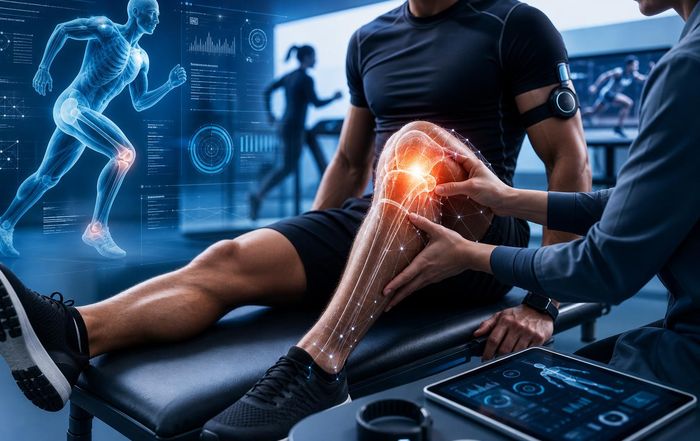
The proliferation of wearable technology has fundamentally changed the information landscape in sports medicine. Devices produced by companies such as Garmin, Apple, Whoop, and Polar now capture heart rate variability, sleep quality, training load, and even indicators of mental stress, providing a continuous, high-resolution view of an athlete's physiological state. In elite environments, this data is supplemented by GPS tracking systems from firms like Catapult Sports and STATSports, which quantify distance covered, sprint counts, and acceleration patterns during training and competition.
What distinguishes 2026 from earlier stages of the wearable revolution is not merely the volume of data but the sophistication of its interpretation. Sports organizations are increasingly hiring data scientists and AI specialists to build bespoke analytics platforms that integrate wearable data with medical records, training logs, and match footage. These integrated systems enable sports medicine teams to identify early signs of overtraining, monitor cardiac health, and adjust rehabilitation protocols dynamically based on real-time responses. Readers can explore how technology is reshaping sport, where these developments are tracked across leagues and regions.
In parallel, consumer-grade wearables have democratized access to performance insights for recreational athletes in markets from the United States and Canada to Germany, Japan, and Brazil. This has created new expectations around transparency and personalization, as everyday runners, cyclists, and gym-goers expect similar levels of data-driven insight that professionals receive. Platforms such as Strava and TrainingPeaks have become central hubs where athletes share training data, compare metrics, and engage with coaches, while healthcare providers increasingly view these data streams as valuable adjuncts to clinical assessments, particularly in cardiovascular screening and rehabilitation.
Integrating Mental Health and Cognitive Performance
The future of sports medicine cannot be understood solely through the lens of muscles, tendons, and joints. Mental health and cognitive performance have become central pillars of comprehensive athlete care, driven by greater openness among high-profile athletes and growing evidence that psychological well-being is inseparable from physical performance. Organizations such as Mind, the mental health charity, The American Psychological Association, and leading sports bodies have pushed for integrated mental health services within clubs, national teams, and collegiate programs.
Sports medicine departments now routinely include sport psychologists, clinical psychologists, and mental skills coaches who collaborate with physicians, physiotherapists, and performance analysts. This integrated approach recognizes that factors such as anxiety, burnout, sleep disruption, and off-field stress can increase injury risk, slow recovery, and diminish performance. On Sportsyncr, coverage of sports culture and social dynamics frequently highlights how mental health narratives are reshaping locker room norms and leadership expectations across leagues in Europe, North America, and Asia.
Technological tools are also entering the mental performance space. Cognitive training platforms, virtual reality systems for decision-making rehearsal, and biofeedback devices that help athletes regulate stress responses are increasingly common in high-performance environments. Organizations such as Cognisens, NeuroTracker, and academic centers like UCL's Institute of Cognitive Neuroscience have contributed to a growing evidence base on how cognitive load and visual processing affect performance in sports ranging from football and rugby to esports. As gaming and traditional sports converge, readers can explore the intersection of performance and gaming, where cognitive training is becoming a shared area of innovation.
Regenerative Medicine, Biologics, and Longevity
Regenerative medicine and biologic therapies are among the most closely watched frontiers in sports medicine, particularly for their potential to extend careers and accelerate recovery from injuries that once ended or significantly curtailed elite performance. Techniques such as platelet-rich plasma (PRP) injections, stem cell therapies, and novel scaffolding materials for cartilage repair have moved from experimental concepts to semi-routine options in elite settings, although evidence quality and regulatory frameworks continue to evolve.
Institutions such as the Mayo Clinic, Cleveland Clinic, and Charité - Universitätsmedizin Berlin are at the forefront of researching and refining these interventions, focusing on conditions like osteoarthritis, tendon degeneration, and complex ligament injuries. Their findings influence protocols adopted by top clubs and national teams in football, basketball, rugby, and athletics across Europe, North America, and Asia. As regenerative options mature, they are increasingly integrated into multi-modal rehabilitation programs that combine surgical repair, targeted physiotherapy, neuromuscular re-education, and psychological support.
The pursuit of longevity in sport is not limited to elite professionals. Recreational athletes in markets such as the United States, United Kingdom, Germany, and Japan are more active later in life than previous generations, and they are seeking interventions that allow them to continue running, cycling, or playing tennis into their sixties and seventies. This trend has significant implications for healthcare systems and insurance models, which must adapt to a population that is both more active and more demanding of advanced care. Readers interested in the broader implications of these trends on global health and wellness can track how policy, access, and equity are evolving alongside scientific advances.
The Business of Sports Medicine: Brands, Investment, and Ecosystems
Sports medicine has become a significant business sector in its own right, sitting at the intersection of healthcare, technology, performance apparel, and consumer wellness. Global brands such as Nike, Adidas, Under Armour, and Puma are no longer just designing shoes and apparel; they are investing in research partnerships with medical institutions and technology companies to develop products that reduce injury risk, improve biomechanics, and integrate seamlessly with digital platforms. Learn more about how brands are reshaping performance ecosystems through sports and lifestyle partnerships, where these collaborations are analyzed in detail.
Venture capital and private equity firms in the United States, Europe, and Asia are actively backing startups in areas such as injury analytics, AI-driven rehabilitation, telemedicine platforms, and advanced imaging. Companies offering remote musculoskeletal assessments, digital physiotherapy, and AI-supported triage are particularly attractive, given the scalability of their business models across global markets. This influx of capital has accelerated innovation but also heightened the need for rigorous validation and regulatory oversight to ensure that commercial pressures do not outpace clinical evidence.
Sports organizations themselves are increasingly viewing sports medicine capabilities as strategic assets rather than cost centers. Clubs in the English Premier League, the Bundesliga, La Liga, the NFL, the NBA, and emerging leagues in Asia and the Middle East are investing in in-house innovation labs, partnering with universities, and building cross-functional performance departments that integrate medical, analytics, and coaching expertise. Readers can explore the business implications of these trends, where Sportsyncr examines how performance health is becoming a core differentiator in competitive strategy.
Digital Health, Telemedicine, and Global Access
The expansion of digital health and telemedicine has transformed how sports medicine is delivered, particularly across vast geographies and resource-constrained environments. The COVID-19 pandemic accelerated adoption of remote consultations and digital rehabilitation tools, and by 2026, these approaches have become standard components of care pathways for athletes at all levels. Platforms that enable secure video consultations, remote monitoring of rehabilitation exercises, and digital adherence tracking are now integrated into club systems and national sporting bodies' medical frameworks.
In regions such as Africa, South America, and parts of Asia, where access to specialist sports medicine expertise has historically been limited, telemedicine is enabling athletes and teams to connect with leading clinicians in Europe and North America. Organizations like the World Health Organization, Doctors Without Borders (Médecins Sans Frontières), and regional sports medicine societies are working to ensure that digital care models are adapted to local contexts, including bandwidth constraints, language diversity, and cultural norms. Readers can follow how global sports news and health policy intersect, as federations and governments negotiate standards for digital health in sport.
Digital platforms also allow for more standardized education and upskilling of coaches, trainers, and medical staff across emerging markets. Online courses from institutions such as MIT OpenCourseWare, Coursera, and edX offer modules on biomechanics, injury prevention, and data analytics, democratizing access to knowledge that was once confined to elite centers. This educational diffusion supports the development of local expertise and reduces dependency on a small number of global hubs, contributing to a more equitable global sports ecosystem.
Ethical, Legal, and Social Considerations
As sports medicine becomes more data-driven and technologically sophisticated, ethical and legal considerations around privacy, consent, equity, and fair play are becoming more complex. The aggregation of biometric, genetic, and performance data raises serious questions about who owns this information, how it can be used, and what protections athletes have against misuse. Regulatory frameworks such as the European Union's General Data Protection Regulation (GDPR) and evolving data protection laws in the United States, Canada, and Asia provide some guardrails, but the unique context of sport, where employment, public visibility, and competitive pressures intersect, requires more tailored solutions.
Sports organizations and medical teams must navigate delicate questions around informed consent, particularly when dealing with younger athletes in academies and collegiate systems. They must also ensure that data-driven insights are not used to discriminate against athletes based on perceived injury risk or genetic predispositions, an issue that has drawn the attention of bodies like the UNESCO International Bioethics Committee and national human rights commissions. Readers can explore how these ethical debates intersect with social dynamics and athlete activism, where issues of power, equity, and representation are increasingly central.
There is also a growing concern that the benefits of advanced sports medicine technologies could be unevenly distributed, favoring wealthy clubs, federations, and countries. Without deliberate efforts to share knowledge and build capacity in under-resourced environments, the performance gap between rich and poor systems could widen, undermining the ideals of fair competition. International federations, NGOs, and academic partnerships will play a critical role in mitigating these disparities, ensuring that innovations in injury prevention, rehabilitation, and mental health support are accessible across continents, from North America and Europe to Africa, Asia, and South America.
The Role of Sportsyncr in a Connected Performance Landscape
As sports medicine and personalized care evolve, Sportsyncr positions itself as a trusted, cross-disciplinary platform that connects athletes, practitioners, brands, and fans with rigorous analysis and contextualized insight. The site's coverage of sports performance and competition, health and wellness, fitness innovation, technology and data, and business strategy reflects a recognition that modern sports medicine does not exist in isolation but sits at the center of a broader ecosystem that includes culture, media, sponsorship, and global policy.
By curating expert perspectives, tracking emerging research, and examining how innovations play out in real-world environments, Sportsyncr aims to support more informed decision-making among athletes, coaches, medical professionals, executives, and policymakers. Whether analyzing how a Premier League club uses AI to reduce hamstring injuries, how a Canadian startup is deploying tele-rehabilitation across rural communities, or how an Australian federation is integrating mental health screening into youth academies, the platform emphasizes evidence, transparency, and long-term impact.
In an environment where commercial interests, technological enthusiasm, and competitive pressures can sometimes overshadow careful evaluation, the commitment to experience, expertise, authoritativeness, and trustworthiness becomes more than a slogan; it is a necessary foundation for navigating the future of sports medicine. By 2026 and beyond, those who succeed in this space will be the organizations and individuals who combine scientific rigor with ethical clarity, global awareness with local sensitivity, and innovation with a deep respect for the athletes whose bodies and lives are at the center of the story.
Looking Ahead: A Holistic Vision of Athlete Care
The future of sports medicine and personalized care is not defined by any single technology or breakthrough but by the integration of multiple domains into a coherent, athlete-centered model. Genomics, wearables, regenerative medicine, digital health, and mental performance tools will continue to advance, but their real value will lie in how effectively they are woven into everyday practice in ways that respect athlete autonomy, protect privacy, and promote long-term health.
In this emerging landscape, sports medicine will serve not only elite professionals in the United States, United Kingdom, Germany, Canada, Australia, France, Italy, Spain, the Netherlands, Switzerland, China, South Korea, Japan, and beyond, but also the millions of recreational participants who see sport and fitness as essential to their identity and well-being. As a global hub for insights at the intersection of sport, health, technology, and business, Sportsyncr will continue to follow and interpret these developments, offering a clear window into how personalized care is reshaping performance, careers, and lives across the world of sport.