

The Future of Sports Broadcasting Beyond Television
A New Era for Global Sports Audiences
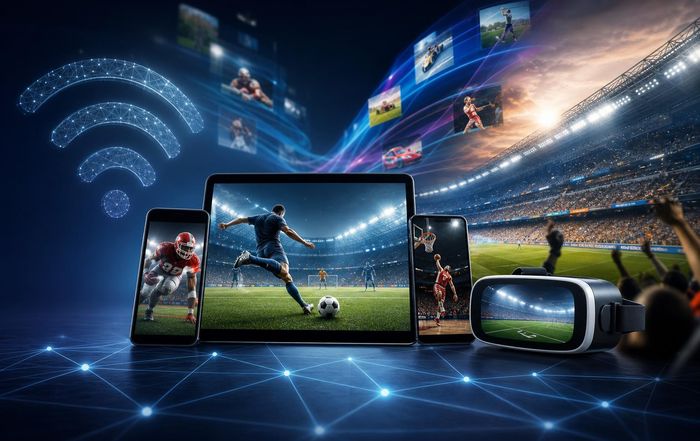
By 2026, the future of sports broadcasting has clearly moved beyond the confines of traditional television, reshaping how fans in the United States, Europe, Asia, Africa and across the world discover, consume and interact with live events, on-demand highlights and the broader culture of sport. What was once a largely linear, cable-dominated ecosystem has evolved into a complex, data-driven and highly personalized environment, in which streaming platforms, social media networks, gaming ecosystems and direct-to-consumer services compete and collaborate to capture attention, time and loyalty. For Sportsyncr and its audience, this transformation is not just a technological story; it is a business, cultural and social shift that touches everything from fan health and fitness habits to the careers of athletes, creators and media professionals.
As rights cycles reset and new markets open, global governing bodies and leagues such as FIFA, the International Olympic Committee (IOC) and World Rugby are experimenting with hybrid distribution models that combine traditional broadcast reach with digital depth, while leading domestic competitions such as the NFL, Premier League, NBA, Bundesliga and IPL are leveraging their immense brand power to negotiate deals that integrate streaming, social content and immersive technologies. In this environment, sports broadcasting is becoming less about "where" fans watch and more about "how" they experience, interact with and even influence the live product, a trend that aligns closely with the editorial focus at Sportsyncr Sports on the intersection of performance, technology and fan engagement.
From Linear Broadcasts to Streaming Ecosystems
The most visible shift beyond television has been the rise of global sports streaming services and the entry of technology giants into sports rights. Platforms such as Amazon Prime Video, Apple TV+, YouTube, DAZN and ESPN+ have become central pillars of the sports media landscape, building on the broadband and mobile infrastructure that organizations like the International Telecommunication Union track as a foundation for digital transformation. In many key markets, including the United States, United Kingdom, Germany and Canada, premium matches and events are increasingly found behind streaming paywalls, with linear television retaining marquee fixtures but losing exclusivity over time.
This transition has not been uniform, with regulatory frameworks and consumer behavior varying sharply between, for example, the United Kingdom's protected events regime, which can be explored through resources from Ofcom, and the more market-driven environment in the United States, where the Federal Communications Commission provides a different backdrop for distribution strategies. Yet, across regions, the pattern is clear: streaming is no longer an add-on but the primary growth engine, enabling leagues to reach younger demographics, test new pricing models and collect direct consumer data that was previously mediated by broadcasters. For readers following the business implications, Sportsyncr Business has increasingly chronicled how this data-centric approach is reshaping sponsorship, ticketing and merchandise strategies.
Personalization, Data and the New Fan Experience
Beyond simple migration from cable to apps, the future of sports broadcasting is defined by personalization, underpinned by data analytics and machine learning. Technology companies and rights holders are deploying recommendation engines similar to those used by Netflix, combined with advanced audience measurement tools from organizations such as Nielsen, to deliver tailored highlight reels, multi-angle viewing options and context-aware notifications that align with individual interests and time zones. Fans in Singapore, Sweden or Brazil may receive different match alerts, language options and commercial offers, all orchestrated in real time.
This personalization extends to fitness and health-related content, as broadcasters and leagues recognize that many fans are also active participants seeking training insights and performance analytics. Integrations with wearables and platforms tracked by entities like the World Health Organization, which emphasizes physical activity as a public health priority, allow broadcasts to feature live biometric overlays, comparative performance benchmarks and interactive training sessions. On Sportsyncr Health and Sportsyncr Fitness, this convergence of elite sports data with consumer wellness tools is becoming a recurring theme, reflecting a future in which the broadcast is not merely watched but also used as a guide for personal improvement.
Social Platforms and Creator-Driven Sports Coverage
As traditional broadcasters and streaming services compete for rights, social media platforms have become indispensable gateways to sports content and conversation. YouTube, TikTok, Instagram, X (formerly Twitter) and Snapchat now host short-form highlights, behind-the-scenes footage and creator-led analysis that often reach more people than official full-match broadcasts, especially among younger demographics in markets such as South Korea, Japan and the Netherlands. The Pew Research Center and Ofcom have documented the growing role of these platforms as primary news and entertainment sources for younger audiences, and sports content is at the heart of this shift.
In this environment, sports creators, independent analysts and athlete-influencers have emerged as powerful media brands in their own right, sometimes rivaling traditional commentators in reach and influence. They provide localized perspectives for fans in Italy, Spain or South Africa, offer tactical breakdowns, lifestyle content and even social advocacy, blurring the line between journalism, entertainment and activism. For Sportsyncr, whose Culture section examines how sports intersects with identity, music, fashion and social movements, this creator-driven layer of sports broadcasting is a critical lens through which to understand the future, as it reflects not only what is happening on the field but also how fans interpret and share it.
The Rise of Direct-to-Consumer League and Club Platforms
A defining feature of the post-television era is the willingness of major leagues, clubs and federations to launch their own direct-to-consumer platforms, bypassing or complementing traditional broadcasters. Services such as NBA League Pass, NFL Game Pass, LaLiga+ and F1 TV provide global access to live and archived content, often bundled with exclusive documentaries, data feeds and interactive features. These platforms, often built in partnership with technology vendors like Microsoft, AWS or Google Cloud, enable rights holders to own the customer relationship, gather granular behavioral data and experiment with tiered pricing, micro-subscriptions and regional packages.
In Europe and Asia, where fans may follow clubs across multiple leagues and countries, this direct approach allows for tailored offerings that reflect local preferences, time zones and language needs. At the same time, it raises questions about market fragmentation, affordability and accessibility, particularly when combined with geo-blocking and complex blackout rules. Policy discussions at organizations such as the European Commission and national competition authorities will increasingly shape how far direct-to-consumer strategies can go before they are seen as anti-competitive. For readers interested in the broader regulatory and geopolitical context, Sportsyncr World frequently highlights how these policy debates affect global fans and rights holders.
Immersive Technologies: VR, AR and Mixed Reality Stadiums
Beyond screens and apps, immersive technologies are redefining what it means to "attend" a sports event. Virtual reality and augmented reality experiences, accelerated by investments from companies such as Meta, Sony and Apple, now offer virtual courtside seats, multi-angle replays and interactive data layers that can be explored during live matches. Early pilots with the NBA, UFC and European football clubs have shown that fans in Australia, New Zealand or Malaysia can experience a level of presence and interactivity that rivals or even surpasses traditional television viewing, especially when combined with spatial audio and haptic feedback.
These developments are closely watched by organizations like the IEEE and academic institutions such as MIT Media Lab, which explore human-computer interaction and the ergonomics of prolonged immersive experiences. For Sportsyncr Technology, this is a critical frontier, as it raises both opportunities and challenges: new revenue streams through virtual tickets and sponsorship activations, but also questions about motion sickness, accessibility for people with disabilities and the environmental footprint of the hardware supply chain. Learn more about sustainable business practices through research from the World Economic Forum, which has increasingly focused on the environmental and social governance implications of digital infrastructure expansion.
Data, Betting and the Ethics of Real-Time Information
Another central pillar of the future of sports broadcasting lies in the monetization and governance of real-time data. Official data providers such as Sportradar and Genius Sports have built extensive partnerships with leagues and bookmakers, turning every pass, shot and sprint into a potential betting market. As regulated sports betting expands in North America, parts of Europe, Africa and Latin America, live broadcasts increasingly integrate odds, betting prompts and predictive graphics, creating a more interactive but also more ethically complex experience.
Regulators such as the UK Gambling Commission and state-level authorities in the United States have begun to scrutinize how betting-related content is presented, particularly to younger audiences and vulnerable groups. Public health bodies and research organizations, including the National Institutes of Health, have raised concerns about the normalization of gambling within mainstream sports coverage and the potential for addiction. For Sportsyncr Social, which examines the societal impacts of sports, the challenge is to balance the commercial opportunities of data-driven betting integrations with the need for responsible messaging, transparent odds and robust safeguards that protect fans across age groups and income levels.
Health, Performance and the Athlete as Media Platform
The future of sports broadcasting beyond television is also transforming how athletes themselves are represented and how they communicate. With direct access to fans via platforms like Instagram, TikTok and personal subscription channels, elite performers increasingly act as media companies, sharing training routines, recovery protocols and mental health journeys that once remained private. This trend aligns with the growing emphasis on athlete welfare and performance science, championed by organizations such as the International Olympic Committee, which publishes consensus statements on topics like mental health in elite athletes, and the World Anti-Doping Agency, which maintains global standards for clean sport.
For fans in markets as diverse as Norway, Thailand, South Africa and Canada, this athlete-driven content offers unprecedented transparency into the realities of professional sport, from injury rehabilitation to travel fatigue and nutrition. On Sportsyncr Health, these stories are increasingly framed not only as inspirational narratives but also as practical insights into sleep, stress management and balanced training, bridging the gap between elite performance and everyday wellbeing. As athletes build their own brands and media channels, rights holders and broadcasters must navigate complex questions about content ownership, image rights and sponsorship conflicts, issues that are becoming central to contract negotiations and collective bargaining agreements.
Globalization, Localization and Cultural Relevance
Sports broadcasting beyond television is fundamentally global, yet its success depends on deep localization. Streaming platforms and rights holders understand that fans in Japan, France or Brazil bring distinct cultural expectations, language preferences and viewing habits, shaped by local sports traditions and media norms. Accordingly, they invest in localized commentary teams, region-specific studio shows and culturally resonant storytelling that connects global competitions to national identities and community narratives. Public service broadcasters such as BBC Sport, ARD/ZDF, France Télévisions and ABC Australia continue to play an important role in this ecosystem, especially for major events such as the Olympics and World Cups, where free-to-air access is often considered a matter of cultural cohesion and public interest.
At the same time, digital distribution enables niche sports and emerging leagues to find audiences far beyond their home markets, from women's football in Europe and North America to esports tournaments in South Korea and China. For Sportsyncr Gaming, this convergence of traditional sports and competitive gaming is particularly relevant, as platforms like Twitch and YouTube Gaming have pioneered interactive broadcast formats-live chat, co-streaming, creator watch parties-that are now being adopted by mainstream sports coverage. Learn more about the growth of esports and digital competition through reports from organizations such as Newzoo, which tracks global gaming and esports trends.
Sponsorship, Brands and the New Measurement Paradigm
As the medium of sports broadcasting changes, so too does the business model that underpins it, particularly in the realm of sponsorship and advertising. Brands in sectors ranging from financial services and automotive to health, fitness and technology are recalibrating their investments, shifting from broad-reach television campaigns to targeted, data-rich activations across streaming, social and in-stadium channels. Organizations such as the International Advertising Bureau (IAB) and WARC have documented this shift toward performance-based metrics, attention measurement and attribution modeling, all of which are increasingly central to sports marketing decisions.
For Sportsyncr Brands, this evolution is central to understanding how sponsors evaluate partnerships with leagues, teams and athletes in 2026. Instead of simply counting gross rating points or average minute audiences, marketers now look at engagement depth, cross-platform reach, sentiment analysis and conversion metrics that span ecommerce, app downloads and subscription sign-ups. Learn more about best practices in sports marketing and sponsorship effectiveness through resources from the Association of National Advertisers (ANA), which frequently highlights case studies in sports and entertainment. As measurement becomes more sophisticated, trust and transparency in reporting are paramount, with third-party verification and standardized methodologies playing a growing role in maintaining credibility for all stakeholders.
Jobs, Skills and the Evolving Sports Media Workforce
The shift beyond television has profound implications for employment and skills in the sports media industry, affecting production crews, journalists, technologists and commercial teams. Traditional roles such as linear broadcast scheduling and satellite operations are giving way to cloud-based production, remote commentary, data engineering and product management for streaming platforms. Universities and training institutions, many of which collaborate with bodies like UNESCO on digital skills development, are updating curricula to reflect the need for expertise in analytics, user experience design, cybersecurity and AI-driven content workflows.
For professionals and aspiring entrants in the United States, United Kingdom, India, South Africa or Brazil, this transformation presents both challenges and opportunities. Legacy broadcasters are restructuring, while new digital-first players are hiring talent with hybrid skill sets that combine editorial judgment, technical literacy and commercial acumen. On Sportsyncr Jobs, the emerging profiles of sports data scientists, virtual production specialists, rights and licensing strategists, and community managers illustrate how diverse and interdisciplinary the sector has become. In parallel, questions about labor rights, remote work policies and diversity and inclusion are rising, with unions and advocacy groups pushing for equitable treatment in a rapidly changing industry.
Sustainability, Infrastructure and the Environmental Footprint
As sports broadcasting expands across digital platforms, the environmental impact of data centers, network infrastructure and consumer devices is coming under greater scrutiny. Streaming high-definition and ultra-high-definition video to millions of fans worldwide requires significant energy consumption, prompting organizations such as the International Energy Agency to analyze the carbon footprint of digital technologies. Rights holders, broadcasters and technology partners are increasingly expected to align with broader sustainability commitments, often informed by frameworks from the United Nations Environment Programme and global initiatives like Science Based Targets.
For Sportsyncr Environment, the key question is how the industry can balance growth with responsibility, particularly as emerging technologies such as virtual reality and real-time volumetric capture demand even greater computational resources. Learn more about climate-conscious digital strategies through reports from CDP and the World Resources Institute, which outline pathways for reducing emissions in ICT and media sectors. From optimizing encoding and caching to investing in renewable-powered data centers and encouraging responsible device lifecycles, sports media organizations are beginning to integrate environmental considerations into rights negotiations, technology procurement and fan communication, recognizing that sustainability is increasingly a factor in brand perception and regulatory compliance.
The Role of Sportsyncr in a Post-Television Landscape
Within this rapidly evolving ecosystem, Sportsyncr positions itself as a trusted guide for business leaders, practitioners and fans seeking to navigate the intersection of sports, technology, culture and commerce. By connecting developments in broadcasting with trends in Sportsyncr Sports, Sportsyncr Technology, Sportsyncr Business, Sportsyncr Social and Sportsyncr Brands, the platform aims to provide a holistic perspective that reflects the realities of 2026 and anticipates the opportunities and risks of the coming decade. This involves not only tracking high-profile rights deals and platform launches but also examining how fans in diverse markets experience these changes, how athletes and creators adapt, and how regulators, sponsors and technology partners shape the boundaries of innovation.
As the future of sports broadcasting moves ever further beyond traditional television, the central challenge for all stakeholders is to build an ecosystem that is commercially viable, technologically robust, culturally inclusive and ethically grounded. Whether through in-depth analysis of new streaming alliances, exploration of immersive fan experiences or scrutiny of data and betting integrations, Sportsyncr will continue to focus on experience, expertise, authoritativeness and trustworthiness, offering readers the context and insight needed to make informed decisions in a world where the game is always on, and the screen is only the beginning.