

What's The Future of Interactive Fan Experiences?
Introduction: A New Era of Connected Fandom
Have you stopped to take notice about the global sports and fitness ecosystem has entered a decisive phase in which passive spectatorship is rapidly giving way to immersive, data-rich, and highly personalized engagement. Stadiums, streaming platforms, wearable devices, and social channels are converging into a unified experience layer that follows the fan across geographies, time zones, and sports. In this environment, SPORTSYNCR positions itself not simply as a media destination with totally unique articles but as a connective tissue between fans, athletes, brands, and rights holders, curating and contextualizing this new wave of interactive fan experiences for audiences from the United States to Singapore and from Germany to Brazil. As sports organizations and technology companies race to define the next decade of engagement, the stakes are high: the winners will be those who can combine technological sophistication with trust, authenticity, and a deep understanding of fan culture.
The transformation of fan engagement is not occurring in isolation; it is shaped by broader shifts in consumer expectations, digital infrastructure, and regulatory environments. The same fans who track their heart rate on a smart watch, follow live scores on a mobile app, and participate in global online communities expect their favorite clubs, leagues, and brands to meet them with the same level of personalization and responsiveness. For healthy and fit engaged community of SPORTSYNCR's sports coverage, this convergence is not an abstract concept but a lived reality, as the border between watching sport and participating in it becomes increasingly blurred.
From Passive Spectators to Active Co-Creators
The most fundamental shift in the future of interactive fan experiences is the move from passive consumption to active co-creation. Historically, fans watched games, read news, and purchased merchandise; their influence rarely extended beyond ticket sales and television ratings. In 2026, fans in markets such as the United Kingdom, Canada, and South Korea expect to shape narratives, influence product development, and participate in real-time decision-making experiences, whether through interactive broadcasts, social voting, or community-led content initiatives.
Platforms like YouTube, Twitch, and TikTok have trained audiences to expect two-way interaction with creators and personalities. As major leagues and clubs adopt creator-style formats, they are embedding features such as live chat, synchronized polls, and instant replay voting directly into their own streaming platforms. Interested readers can explore how these dynamics echo broader creator economy trends through resources from Harvard Business Review. For a platform like SPORTSYNCR, which sits at the intersection of sports, culture, and technology, this means curating stories that highlight not just what organizations do for fans, but what fans are empowered to do with organizations.
This co-creative model extends beyond media to product and service design. In markets such as Germany, the Netherlands, and Japan, clubs are experimenting with fan advisory boards and digital councils that provide structured input into matchday experience, sustainability initiatives, and even jersey design, with feedback loops managed via secure, data-driven platforms. The organizations that thrive will be those that treat fans as strategic partners rather than as a monolithic audience segment.
Immersive Technologies: AR, VR, and the Spatial Stadium
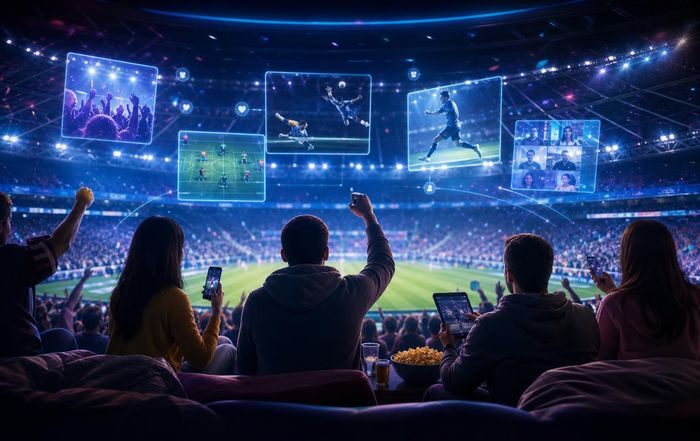
Immersive technologies are redefining what it means to "attend" a game. Augmented reality overlays in stadiums and at home, virtual reality broadcast options, and the emerging category of spatial computing are transforming the fan journey from a linear timeline into a multi-layered experience. Companies such as Apple, Meta, and Sony are investing heavily in devices and platforms that support real-time 3D environments, while leagues across North America, Europe, and Asia pilot new formats that go far beyond traditional camera angles.
Fans can now watch a match from the perspective of a goalkeeper, track positional data for every player, and access contextual statistics as they unfold, all through AR-enhanced mobile apps or headsets. For a deeper understanding of how spatial computing is reshaping media, readers may look to technology analysis from MIT Technology Review. At the same time, stadiums from the United States to Qatar are embedding mixed reality displays, location-aware services, and hyper-personalized wayfinding, turning the venue into a responsive interface that adjusts to the preferences of each visitor.
For SPORTSYNCR, which covers the intersection of technology and sport, this immersive shift is not just a hardware story but a narrative about accessibility and inclusivity. Fans in regions such as South Africa, Brazil, and Thailand, who may not have the means to travel to major events, can experience stadium atmospheres through affordable VR subscriptions or community viewing hubs. The challenge for rights holders and broadcasters is to ensure that these experiences remain authentic and do not overwhelm the core drama of sport with an excess of digital overlays and distractions.
Data, Personalization, and the Quantified Fan
The future of interactive fan experiences is inseparable from the future of data. Every interaction-whether a streamed match, a merchandise purchase, a social media comment, or a fitness-tracking session inspired by a favorite athlete-generates signals that can be used to tailor content and services. Organizations that master this data responsibly can deliver deeply personalized experiences that increase engagement and lifetime value, while those that misuse or underutilize data risk alienating fans and falling behind more agile competitors.
Major leagues and clubs are already working with analytics providers and cloud platforms such as Amazon Web Services and Microsoft Azure to create unified fan profiles that aggregate behavior across channels. Fans might receive customized highlight reels based on their favorite players, targeted offers for wellness products aligned with their training habits, or exclusive access to behind-the-scenes content when they attend a live event. Those interested in how data strategies support personalization at scale can learn more about digital transformation in sports business from global consulting analyses.
At the same time, the rise of the quantified self-through wearables, connected equipment, and fitness platforms-creates opportunities for two-way data flows between fans and organizations. A runner in Australia, using a connected treadmill or smart shoe, might participate in a virtual race sponsored by a global brand and benchmark their performance against thousands of others, turning personal training into a shared competitive experience. For audiences of SPORTSYNCR's fitness and health verticals, this convergence of performance data and fandom is particularly resonant, as it blurs the line between fan and athlete.
Health, Wellness, and Performance as Fan Engagement
As awareness of physical and mental health continues to grow across Europe, Asia, and the Americas, sports organizations are reframing fan engagement not only as entertainment but as a pathway to healthier lifestyles. Clubs, leagues, and brands are integrating wellness content, guided training programs, and evidence-based health advice into their fan ecosystems, often in partnership with healthcare providers and academic institutions. Reputable sources such as the World Health Organization and Mayo Clinic provide frameworks that organizations can adapt to ensure that wellness initiatives remain grounded in science rather than fad.
For SPORTSYNCR, which consistently connects sport, fitness, and wellbeing, this trend reinforces the platform's mission to provide actionable insight rather than mere spectacle. Fans no longer simply watch elite athletes; they track their own sleep, nutrition, and recovery, using tools popularized by brands like WHOOP, Garmin, and Polar. Clubs in markets such as Italy, Spain, and the United States are launching co-branded fitness challenges, mindfulness workshops, and recovery education programs, often delivered through mobile apps that integrate with popular wearables.
This wellness-focused engagement has a powerful social dimension. Community running clubs, esports training groups, and online fitness communities are forming around shared affiliations to teams, leagues, or athletes, reinforcing loyalty while delivering measurable health benefits. Readers interested in the intersection of sport, health, and society can explore more of this narrative in SPORTSYNCR's health coverage, where the platform highlights initiatives that prioritize long-term wellbeing over short-term engagement metrics.
Social and Cultural Dimensions of Fan Interaction
Interactive fan experiences are as much about culture and community as they are about technology. Fans in London, Lagos, Seoul, and São Paulo bring distinct cultural expectations to their engagement with sport, shaped by local traditions, social norms, and media ecosystems. The rise of global streaming platforms and social networks has created shared reference points, but it has also made cultural authenticity more important than ever. Organizations that impose a one-size-fits-all engagement model risk eroding trust among local fan bases.
Social platforms such as X (formerly Twitter), Instagram, and WeChat have become real-time arenas for fan expression, debate, and creativity. Hashtag campaigns, fan-created highlight edits, and live audio rooms turn major events into global conversations. For a nuanced understanding of these social dynamics, readers may consult research from the Pew Research Center on digital behavior and online communities. SPORTSYNCR, through its culture and social verticals, is uniquely positioned to interpret these cultural currents, spotlighting how fan creativity-from choreographed tifos in European stadiums to meme culture in North American and Asian online communities-shapes the identity of clubs and leagues.
Diversity, equity, and inclusion are also central to the future of interactive fandom. Fans increasingly expect organizations to take clear positions on social issues, to represent diverse voices in their content, and to ensure that interactive platforms are moderated in ways that protect marginalized communities from abuse. Partnerships with organizations such as UN Women or initiatives guided by frameworks from the United Nations are becoming more visible, especially around major events like the FIFA World Cup or the Olympic Games. The most trusted sports brands will be those that treat inclusion as a core design principle rather than a marketing theme.
Brand Partnerships and the New Sponsorship Playbook
The sponsorship landscape is undergoing a structural shift as brands move away from logo exposure and toward integrated, interactive experiences that deliver measurable outcomes. Traditional perimeter advertising and static jersey branding are being complemented-and in some cases replaced-by digital activations that invite fans to participate directly in brand narratives. Companies such as Nike, Adidas, Coca-Cola, and Red Bull are investing heavily in interactive campaigns that span physical venues, mobile apps, and social channels, often anchored by real-time data and gamified elements.
In this environment, SPORTSYNCR's brands, business, and sponsorship coverage becomes a critical lens for executives seeking to understand best practices. For example, a brand might sponsor a "second-screen" companion experience that allows fans to predict outcomes, unlock exclusive content, or compete against friends in real time, with rewards tied to loyalty programs or product discounts. To explore how sponsorship strategies are evolving across global markets, practitioners can reference insights from the International Journal of Sports Marketing & Sponsorship.
Measurement is central to this new sponsorship playbook. Brands are no longer satisfied with estimated impressions; they demand granular data on engagement, conversions, and sentiment. Advanced attribution models, often built in collaboration with analytics firms and marketing platforms, allow sponsors to see how interactive activations influence behavior across channels and over time. This data-driven approach rewards organizations that design experiences with clear value propositions for fans, rather than intrusive or purely promotional features.
The Role of Emerging Technologies: AI, Blockchain, and Beyond
Artificial intelligence, blockchain, and other emerging technologies are reshaping the infrastructure of interactive fan experiences in ways that extend far beyond surface-level novelty. AI-driven recommendation engines, conversational interfaces, and content-generation tools are enabling organizations to scale personalization and customer service without sacrificing quality. Fans can receive real-time tactical explanations, personalized highlight compilations, or instant translations of commentary, powered by machine learning models similar to those being advanced by companies like Google DeepMind and OpenAI. For a deeper exploration of AI's impact on media and entertainment, readers may consult resources from McKinsey & Company.
Blockchain technologies, while no longer the speculative frenzy of earlier years, continue to underpin new models of digital ownership and participation. Non-fungible tokens (NFTs) have evolved from simple collectibles into more sophisticated access passes, loyalty instruments, and proof-of-attendance tokens that unlock layered experiences. Clubs in markets such as France, Spain, and Japan are experimenting with tokenized membership tiers that provide voting rights on non-competitive decisions, priority access to tickets, and curated digital memorabilia. The European Commission's digital policy resources provide context on how regulatory frameworks are influencing the responsible deployment of such technologies in the European Union.
Beyond AI and blockchain, advances in edge computing, 5G, and low-latency networking are enabling real-time interactivity at scales previously impossible. Fans in densely populated cities like New York, London, and Tokyo can participate in synchronized AR experiences, multi-angle live streams, and interactive betting markets with minimal delay, while those in emerging markets benefit from more stable and accessible streaming. For SPORTSYNCR, which tracks these developments across its technology and news sections, the focus remains on how these tools can enhance, rather than overshadow, the human drama at the core of sport.
Globalization, Localization, and Regulatory Complexity
As fan experiences become more interactive and data-driven, the global nature of sport collides with local regulatory, cultural, and infrastructural realities. Organizations operating across North America, Europe, Asia, and Africa must navigate a complex landscape of privacy laws, content regulations, and consumer protection standards. The European Union's GDPR framework, evolving data regulations in countries like Brazil and South Africa, and China's distinct digital ecosystem all shape how interactive features can be designed and deployed. Executives seeking to understand this regulatory environment can learn more about global data protection standards through specialized resources.
Localization is not merely a matter of language translation; it requires sensitivity to local fan rituals, payment preferences, and digital behaviors. For instance, fans in Japan and South Korea may prioritize mobile-first experiences with integrated messaging features, while those in the United States and Canada might expect seamless integration with fantasy sports, sports betting, and connected TV ecosystems. Meanwhile, in markets such as India, Nigeria, and Indonesia, bandwidth constraints and device diversity require lightweight, resilient applications that can deliver interactivity without assuming high-end hardware.
For SPORTSYNCR, whose readership spans established sports economies and rapidly growing markets, this global-local tension is a recurring theme. The platform's world coverage highlights how clubs and leagues balance the desire for global reach with the need to remain rooted in local communities, ensuring that interactive experiences feel relevant and respectful rather than generic or imposed.
Jobs, Skills, and the Future Workforce of Fan Engagement
The evolution of interactive fan experiences is reshaping the talent landscape within sports organizations, media companies, and technology providers. Roles that barely existed a decade ago-fan experience designer, sports data scientist, virtual production specialist, community strategist-are now central to competitive advantage. Universities in the United States, the United Kingdom, and Australia are launching specialized programs in sports technology, digital marketing, and esports management, while professional training platforms adapt curricula to meet emerging needs. Readers interested in how these shifts translate into career opportunities can explore the evolving marketplace through SPORTSYNCR's jobs section.
Organizations are increasingly seeking hybrid profiles that combine domain expertise in sport with technical fluency and a deep understanding of fan psychology. A modern fan engagement team might include UX designers, AI engineers, behavioral scientists, and cultural strategists working alongside traditional marketers and event managers. Industry bodies such as SportTechie, Leaders in Sport, and academic centers like the University of Michigan's Sport Management program are documenting and supporting this skills transformation.
For SPORTSYNCR, which aims to serve not only fans but also professionals and aspiring entrants to the sports industry, covering these workforce shifts is part of a broader commitment to expertise and trustworthiness. By highlighting best practices, emerging roles, and educational pathways, the platform helps readers navigate a rapidly changing employment landscape where interactive fan experiences are central to organizational strategy.
Sustainability, Responsibility, and the Ethics of Engagement
As interactive fan experiences become more sophisticated, questions of sustainability and ethics move to the forefront. High-definition streaming, large-scale data processing, and immersive technologies all carry environmental footprints, prompting organizations to seek greener infrastructure and more efficient delivery methods. Cloud providers and broadcasters are investing in energy-efficient data centers and compression technologies, while clubs and leagues integrate digital sustainability into their broader environmental strategies. Those interested in the intersection of sport, technology, and sustainability can learn more about sustainable business practices from global environmental organizations.
There is also a growing recognition that engagement strategies must respect fans' time, attention, and wellbeing. Overly gamified systems, aggressive notification strategies, and addictive mechanics can erode trust and harm mental health, particularly among younger audiences. Ethical frameworks, informed by research from institutions such as the World Economic Forum and leading universities, are increasingly guiding design decisions. For SPORTSYNCR, the environment and science verticals provide a platform to examine these issues critically, highlighting organizations that prioritize long-term societal value over short-term engagement metrics.
Responsible engagement also encompasses issues of integrity and fair play. As interactive betting, fantasy sports, and real-time micro-wagering become more integrated into fan experiences, regulators and industry bodies must ensure that safeguards against problem gambling, match manipulation, and data misuse are robust and transparent. Trusted coverage that explains these complexities in clear, evidence-based terms is essential to maintaining confidence among fans, brands, and policymakers.
Conclusion: SPORTSYNCR's Role in a Connected Fan Future
The future of interactive fan experiences is not defined by any single technology, platform, or trend, but by the complex interplay of immersion, data, culture, and responsibility. Fans around the world-from stadium-goers in Madrid and Munich to mobile-first viewers in Bangkok and Nairobi-are demanding experiences that are more personalized, participatory, and purposeful. Organizations that succeed will be those that combine cutting-edge capabilities with a deep respect for the emotional core of sport and the diverse communities that sustain it.
In this landscape, SPORTSYNCR stands as a guide, synthesizing developments across sports, fitness, health, culture, business, technology, and beyond, and presenting them in a way that equips readers to make informed decisions-whether as fans, professionals, or industry leaders. By foregrounding experience, expertise, authoritativeness, and trustworthiness, the platform offers more than news; it offers context, critical analysis, and a long-term perspective on where interactive fan experiences are heading.
As time unfolds and the boundaries between spectator and participant continue to dissolve, the organizations and platforms that thrive will be those that view fans not as data points but as partners in a shared narrative. SPORTSYNCR's commitment to covering this evolution with rigor and insight ensures that its audience remains not only entertained but empowered, ready to shape the next chapter of global sport and its increasingly interactive future.