

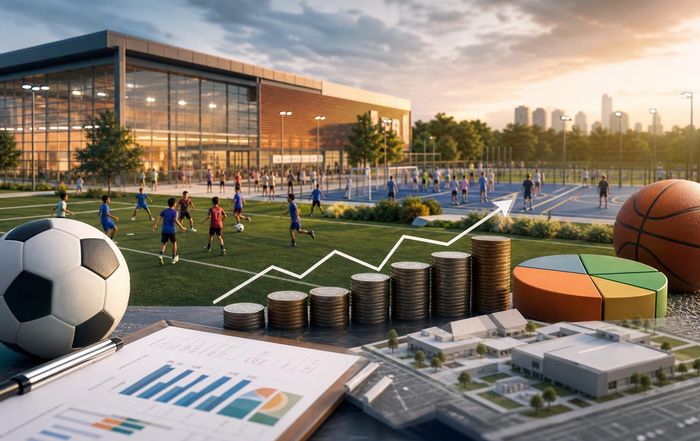
Inside the Economics of Community Sports Facilities
Community sports centers, local pitches, ice rinks, and swimming pools are often framed as feel-good amenities: places where kids learn teamwork, adults stay active, and neighborhoods come together. Behind the scenes, however, they are also complex economic projects with balance sheets, debt service, maintenance schedules, and political scrutiny. Understanding how these facilities are planned, funded, and operated explains why some cities enjoy thriving multi-sport hubs while others struggle with aging gyms and closed pools.
This active article looks inside the economics of community sports facilities: how they are financed, what drives their costs and revenues, how cities measure their impact, and what models are emerging to make them more sustainable.
Why community sports facilities are built in the first place
Most community sports projects start from social, not financial, objectives. Municipalities, school districts, and non-profits usually justify new facilities on the basis of public health, youth development, social cohesion, and neighborhood regeneration rather than direct profit.
Public-health agencies such as the World Health Organization highlight physical inactivity as a major risk factor for non-communicable diseases, from heart disease to type 2 diabetes, and estimate significant economic losses from reduced productivity and increased healthcare costs worldwide. Governments and health systems, from NHS England to the U.S. Centers for Disease Control and Prevention, consistently point to community-level opportunities for physical activity as part of the solution. Local sports halls, football pitches, and recreation centers are one of the most visible ways to deliver those opportunities, especially in lower-income neighborhoods where private gyms are scarce.
Social outcomes matter as well. Research summarized by organizations such as UNESCO and the OECD links youth sport participation to improved social skills, better school engagement, and reduced antisocial behavior. That is why many municipal masterplans treat sports facilities as core infrastructure, alongside libraries and parks, rather than lifestyle luxuries. Even when cities pursue flagship arenas or aquatic centers partly for prestige or tourism, the public rhetoric usually leans heavily on community benefits, inclusive access, and sport-for-all narratives.
For a broad sports-focused audience, these social arguments are familiar. What is less visible is how those goals are translated into financial decisions: What size of facility is feasible? How much subsidy is acceptable? Which user groups get priority? To unpack that, it helps to start with the basic cost structure.
The cost side: from concrete to constant maintenance
Community sports facilities are capital-intensive to build and expensive to maintain. Even relatively modest multi-purpose recreation centers can cost tens of millions of dollars or euros once land, design, construction, and equipment are included. Ice rinks, indoor aquatics centers, and velodromes sit at the high end of the cost spectrum because of specialized systems and energy demand.
Capital costs typically include land acquisition or leasing, architectural and engineering design, planning and permitting, construction, and major equipment such as HVAC systems, pool filtration, and sports flooring. Many projects underestimate lifecycle costs by focusing on the build price alone. Organizations like Sport England and national sports councils in Europe and Asia now publish facility design and cost guidance that explicitly emphasize long-term operating expenses, especially energy and staffing.
Once a facility opens, operating expenses become the main economic challenge. Labor is usually the largest single cost: lifeguards, coaches, front-desk staff, maintenance teams, and managers. Utilities follow closely, particularly for heated pools, ice surfaces, and large indoor arenas where climate control is constant. Routine maintenance, cleaning, insurance, security, and equipment replacement add further pressure. Over a 30- or 40-year life, these recurring costs can easily exceed the original construction budget several times over.
This is where design choices become economic decisions. A slightly higher initial investment in insulation, efficient boilers or heat pumps, solar panels, and smart building controls can reduce energy bills for decades. Choosing multi-use halls that can host basketball, volleyball, futsal, and community events can generate more hours of utilization than highly specialized spaces. In many cities, facility managers now work closely with sustainability officers, recognizing that environmental and financial performance are intertwined. For readers interested in the intersection of sport and sustainability, this connects directly to broader debates about facilities' carbon footprints, a subject we cover regularly in our environment and science sections.
How these facilities are financed: public, private, and everything in between
Because community sports facilities rarely cover their full costs from user fees, the financing question is central. Globally, four broad models are common, often combined within a single project.
The most traditional approach is direct public funding. Municipalities or regional authorities issue bonds or allocate capital budgets to design, build, and own facilities, then either operate them in-house or contract an operator. Debt service is repaid from general taxation or earmarked levies. This model is still widespread in Europe and parts of North America, where local government has a strong role in public amenities. Organizations such as the International City/County Management Association and national municipal associations provide guidance on structuring these investments and communicating their value to taxpayers.
A second model is public-private partnership (PPP). Here, a private consortium finances, builds, and sometimes operates the facility under a long-term contract, while the public sector commits to availability payments or minimum revenue guarantees. PPPs are used more frequently for larger complexes or where governments seek to shift construction risk to private partners. Institutions like the World Bank and the European Investment Bank offer toolkits on PPP contracts, including for sports and leisure infrastructure, emphasizing the need for transparent risk allocation and performance monitoring.
A third route involves community or non-profit ownership. Local sports clubs, cooperatives, or charitable foundations may lead fundraising, apply for grants from national sports bodies, and run facilities on a not-for-profit basis. In some European countries, community clubs own and manage significant assets, relying on volunteer labor and modest membership fees. The International Olympic Committee, through its Olympic Solidarity programs, and national Olympic committees have also supported legacy community facilities in specific contexts.
Finally, there is commercial development, where private companies build and run facilities primarily as businesses. This is more common for fitness chains, indoor soccer centers, or esports arenas than for fully open community complexes, but hybrid models exist. Some cities lease municipal land at favorable rates to private operators in exchange for guaranteed community access hours or reduced fees for youth programs.
In practice, modern projects often blend these approaches: a publicly funded shell with leased spaces for private fitness operators, a non-profit aquatic club as anchor tenant, and sponsorship or naming-rights deals with local or global brands. For readers interested in the commercial side of sport, these financial structures intersect with the sponsorship and branding dynamics we explore in our business and sponsorship coverage.
Revenue streams: why "break-even" is more complex than it sounds
On paper, the revenue side of a community sports facility seems straightforward: memberships, pay-per-use fees, rentals to clubs, and maybe some concessions or events. In reality, the economics are more nuanced because most facilities pursue both financial and social objectives.
User fees are the most obvious income source. Monthly memberships, season passes, and per-session charges for swimming, gym access, or classes can cover a significant share of operating costs, especially in affluent areas. However, if prices are set purely to maximize revenue, lower-income residents may be excluded, undermining health and equity goals. Many cities therefore use tiered pricing: standard rates, discounted youth or senior passes, low-income subsidies, and free access for certain school or community programs.
Facility rentals are another pillar. Local clubs, school teams, and leagues pay for block bookings of courts, pitches, and ice time. Weekend tournaments bring concentrated revenue and footfall. In some markets, esports events or fitness expos are emerging as additional uses. International federations such as FIFA, World Rugby, and World Aquatics encourage multi-use community venues precisely because this diversified activity base improves both utilization and financial resilience.
Commercial activities add smaller but meaningful streams. Cafés, vending, pro shops, personal training, and physiotherapy services can be run in-house or leased to external providers. Naming rights and sponsorship, whether from local businesses or larger brands, can support specific facilities or programs. For example, a company might fund a "free swim Friday" initiative in exchange for branding and community goodwill, aligning with the corporate social responsibility agendas promoted by organizations like the World Economic Forum.
Crucially, most community sports facilities operate with some level of ongoing public subsidy, even after accounting for all these revenues. Policymakers often speak of "cost recovery" ratios: the percentage of operating costs covered by internal revenue. A cost recovery of 70-80% may be considered strong for a municipal recreation center that deliberately offers low-cost access. The remaining 20-30% is effectively a public investment in health and social outcomes, analogous to libraries or public transit.
Measuring value: beyond the operating budget
Because direct financial returns rarely justify community sports facilities on their own, cities and funders increasingly rely on broader economic and social impact assessments. This is where the economics become more complex but also more interesting.
On the economic side, construction itself creates jobs and local procurement, a point often emphasized during planning. Once operational, facilities support ongoing employment and can stimulate nearby businesses: cafés, sports retailers, and transport services. Major regional tournaments or events can generate visitor spending on hotels and dining, though expectations must be realistic; community venues do not operate at the scale of professional stadiums.
The bigger long-term value, however, is typically in health and social outcomes. Public-health economists use cost-benefit and cost-effectiveness frameworks to estimate how increased physical activity reduces healthcare spending and productivity losses. Agencies such as Public Health England (now the Office for Health Improvement and Disparities) have published models showing how investment in sport and active recreation can deliver net economic benefits when reduced disease burden and improved mental health are included. Similar work exists in Canada, Australia, and other markets.
Social return on investment (SROI) studies, promoted by bodies like Sport New Zealand and various European sports ministries, attempt to capture benefits such as improved educational attainment, reduced crime, and stronger community networks. While methodologies vary and critics warn against over-precise numbers, the direction of evidence generally supports the idea that well-used community sports infrastructure delivers value well beyond gate receipts.
For local decision-makers, this raises a practical question: how to ensure those broader benefits actually materialize? Facilities that are poorly located, hard to reach by public transport, or priced beyond the means of target communities can underperform despite high upfront costs. That is why planning now frequently integrates transport agencies, school boards, and health departments alongside sports officials.
Equity, access, and the politics of who benefits
Community sports facilities are rarely politically neutral. Choices about where to build, what to prioritize, and how to price access can either reinforce or reduce inequalities in participation.
In many cities, wealthier neighborhoods have historically enjoyed better-quality sports infrastructure, often supplemented by private clubs and school facilities. Lower-income and minority communities, by contrast, may face a shortage of safe, accessible spaces for sport and recreation. Studies referenced by organizations like UN-Habitat and UNICEF highlight how urban planning decisions shape children's opportunities for active play and organized sport.
Modern strategies increasingly emphasize equity: locating new facilities near public transit, co-locating with schools or community centers, and designing inclusive spaces for women and girls, people with disabilities, and older adults. International frameworks such as the Kazan Action Plan on sport policy, endorsed by UNESCO and many governments, encourage using sport to support sustainable development goals, including reduced inequalities and healthier cities.
From an economic standpoint, equity considerations influence pricing and programming. Offering free or very low-cost access at certain times may reduce revenue but increase participation among target groups, potentially improving long-term health outcomes and justifying public subsidy. Partnerships with schools, youth services, and social agencies can help identify those who would benefit most from structured sport or activity programs. For readers interested in the intersection of sport, society, and culture, this connects directly with the themes explored in our culture and social coverage.
Of course, not all decisions are purely technocratic. High-profile projects sometimes attract criticism for cost overruns, under-utilization, or perceived favoritism toward certain sports. Transparent business cases, community consultation, and clear performance metrics can help maintain trust and demonstrate that economic and social objectives are genuinely aligned.
Emerging trends reshaping the economics
As sport, technology, and urban life evolve, so do the economics of community facilities. Several trends are particularly influential.
First, energy and climate pressures are reshaping design and retrofits. Rising energy prices and net-zero commitments are pushing facility owners toward more efficient systems, renewable generation, and better building envelopes. International sport bodies and climate-focused organizations, including initiatives highlighted by the United Nations Framework Convention on Climate Change, are encouraging sport venues of all sizes to reduce emissions. While retrofits require capital, they can significantly lower long-term operating costs, especially for pools and ice rinks.
Second, digital technology is changing how facilities are managed and monetized. Online booking platforms, dynamic pricing, and integrated membership systems make it easier to optimize utilization and understand user behavior. Wearables and connected fitness platforms, led by companies such as Apple, Garmin, and Strava, are blending indoor and outdoor activity data, opening possibilities for loyalty programs or insurance partnerships tied to facility use. Smart-building systems allow for more precise control of lighting, heating, and ventilation, improving both comfort and cost efficiency. These developments intersect with broader sports-tech themes we explore in our technology and gaming sections.
Third, the definition of "sport" is broadening, affecting space needs and business models. Demand is rising not only for traditional courts and pitches but also for skate parks, climbing walls, padel courts, parkour zones, and esports spaces. Multi-sport "activity hubs" that mix formal and informal spaces can attract more diverse users and smooth demand across the day. This versatility can improve revenue per square meter but requires careful programming and design.
Finally, partnerships are becoming more sophisticated. Health insurers, hospitals, and corporate wellness programs increasingly see value in prescribing or subsidizing community facility use. Universities and colleges partner with cities to share facilities. Major brands look to align with authentic grassroots sport as part of their marketing strategies, sometimes funding capital improvements or specific community initiatives. Navigating these partnerships requires governance structures that protect public interest while leveraging private resources.
Jobs, skills, and careers in community sport
Behind every community facility is a workforce of coaches, managers, and operational staff whose livelihoods depend on its economic health. For readers interested in sports-related careers and the business of sport, community facilities represent a significant employment ecosystem.
Roles range from entry-level lifeguards and reception staff to specialist technicians, program coordinators, and senior facility managers. Beyond direct employment, there are opportunities for self-employed coaches, personal trainers, and small businesses providing catering, equipment, or maintenance services. National sport and recreation bodies, as well as job platforms such as Indeed, LinkedIn, and sector-specific boards, regularly advertise roles in this space.
The economic model of a facility influences its labor conditions. Publicly operated centers may offer more stable employment and benefits but face budget constraints and hiring freezes. Private operators might be more flexible and performance-driven but rely heavily on part-time or casual contracts. Non-profit and community-run facilities often depend on volunteers, which lowers costs but raises questions about sustainability and professionalization.
As expectations rise around safeguarding, inclusion, and quality coaching, training and accreditation become more important. Organizations such as UK Coaching, Coaching Association of Canada, and similar bodies worldwide provide frameworks and courses, often in partnership with national sports federations. For those exploring sports-related employment, our jobs coverage frequently highlights how trends in community sport translate into new roles and required skills.
What sustainable success looks like
When community sports facilities work well economically, several elements tend to be in place. The planning process starts from clear objectives-health, youth engagement, neighborhood regeneration-and translates them into realistic facility size, location, and programming. Capital financing is structured with a long-term view of operating costs, including energy and maintenance, not just the headline construction number.
Operationally, successful facilities balance cost recovery with access. They use data to understand who is using the space and at what times, adjusting schedules and prices to maximize both utilization and inclusion. They cultivate a mix of revenue streams-memberships, club rentals, events, sponsorship-without crowding out community use. Partnerships with schools, health providers, and local clubs ensure spaces are busy from early morning to late evening, across age groups and ability levels.
Governance is transparent, with regular reporting on both financial performance and social impact. Community voices are part of decision-making, whether through advisory boards, user councils, or structured consultation. Environmental performance is treated as a core economic issue, not an optional add-on, recognizing that lower energy use and smarter operations free up resources for programming and maintenance.
Perhaps most importantly, there is a willingness to adapt. Sports preferences change, demographics shift, and new technologies emerge. Facilities that remain economically and socially vibrant are those that treat their initial business plan as a starting point rather than a fixed script.
For sports fans, athletes, and families, community facilities are often just the backdrop to games and workouts. For city leaders, operators, and funders, they are complex economic systems that require careful design and constant adjustment. Understanding that economic reality does not diminish their social value; it is what makes that value sustainable over time.
Active people who want to explore related angles-from elite venues and sponsorship to health impacts and sports technology-can dive deeper into our sporty content across sports, health, fitness, news, and world.