

Inclusive Sports Policies Expanding Access Worldwide in 2026
Inclusive sport has moved from the margins of policy debate to the center of national and corporate strategy, and by 2026 it is increasingly viewed as a critical lever for public health, social cohesion, innovation and economic growth. Across continents, governments, federations, brands and technology companies are rethinking who sport is for, how it is delivered and how its benefits are measured, with a clear shift from symbolic gestures to structural reform. For Sportsyncr, a platform devoted to the evolving relationship between performance, health, culture, technology and society, inclusive sports policy is no longer a specialist beat but a defining framework that shapes coverage across its sports, business, technology and social impact verticals.
The Strategic Imperative for Inclusion in the Mid-2020s
By 2026, policymakers in the United States, United Kingdom, Germany, Canada, Australia and other leading markets increasingly treat sport as a strategic public good that underpins population health, community resilience and labor productivity. The World Health Organization continues to warn that physical inactivity is a major risk factor for non-communicable diseases and a driver of unsustainable healthcare costs, and its latest analyses show that investment in active lifestyles yields returns far beyond the health sector through higher workforce participation and improved educational outcomes. Learn more about the global burden of inactivity and the case for physical activity through the World Health Organization's physical activity resources.
At the same time, sport is being integrated into skills, education and employment agendas. The Organisation for Economic Co-operation and Development (OECD) has expanded its work on well-being and human capital to highlight how structured sports participation builds social skills, confidence and networks that enhance employability, particularly for young people in disadvantaged communities. Governments and employers that support inclusive sport are increasingly aware that they are investing not only in health but in social capital, innovation capacity and long-term employability. Readers can explore these socio-economic linkages through the OECD's work on skills and well-being.
For the private sector, inclusive sports policies open new and differentiated markets. Equipment manufacturers, media rights holders, event organizers and digital platforms now see inclusion as a core dimension of product design, audience development and brand positioning, especially among younger consumers in North America, Europe and Asia-Pacific who expect organizations to align with credible social impact agendas. On Sportsyncr's business hub, accessible at sportsyncr.com/business, executives and investors can follow how leagues, federations and sponsors are reframing their commercial strategies around equity, accessibility and long-term community value.
Divergent Policy Frameworks, Converging Goals
Inclusive sports policies are shaped by diverse legal traditions and political cultures, yet in 2026 they reveal a growing convergence around shared principles of access, non-discrimination, accountability and data-informed decision-making.
In Europe, the European Union has deepened its integration of sport into strategies on social inclusion, gender equality, disability rights and youth development. Member states such as Germany, France, Italy, Spain, the Netherlands, Sweden, Denmark and Finland are expected to develop national sport strategies that address participation gaps, invest in local infrastructure and support dual careers for athletes balancing sport, education and work. The European Commission's sport policy portal outlines these frameworks and their implementation pathways, and readers can explore them via the European Commission's sport pages.
In North America, the United States and Canada continue to advance inclusive sports policies through civil rights legislation, targeted funding and inter-agency coordination. In the U.S., Title IX remains the principal mechanism for enforcing gender equity in school and college sports, while new federal and state initiatives focus on disability access, LGBTQ+ inclusion and support for low-income communities. The U.S. Department of Education's Office for Civil Rights provides updated guidance to help institutions comply with legal obligations and embed inclusive practices more deeply, which can be reviewed via the Office for Civil Rights website.
Across Asia, inclusive sport is often woven into national development strategies and legacy plans for mega-events. China's mass fitness campaigns, Japan's post-Tokyo 2020 legacy programs, South Korea's integration of esports and physical activity, and Singapore's active aging strategies all position sport as a tool for public health, social stability and innovation. The United Nations Educational, Scientific and Cultural Organization (UNESCO) supports governments across Asia and beyond in designing policies that use sport for development and peace, and its guidance can be explored through UNESCO's sport for development resources.
On the African continent, countries including South Africa, Kenya and Nigeria are refining inclusive sports strategies that intersect with education, youth employment and peacebuilding, often in partnership with international organizations and philanthropic foundations. The African Union has embedded sport within its Agenda 2063 framework, emphasizing its role in social cohesion and economic opportunity, and readers can gain insight into these priorities through the African Union's youth and sport pages.
In Latin America, Brazil retains a prominent role following the Rio 2016 Olympic and Paralympic Games, which catalyzed investment in para-sport, community facilities and youth programs even as economic volatility created challenges for continuity. The International Paralympic Committee (IPC) continues to document how host nations and federations in the Americas and elsewhere are building more inclusive systems, and more information is available through the IPC's official site.
Disability, Para-Sport and the Universal Design Mindset
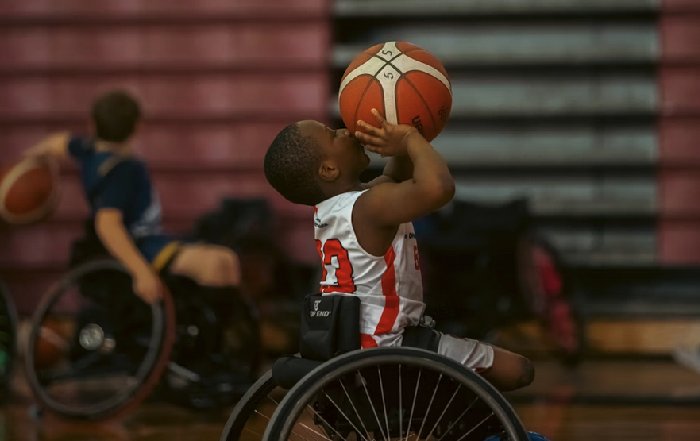
The para-sport movement remains one of the most powerful drivers of inclusive policy, and by 2026 the visibility of Paralympic and para-athletes has become a mainstream feature of sports culture in the United Kingdom, Germany, Canada, Australia, Japan, Brazil and beyond. The work of the International Paralympic Committee, national Paralympic committees and disability advocacy groups has helped shift public discourse from charity toward performance, rights and human potential, prompting governments and federations to rethink how facilities, competitions and media narratives are structured.
Universal design principles now sit at the heart of many infrastructure and program decisions. New stadiums, community centers and public spaces are increasingly required to be accessible to people with a wide range of physical, sensory and cognitive disabilities, encompassing barrier-free architecture, adaptive equipment, tactile and audio navigation, accessible transport connections and inclusive digital communication. In mature markets, building codes and public procurement frameworks are progressively embedding these standards, while in emerging economies there is growing recognition that accessibility is integral to equitable development rather than an optional add-on. Readers seeking a deeper understanding of universal design in sport and the built environment can explore resources from the Center for Inclusive Design and Environmental Access.
At the participation level, inclusive policy now favors integrated models in which athletes with disabilities train and compete alongside their non-disabled peers where appropriate, supported by coach education, adaptive equipment and specialist staff. This approach can accelerate social inclusion and challenge stereotypes, but it also demands sustained investment and careful program design. Through its health and fitness coverage, Sportsyncr tracks how clubs, schools and federations in regions from North America and Europe to Asia-Pacific and Africa are scaling these models, and how technology, funding and governance are determining their success.
Gender Equity and the Business of Women's Sport
Gender equity has evolved into one of the most commercially significant and politically sensitive dimensions of inclusive sports policy. The global growth of women's football, the professionalization of women's cricket in countries such as the United Kingdom and Australia, the expansion of women's basketball and rugby leagues, and the rising visibility of women in combat sports and motorsport demonstrate how policy, investment and cultural change can reinforce one another.
International federations including Fédération Internationale de Football Association (FIFA), World Rugby and the International Cricket Council (ICC) have adopted explicit strategies to grow women's sport, combining grassroots development, competition reform, targeted marketing and incremental moves toward pay equity and prize money parity. These strategies are reshaping media rights negotiations, sponsorship portfolios and fan engagement models, particularly in markets where women's sport is now viewed as a high-potential growth asset. Readers can examine these evolving frameworks at organizations such as FIFA and World Rugby.
In the United States, Title IX continues to underpin gender equity in educational sport, while in Europe, national equality legislation and EU directives reinforce comparable principles. Canada, Australia and New Zealand have integrated sport into broader gender equality roadmaps, and several federations now track diversity metrics in leadership and technical roles as part of their compliance obligations. However, gaps remain in representation, media coverage, revenue sharing and safe working environments, particularly in parts of Asia, Africa and Latin America where structural and cultural barriers persist. Through its dedicated sports coverage, Sportsyncr examines both the commercial upside and the unresolved governance challenges that shape the women's sports economy in 2026.
Socio-Economic Barriers and Community-Level Innovation
Even as high-profile reforms advance, socio-economic barriers continue to restrict access to sport in many communities. Participation costs, limited availability of safe and accessible facilities, inadequate public transport, precarious employment and caregiving responsibilities all reduce the ability of lower-income families to engage in regular sport, whether in New York, London, Berlin, Johannesburg, São Paulo, Mumbai or Bangkok. Inclusive sports policy must therefore grapple not only with formal rights but with the material conditions that determine who can realistically participate.
Cities and regions are experimenting with integrated community models in which sport is embedded into broader social services, including after-school education, youth employment programs, violence prevention initiatives and mental health support. These approaches often involve multi-use public spaces, sliding-scale or zero-cost participation, and partnerships with NGOs, social enterprises and local businesses. The World Bank has documented how investment in community sport infrastructure can contribute to urban regeneration, social cohesion and local economic development, and readers can explore these perspectives through the World Bank's work on sport for development.
Public-private partnerships are central to scaling these initiatives. Municipalities collaborate with clubs, brands and philanthropic organizations to finance and manage inclusive programs, while impact investors increasingly recognize community sport as a domain where social and financial returns can align. Sportsyncr, through its coverage of brands and sponsorship, analyzes how companies in sectors such as apparel, financial services and technology are integrating inclusive community sport into their ESG and corporate citizenship strategies, and how these efforts are perceived by participants, fans and regulators.
Technology, Data and the New Frontiers of Digital Inclusion
Technology's role in inclusive sport has deepened considerably by 2026. Wearable devices, connected fitness platforms, AI-driven coaching tools and advanced data analytics provide unprecedented opportunities to personalize training, monitor participation and evaluate policy outcomes. At the same time, persistent digital divides in connectivity, device access and digital literacy risk creating new forms of exclusion, particularly in low-income neighborhoods and regions of Africa, South Asia and parts of Latin America.
Governments, federations and research institutions increasingly rely on data to identify participation gaps by gender, age, disability, geography and income, and to design interventions that are more precisely targeted and measurable. The International Olympic Committee (IOC), through the Olympic Studies Centre, has expanded its support for evidence-based sports policy and legacy evaluation, emphasizing rigorous data collection and transparent reporting. Those interested in the research foundations of modern sports policy can explore the IOC's resources via the Olympic Studies Centre.
Simultaneously, the boundary between physical sport, connected fitness and gaming continues to blur. Esports, exergaming platforms and mixed-reality experiences have become mainstream components of youth culture in the United States, South Korea, Japan, China, the Nordic countries and increasingly in Europe and Latin America. Policymakers are beginning to recognize that these digital and hybrid forms of sport can serve as entry points for physical activity and social connection if designed and governed responsibly. Sportsyncr's technology and gaming coverage, available at sportsyncr.com/technology and sportsyncr.com/gaming, follows how motion-tracking systems, adaptive controllers, haptic feedback and inclusive game design are expanding opportunities for people with disabilities or limited access to traditional facilities.
Data protection and ethics have emerged as critical policy issues in this environment. As organizations collect granular performance, health and behavioral data, inclusive policies must also protect privacy, prevent discrimination and ensure that algorithmic tools do not reinforce bias. In Europe, guidance from the European Data Protection Board and the European Data Protection Supervisor is shaping how sports entities manage personal data across borders, and readers can find further context through the European Data Protection Supervisor's website.
Health, Mental Well-Being and Holistic Inclusion
The experience of the COVID-19 pandemic and its long-tail effects has accelerated a shift toward a holistic understanding of health in sport policy. In 2026, inclusive sports strategies in many countries are explicitly aligned with national health plans, recognizing that accessible physical activity can reduce the incidence of cardiovascular disease, diabetes and obesity while also supporting mental health, social connection and resilience.
Public health agencies increasingly collaborate with sports bodies to design campaigns and programs tailored to specific populations, including older adults in Europe and East Asia, youth at risk of exclusion in North America and Africa, migrant communities in major urban centers, and people living with chronic conditions worldwide. The Centers for Disease Control and Prevention (CDC) in the United States continues to refine its physical activity and mental health guidelines, emphasizing the need for culturally sensitive and inclusive approaches to program design, and readers can explore these recommendations via the CDC's physical activity resources.
Mental health in sport has moved decisively from taboo to mainstream policy concern, particularly as high-profile athletes from the United States, Japan, Australia, the United Kingdom and elsewhere have spoken openly about stress, anxiety and burnout. Inclusive sports policies now address psychological safety, anti-abuse frameworks, access to counseling, workload management and the responsibilities of coaches, agents and media organizations. Through its health and culture coverage, Sportsyncr explores how mental health considerations are reshaping training environments, fan expectations and governance standards, and how organizations are being held accountable for the well-being of athletes at all levels.
Human Rights, Global Governance and Ethical Standards
Inclusive sports policies in 2026 are increasingly anchored in human rights norms and international development agendas. The United Nations recognizes sport as a powerful enabler of the Sustainable Development Goals, particularly in relation to health, education, gender equality, reduced inequalities and peaceful, inclusive societies. Agencies such as UNICEF and UN Women, alongside the UN Office on Sport for Development and Peace, work with governments and sports organizations to ensure that policies and programs respect and promote the rights of children, women, refugees and people with disabilities. Readers can learn more about this agenda through the United Nations' sport for development platform.
International federations and event organizers face growing scrutiny over host country selection, labor conditions in event-related construction, freedom of expression for athletes and fans, and the environmental and social legacy of mega-events. The Centre for Sport and Human Rights has become a key reference point for best practice, offering guidance on due diligence, grievance mechanisms and stakeholder engagement, and its resources can be explored via the Centre for Sport and Human Rights.
For Sportsyncr, whose world and news coverage track global developments, this human rights framing is essential to understanding how inclusive sports policy is intertwined with broader debates about democracy, labor standards, migration, digital rights and environmental justice. The platform's editorial stance emphasizes rigorous analysis of claims made by governing bodies and brands, with a view to strengthening transparency and trust across the ecosystem.
Economic Opportunities, Jobs and the Future Sports Workforce
The expansion of inclusive sport has significant implications for labor markets and the future workforce. As participation diversifies across age, gender, disability, income and geography, demand grows for coaches, administrators, sports scientists, technologists, health professionals and content creators who are trained to work in inclusive environments and who understand both performance and social impact objectives.
Universities and vocational institutions in the United States, United Kingdom, Germany, Canada, Australia, Singapore and elsewhere are updating curricula in physical education, sports management, physiotherapy, data science and event management to embed inclusion, safeguarding and digital literacy. Professional development programs for existing coaches and administrators increasingly cover topics such as unconscious bias, adaptive training methods, mental health first aid and data ethics. Through sportsyncr.com/jobs, Sportsyncr provides insight into how these shifts are reshaping career pathways, from grassroots coaching roles in local communities to analytics, product and governance positions in global organizations.
Inclusive sports growth is also stimulating innovation in adjacent industries, including adaptive equipment design, accessible venue technologies, multilingual and multi-platform fan engagement tools and inclusive media production. Venture capital funds and corporate innovation units now treat inclusive sport as a promising impact-oriented growth domain, with start-ups emerging in hubs from Silicon Valley and Toronto to Berlin, Stockholm, Seoul and Singapore. The World Economic Forum has highlighted how sport, health and technology intersect to influence future economies and labor markets, and interested readers can explore these dynamics through the World Economic Forum's sports insights.
Environmental Sustainability and Inclusive Infrastructure
Climate change has become an unavoidable consideration in sports policy and infrastructure planning, and by 2026 the intersection of environmental sustainability and inclusion is increasingly prominent. Extreme heat, air pollution, flooding and water scarcity are disrupting training and competition schedules in regions across North America, Europe, Asia, Africa and South America, often hitting low-income and marginalized communities hardest and exacerbating existing inequalities in access to safe, healthy sports environments.
Forward-looking cities and federations are prioritizing sustainable, climate-resilient sports infrastructure that also advances social inclusion. This includes energy-efficient and low-carbon facilities, integration of public transport and active mobility options for participants and spectators, nature-based designs that provide shade and cooling in urban neighborhoods, and multi-purpose community hubs that serve both elite and grassroots needs. Organizations such as the Green Sports Alliance offer frameworks and case studies on how sports entities can reduce their environmental footprint while enhancing community value, and readers can learn more about these practices through the Green Sports Alliance.
For Sportsyncr, whose environment coverage examines the nexus of sport, climate and sustainability, a central question is how public and private investment in green infrastructure can be directed to benefit everyday participants in underserved urban districts and rural regions as much as high-profile events in global cities. This perspective reflects a broader editorial commitment to assessing inclusion not only in terms of who plays and watches, but also who benefits from long-term infrastructure and environmental decisions.
Media, Storytelling and the Role of Sportsyncr
Media and storytelling are powerful determinants of how inclusive sports policies are understood, prioritized and implemented. Coverage that elevates diverse athletes, showcases accessible programs and interrogates both successes and failures can shift public opinion, attract or redirect sponsorship and influence regulatory agendas. Conversely, narrow or sensationalist narratives can entrench stereotypes and obscure systemic issues.
As a digital platform positioned at the intersection of sport, health, culture, business, technology and social change, Sportsyncr has a distinctive role in this landscape. Through integrated coverage across sports, science, social issues and business and technology, it can connect developments that are often treated in isolation: for example, linking a new adaptive equipment innovation in Germany to policy reforms in the European Union, or tracing how mental health protocols adopted by a major U.S. league influence community coaching standards in South Africa or Brazil.
By grounding its journalism in experience, expertise, authoritativeness and trustworthiness, Sportsyncr aims to serve a global audience across North America, Europe, Asia-Pacific, Africa and South America that seeks not just headlines but context. The platform's global orientation, accessible via sportsyncr.com, reflects an understanding that inclusive sports policy is inherently international: ideas, technologies and governance models travel quickly, but they must be adapted to local realities if they are to deliver meaningful change.
From Policy to Practice: The Decisive Decade Ahead
By 2026, the architecture of inclusive sports policy is more developed than at any time in history, yet the distance between policy documents and lived experience remains substantial in many parts of the world. The decisive challenge for the remainder of this decade will be to convert commitments into consistent practice, supported by sustainable financing, robust and ethical data systems, participatory governance and continuous learning.
Governments will need to embed sport more deeply into cross-sector strategies on health, education, employment, urban planning, digital transformation and climate resilience, ensuring that regulations and incentives reward inclusive behavior rather than merely avoiding non-compliance. Federations and leagues must align competition structures, talent pathways, leadership pipelines and commercial strategies with clearly articulated inclusion goals, recognizing that credibility with fans, sponsors and regulators increasingly depends on demonstrable progress. Brands and sponsors will be expected to move beyond short-term campaigns toward long-term partnerships that deliver measurable benefits to marginalized communities and transparent reporting on impact.
For Sportsyncr, the task is to document and interrogate this transition with clarity and rigor, providing stakeholders with the insight needed to navigate a rapidly evolving landscape. By tracking developments from grassroots initiatives in townships, favelas and inner-city neighborhoods to policy debates in Brussels, Washington, Beijing, Geneva and beyond, the platform can offer a comprehensive and globally informed view of how inclusive sports policies are expanding access worldwide, and how that expansion is redefining not only who participates in sport, but what sport represents in an increasingly interconnected and demanding world.