

How Emerging Technologies Are Redefining Active Living
A New Era of Movement: From Passive Tracking to Intelligent Coaching
So active living has moved decisively beyond step counts and basic heart-rate graphs into a deeply integrated ecosystem where smart devices, intelligent software, and connected communities shape how people around the world move, train, recover, and compete. What began as simple fitness tracking has evolved into an adaptive, data-rich environment in which individuals in the United States, Europe, Asia, Africa, and across the globe receive real-time, personalized guidance that responds to their physiology, environment, and goals. For Sportsyncr and its crazy active sporty people, this shift is not an abstract technological trend; it is transforming how sports are played, how health is managed, how brands communicate, and how entire cultures think about performance and wellbeing.
The convergence of artificial intelligence, biometric sensing, extended reality, and networked platforms has created a new foundation for active lifestyles. Where earlier generations relied on generic workout plans and fragmented health advice, today's athletes, fitness enthusiasts, and everyday movers can access integrated experiences that connect training, nutrition, mental health, and recovery into a cohesive whole. As organizations such as the World Health Organization highlight the global burden of inactivity and lifestyle-related disease, emerging technologies are increasingly positioned not only as performance enhancers but as essential tools in public health strategy, helping individuals understand guidelines for physical activity and adapt them to their own lives. At the same time, the rise of intelligent systems raises fundamental questions about data privacy, algorithmic bias, and equitable access, making trust and governance as critical as innovation itself.
Intelligent Wearables and the Rise of Continuous Performance Insight
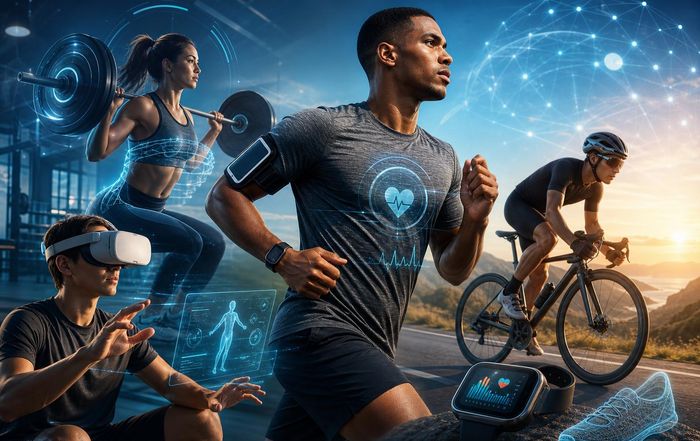
The most visible symbol of this transformation remains the wearable device, yet in 2026 it bears little resemblance to the early fitness trackers that merely logged steps and sleep. Modern wearables from companies such as Apple, Garmin, Samsung, and Whoop integrate advanced optical sensors, ECG capabilities, skin temperature monitoring, and increasingly, non-invasive glucose proxies and blood oxygen analysis, feeding continuous data streams into machine learning models that can detect subtle changes in readiness, stress, and recovery. Readers can explore how these devices interpret heart-rate variability and other biomarkers by reviewing resources from the American College of Sports Medicine, which has long explained the physiological underpinnings of training load and adaptation.
For competitive athletes and committed amateurs, the value of these intelligent wearables lies in their capacity to convert raw data into specific, actionable recommendations rather than simple metrics. Instead of telling a runner that they slept six hours, these systems now analyze sleep stages, micro-arousals, and resting heart rate to recommend whether to attempt a high-intensity interval session or pivot to a lighter recovery run. Platforms like Strava, which began as social training logs, now integrate predictive analytics that benchmark an individual against global cohorts, weather patterns, and course profiles, offering pacing strategies and risk alerts as conditions evolve. Those interested in how this connects to broader sports performance trends can find related coverage on Sportsyncr's sports page, where global leagues and endurance events are increasingly shaped by these insights.
Beyond sport, the health implications are profound. Continuous monitoring combined with AI-driven pattern recognition is enabling earlier detection of arrhythmias, overtraining, and even early warning signs of respiratory infections, complementing information from public health bodies such as the Centers for Disease Control and Prevention. For employers and insurers in North America, Europe, and Asia, this has catalyzed new models of preventative care and wellness incentives, while simultaneously raising complex questions about data ownership and the boundary between support and surveillance that regulators from the European Commission to national data protection authorities are now grappling with.
From Apps to Adaptive Ecosystems: AI Coaching as a Daily Companion
If wearables are the sensory layer of active living, AI coaching platforms represent its cognitive core. The past few years have seen rapid advances in generative AI and reinforcement learning, enabling virtual coaches that can design, adapt, and explain training plans with a level of nuance that begins to approximate experienced human trainers. Companies such as Nike, Adidas, and Under Armour have integrated AI into their training apps, while specialist platforms leverage research from institutions like Harvard T.H. Chan School of Public Health to tailor nutrition and exercise guidance to individual risk profiles and lifestyle constraints. Those seeking a deeper understanding of evidence-based fitness programming can explore Sportsyncr's fitness coverage, which frequently intersects with these emerging coaching paradigms.
Modern AI coaches draw on an expanding array of inputs, from wearable data and sleep logs to calendar schedules, travel patterns, and even air quality indexes. By connecting to environmental data sources such as IQAir or public APIs that track pollution and heat waves, these systems can suggest indoor workouts when outdoor conditions in cities like Delhi, Beijing, or Los Angeles are unsafe, or adjust hydration and pacing strategies during European heat events that have become more frequent according to organizations like the European Environment Agency. In regions such as Scandinavia and Canada, where winter conditions can be harsh, AI-driven periodization now routinely blends indoor cycling, strength work, and outdoor sessions in a way that respects both weather and daylight constraints, supporting consistent progress across the year.
The most sophisticated platforms are also beginning to integrate psychological and behavioral science, drawing on frameworks from bodies such as the American Psychological Association to support motivation, habit formation, and mental resilience. Rather than simply prescribing a workout, AI systems can now recommend micro-goals, social accountability mechanisms, or gamified challenges tailored to an individual's personality and past adherence patterns. For professionals balancing demanding careers in finance, technology, healthcare, or creative industries, these adaptive coaches reduce cognitive load, turning active living from another task on the to-do list into a seamlessly integrated part of daily life. At Sportsyncr, this shift aligns with growing interest in the intersection of performance, productivity, and wellbeing, a theme that recurs across its health and business sections.
Extended Reality and the Immersive Transformation of Training
Parallel to the rise of intelligent coaching is the rapid maturation of extended reality technologies, including virtual reality (VR), augmented reality (AR), and mixed reality (MR). In 2026, training is no longer confined to the physical environment immediately surrounding the athlete; instead, digital layers overlay or entirely replace that environment, creating immersive scenarios that stimulate both body and mind. Companies such as Meta, Sony, and HTC have invested heavily in VR ecosystems, while Apple and Microsoft continue to advance AR and MR platforms that can project real-time metrics, positional cues, and tactical overlays into the athlete's field of view. Those interested in the broader trajectory of immersive media can consult resources from MIT Technology Review, which frequently analyzes the intersection of hardware, content, and user behavior.
For cyclists and runners globally, platforms like Zwift and Rouvy have evolved into fully fledged virtual worlds where athletes in the United States, Germany, South Africa, Brazil, and beyond can ride or run together in real time, competing in structured races or collaborative group workouts. These environments integrate real-world physics, elevation profiles, and even drafting dynamics, offering a level of engagement that traditional indoor training could never match. Meanwhile, AR applications for team sports allow coaches to project tactical diagrams onto training pitches, visualize passing lanes, and simulate opposition movements, drawing on analytics similar to those used by elite clubs and leagues covered regularly on Sportsyncr's sports pages.
Perhaps most transformative is the application of extended reality to populations historically underserved by traditional fitness offerings. Individuals with disabilities can participate in adaptive VR experiences designed in collaboration with organizations like the International Paralympic Committee, while older adults in countries such as Japan, Italy, and Sweden can engage in low-impact, balance-focused VR programs that support fall prevention and cognitive engagement, complementing guidance from agencies like the National Institute on Aging. In emerging markets across Asia, Africa, and South America, mobile-based AR experiences are beginning to democratize access to high-quality coaching content without the need for expensive gym memberships, aligning with the inclusive ethos that Sportsyncr seeks to champion across its culture and social coverage.
Data, Trust, and the Governance of the Active Living Economy
As active living becomes ever more data-driven, the question of trust moves from the periphery to the center of the conversation. The same continuous monitoring that enables early detection of health issues and finely tuned training plans also generates highly sensitive information about individuals' routines, locations, and physiological states. Governments and regulators from the European Data Protection Board to the Federal Trade Commission in the United States have intensified scrutiny of how health and fitness platforms collect, process, and share data, particularly as the boundary between wellness data and medical data blurs. For business leaders and investors following Sportsyncr's business reporting on digital health and sports technology, understanding this regulatory landscape has become a strategic imperative.
At the corporate level, leading brands recognize that long-term value depends on more than technological sophistication; it also rests on demonstrable commitments to data minimization, encryption, user control, and transparent consent. Independent initiatives such as the Global Digital Health Partnership and frameworks advanced by organizations like the World Economic Forum are shaping best practices for interoperability, ethical AI deployment, and cross-border data flows, especially critical as active living platforms operate simultaneously in North America, Europe, and Asia-Pacific. Companies that can articulate clear, verifiable privacy standards and governance structures are increasingly favored by both consumers and institutional partners, whether they are sports leagues, healthcare providers, or corporate wellness programs.
For Sportsyncr, whose audience spans athletes, health professionals, brand strategists, and technologists, this intersection of trust, regulation, and innovation is a defining theme. Coverage on Sportsyncr's news section and technology section frequently highlights how new regulations such as the EU's AI Act or national health data laws in countries like Singapore and South Korea influence product design, cross-border partnerships, and investment flows. The emerging consensus is that organizations able to demonstrate robust Experience, Expertise, Authoritativeness, and Trustworthiness-often summarized as E-E-A-T-will be best positioned to lead in this evolving ecosystem.
Brand Strategy, Sponsorship, and the New Metrics of Engagement
Emerging technologies are not only reshaping training and health outcomes; they are fundamentally altering how brands communicate with consumers and measure the impact of sponsorship and marketing investments. In the past, sports and fitness sponsorships were largely evaluated on reach and media value, with limited insight into how campaigns influenced actual behavior. In 2026, brands can increasingly link sponsorship activations to concrete changes in activity patterns, health metrics, and digital engagement, thanks to the integration of wearable data, app usage, and immersive experiences.
Global companies such as Coca-Cola, Nike, Adidas, and Lululemon are partnering with leagues, teams, and technology platforms to create performance-linked challenges in which consumers unlock rewards by completing specific activity milestones, attending virtual events, or participating in AR-enhanced experiences. Organizations like FIFA, the NBA, and the IOC now routinely integrate digital fitness activations into major tournaments, turning global events into catalysts for everyday movement. Those interested in how this dynamic is evolving can explore Sportsyncr's brands coverage and sponsorship insights, which track how rights holders and sponsors build year-round engagement through technology-enabled programs.
For marketers, the ability to measure not only impressions but also steps taken, workouts completed, or minutes of mindful movement offers a powerful new lens on campaign effectiveness. However, this also demands rigorous attention to consent, anonymization, and ethical use of data, in line with guidance from organizations such as the Interactive Advertising Bureau and privacy advocates worldwide. Brands that treat active living merely as a branding opportunity without substantive support for health, inclusivity, and sustainability risk reputational damage, particularly among younger consumers in markets like the United Kingdom, Germany, and Australia, who are increasingly attuned to authenticity and impact. In this context, Sportsyncr serves as both observer and participant, curating stories that highlight best practices and challenge superficial approaches to "fitwashing."
The Workplace, Talent Markets, and the Economics of Wellbeing
The redefinition of active living is also transforming the world of work, influencing how organizations design jobs, manage talent, and calculate productivity. In knowledge economies across North America, Europe, and Asia-Pacific, employers have come to recognize that physical and mental wellbeing are not peripheral benefits but core drivers of performance, retention, and innovation. Reports from bodies such as the World Economic Forum and McKinsey & Company have quantified the economic cost of burnout and chronic disease, while demonstrating the ROI of integrated wellbeing strategies that blend digital tools, human coaching, and supportive cultures.
In 2026, leading employers in sectors ranging from technology and finance to manufacturing and professional services are deploying active living platforms that integrate with wearable devices, corporate health plans, and mental health resources. These systems can suggest movement breaks, micro-workouts, or mindfulness sessions based on calendar intensity, time zone, and individual stress markers, aligning with evidence from organizations like Gallup on the relationship between wellbeing and engagement. Remote and hybrid work arrangements, now entrenched in markets such as Canada, the Netherlands, and New Zealand, have accelerated adoption of these tools as companies seek to support distributed teams across continents and time zones.
For job seekers and professionals navigating evolving career paths, active living technologies are becoming part of the broader value proposition they evaluate when choosing employers, especially in competitive fields and innovation hubs from Silicon Valley to Singapore and Berlin. Candidates increasingly expect companies to offer meaningful support for health and fitness, not only through gym subsidies but through integrated digital ecosystems that respect privacy and autonomy. Sportsyncr's jobs section at sportsyncr.com/jobs.html reflects this shift, highlighting roles at the intersection of sports, technology, and health, as well as employers that treat active living as a strategic asset rather than a superficial perk.
Global Equity, Environment, and the Future of Active Cities
While emerging technologies have unlocked remarkable possibilities, they also risk deepening global inequities if access remains concentrated in wealthier countries and higher-income populations. The challenge for policymakers, NGOs, and businesses is to ensure that the benefits of intelligent coaching, immersive training, and connected health are available in diverse contexts, from urban centers in Europe and North America to rapidly growing cities in Africa, South America, and Southeast Asia. Organizations such as UN-Habitat and the World Bank are increasingly focused on how digital infrastructure, public space design, and transportation systems can collectively support active lifestyles, particularly as climate change reshapes urban environments.
In many cities, the integration of technology and urban planning is giving rise to "active cities" where cycling infrastructure, pedestrian zones, green corridors, and smart lighting are complemented by digital tools that guide residents toward safe, enjoyable routes. Platforms that combine geospatial data, crime statistics, and environmental indicators with user preferences are helping runners, walkers, and cyclists in cities like London, Copenhagen, Seoul, and São Paulo find routes that balance safety, air quality, and aesthetic appeal. These developments align with broader sustainability goals championed by organizations such as the United Nations Environment Programme, which emphasizes the role of active mobility in reducing emissions and improving public health. Readers can explore related perspectives on Sportsyncr's environment page, where active living is increasingly framed as both a health and climate solution.
In parallel, community-based organizations and startups in countries across Africa, Asia, and Latin America are leveraging low-cost sensors, SMS-based coaching, and locally relevant content to support active living in environments where high-end wearables and VR headsets remain out of reach. These initiatives underscore a critical principle: technology should augment, not replace, the social and cultural fabric that underpins movement traditions, from football in Brazil and running in Kenya to yoga in India and martial arts in South Korea and Thailand. Sportsyncr's world section at sportsyncr.com/world.html regularly highlights such stories, emphasizing that innovation in active living is as much about context and community as it is about hardware and algorithms.
Sportsyncr's Role in a Rapidly Evolving Active Living Landscape
As emerging technologies continue to redefine what it means to live actively and beyond, the need for trusted, integrative perspectives becomes ever more pressing. Sportsyncr jumps itself at this intersection, drawing on global developments in sports, fitness, health, brands, culture, business, and technology to provide readers with nuanced, actionable insights. By connecting stories about elite performance and grassroots participation, corporate strategy and urban design, digital innovation and human experience, the platform aims to help its audience navigate a landscape where the boundaries between physical and digital, local and global, personal and professional are increasingly fluid.
For athletes seeking to understand how AI coaching can complement human expertise, for health professionals evaluating the efficacy of new digital tools, for brand leaders designing sponsorship strategies that genuinely promote wellbeing, and for policymakers crafting frameworks that balance innovation with equity and privacy, the questions are complex and evolving. Yet the underlying opportunity is clear: when thoughtfully designed and responsibly governed, emerging technologies can support a more active, healthier, and more connected world. Readers exploring Sportsyncr's science section will find ongoing coverage of the research that underpins these innovations, while the homepage brings together the latest developments across all relevant domains.
In this new era, active living is no longer a siloed pursuit reserved for athletes or fitness enthusiasts; it is becoming a central organizing principle for individuals, organizations, and societies that recognize movement as a foundation for health, resilience, creativity, and sustainable growth. The technologies shaping this transformation-from intelligent wearables and AI coaches to immersive realities and smart cities-are tools, not ends in themselves. Their true value will be measured not only in performance gains or engagement metrics, but in the extent to which they help people in every region, from North America and Europe to Asia, Africa, and South America, build lives in which activity, wellbeing, and purpose are deeply and sustainably aligned.