

How Digital Ticketing Is Reshaping Live Sports Entry
Digital ticketing has quietly become one of the most disruptive changes in the live sports experience. What began as a convenience feature is now the default entry method for many major leagues and venues, changing how fans buy, transfer, resell, and even think about access to games. For clubs, leagues, and stadium operators, it is also transforming operations, security, sponsorship, and data strategy in ways that go far beyond replacing paper with QR codes. Now understand how digital ticketing is changing live sports entry across technology, fan experience, business models, and regulation, and where the next wave of innovation and friction is likely to emerge.
From paper stubs to mobile IDs: the new entry infrastructure
Over the past decade, the largest sports properties have moved decisively toward mobile-only or mobile-first ticketing. Ticketmaster, now part of Live Nation, has deployed its SafeTix encrypted mobile tickets across major North American leagues including the NFL, NBA, and NHL, while Major League Baseball has integrated its Ballpark app as the primary entry method in many stadiums. In Europe, clubs in the Premier League, La Liga, and Bundesliga have shifted to digital passes, often tied to official club apps or third-party providers.
The core technology stack is straightforward but powerful. Tickets are typically delivered via mobile apps or digital wallets (such as Apple Wallet or Google Wallet), with a dynamically generated barcode, QR code, or NFC credential that refreshes regularly to reduce fraud. On the venue side, turnstiles and handheld scanners from access-control providers such as SKIDATA or HID Global read these credentials and link them in real time to back-end ticketing systems. Increasingly, these systems integrate with CRM platforms like Salesforce or in-house databases, giving clubs and venue operators a live view of who is entering the building and when.
For leagues and governing bodies, the shift is tied to broader digital strategies. Organizations like FIFA and the International Olympic Committee have used digital ticketing to manage complex, multi-venue events, supporting identity verification, controlled resale, and last-minute seat reallocation. National associations and venue operators often rely on standards and guidance from groups such as the International Association of Venue Managers and regional safety regulators, who see digital ticketing as part of a modern safety and crowd-management toolkit.
For readers interested in the broader sports business landscape, our dedicated sports coverage and business section regularly follow how these systems are rolled out across leagues and markets.
What changes for fans at the gate?
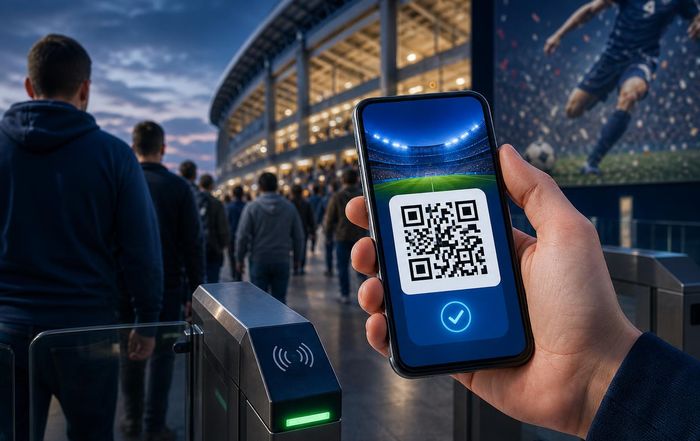
For many fans, the most visible change is at the turnstile. Instead of paper stubs or print-at-home PDFs, entry is now tied to a smartphone or wearable device. In practice, that reshapes the entry experience in several ways.
First, arrival and queuing patterns are changing. With barcodes that can be scanned at speed and an increasing shift to NFC tap-and-go gates, venues can process more people per minute at each lane, which can reduce bottlenecks when systems are well configured. Clubs from the NFL to the English Premier League have reported smoother entry at many stadiums once fans become familiar with the process, though early-season matches or high-stakes fixtures still expose weaknesses when connectivity, staff training, or signage fall short.
Second, digital ticketing changes how groups enter venues. Instead of one person distributing paper tickets outside the stadium, group leaders now often "manage tickets" in an app, transferring individual seats to friends or family in advance. This can make it easier for each attendee to enter independently and can reduce congestion at gates where people previously gathered to hand over physical tickets. At the same time, it can create friction for less tech-confident fans, or for last-minute guests who may struggle to set up accounts and apps under time pressure.
Third, accessibility and inclusion questions have become more prominent. Older fans, children without smartphones, and visitors from regions where mobile data is expensive or unreliable may find digital-only policies difficult. Some leagues and venues have responded with limited physical alternatives, such as card-based season passes, will-call windows, or printed access cards for accessibility cases. Others have doubled down on app-only entry, arguing that maintaining parallel systems adds cost and complexity. How this balance is struck varies significantly by market and regulation.
This intersection of fan experience, health, and accessibility also connects to wider conversations in our health and social coverage, where technology sometimes widens, and sometimes narrows, participation gaps.
Security, fraud, and the battle over the secondary market
One of the biggest reasons rights holders have embraced digital ticketing is control. Historically, paper tickets and PDFs were easy to duplicate, resell, or misuse. With mobile tickets that can be locked to devices, accounts, or verified identities, leagues and venues can significantly reduce traditional forms of counterfeiting and unauthorized duplication.
Dynamic barcodes that refresh regularly, as used by platforms like Ticketmaster and AXS, make it much harder for scalpers to sell screenshots or for fraudsters to circulate the same code to multiple buyers. Identity-based ticketing, where an attendee's name and sometimes ID are linked to the ticket, is particularly common at high-profile events or in jurisdictions keen to combat hooliganism and match-fixing. For example, several European countries have used digital ticketing as part of broader safety laws around football attendance, informed in part by guidance from bodies such as UEFA and national interior ministries.
However, control cuts both ways. Consumer groups and some regulators have raised concerns that digital ticketing can be used to restrict legitimate resale, lock fans into official marketplaces, and gather more personal data than is strictly necessary. In markets like the United States, agencies such as the Federal Trade Commission and state attorneys general have examined ticketing practices, while in the European Union, privacy regulators enforce data-protection rules under the General Data Protection Regulation (GDPR). Organizations such as BEUC (the European Consumer Organisation) and national consumer watchdogs have argued for clearer rules on transparency, fees, and portability of tickets between platforms.
There is also a broader economic and cultural debate around the role of the secondary market. Some leagues have created official resale exchanges with price caps or floors, while others allow dynamic pricing that can push prices sharply higher for in-demand games. Digital ticketing makes it technically easier to track every transfer and sale, but it also raises questions about who should benefit from that liquidity: clubs, players, venue operators, or fans themselves. Our sponsorship and business sections often return to this tension as teams seek new revenue without alienating core supporters.
Data, personalization, and the new fan profile
Perhaps the most transformative aspect of digital ticketing is the data it generates. In a paper world, clubs often knew only who bought the tickets, not who actually attended. Digital systems can, in principle, capture the identity and behavior of each attendee: which matches they attend, how early they arrive, which entrance they use, whether they are season-ticket holders or occasional visitors, and whether they open marketing emails or app notifications.
When combined with in-stadium Wi-Fi analytics, point-of-sale data, and loyalty programs, this information can underpin sophisticated personalization. Clubs and venues can segment fans by behavior, tailoring offers ranging from discounted weekday fixtures to premium hospitality upgrades. Sponsors, too, are interested in more granular audience profiles, something global brands and agencies increasingly expect when they invest in naming rights or jersey deals. Major sports marketing firms and consultancies such as Nielsen Sports and Deloitte have highlighted digital ticketing data as a key asset in modern sponsorship valuation.
For fans, the upside is more relevant communication, integrated digital experiences, and potentially better value if clubs use data to reward loyalty rather than simply maximize short-term revenue. Team apps can surface parking information, gate recommendations based on historical entry patterns, or push notifications about concession offers near a fan's seat. In some stadiums, digital tickets double as payment credentials or loyalty IDs, encouraging cashless purchases and simplifying rewards schemes.
The downside is the risk of overreach. Privacy advocates, including civil-society organizations that engage with regulators like the European Data Protection Board or Electronic Frontier Foundation, warn that linking identity, location, and purchase data can create detailed behavioral profiles. Fans may not always realize how extensively their data is being used, especially when consent is bundled into dense terms and conditions. Regulators in Europe, North America, and parts of Asia are increasingly scrutinizing how sports organizations handle personal data, including retention periods, data sharing with sponsors, and mechanisms for opting out.
For readers interested in the broader technology and data ethics context, our technology and world sections frequently cover how digital systems in sport intersect with global privacy and governance debates.
Operational gains: staffing, safety, and crowd flow
From an operations standpoint, digital ticketing gives venue managers a richer picture of demand and attendance, which can translate into more efficient staffing and improved safety. Real-time dashboards can show how many fans have entered by a certain time, which gates are congested, and whether capacity thresholds are nearing in particular zones. This allows security teams to redirect staff, open additional lanes, or adjust signage dynamically.
During and after the COVID-19 pandemic, these capabilities became especially important. Many leagues adopted timed entry windows, contactless scanning, and capacity restrictions to comply with public-health guidance from organizations such as the World Health Organization and national health agencies like the U.S. Centers for Disease Control and Prevention or Public Health England (now part of the UK Health Security Agency). Digital tickets made it easier to communicate entry times, enforce zoning, and perform contact tracing when required.
Even in a post-emergency context, the same tools help manage large crowds more safely. Insights from crowd-science researchers and safety bodies such as the UK Sports Grounds Safety Authority have emphasized the importance of controlled ingress and egress, clear wayfinding, and the ability to respond quickly to unexpected surges. Digital entry data, combined with CCTV and on-the-ground stewards, is now part of standard practice at many top-tier stadiums.
Operationally, digital ticketing also reduces some traditional pain points, such as counterfeit tickets causing disputes at the gate or lost tickets requiring manual verification. However, it introduces new dependencies on connectivity, device battery life, and system uptime. High-profile outages of major ticketing platforms have shown that when centralized systems fail, thousands of fans can be left outside venues with no simple fallback. Many operators now plan explicit contingencies, including backup scanners, on-site printing for exceptional cases, and coordination with ticketing providers to restore service quickly.
The operational dimension touches on multiple beats we cover at SportSyncr, from news about stadium incidents to environment stories on how digital systems change resource use.
Sustainability and the end of the paper ticket?
Digital ticketing is often promoted as a greener alternative to paper. The logic is intuitive: fewer printed tickets mean less paper, ink, and physical distribution. For clubs and leagues with millions of attendees each season, that can be a significant reduction in materials and logistics. Sustainability-oriented organizations and some environmental NGOs have welcomed moves away from single-use plastics and paper where practical, aligning with broader goals articulated by bodies such as the United Nations Environment Programme.
However, sustainability calculations are rarely straightforward. The environmental impact of smartphones, data centers, and network infrastructure is non-trivial, and digital systems can encourage more frequent device upgrades. Life-cycle analyses from academic institutions and organizations like the International Telecommunication Union highlight that while digital services can reduce certain material flows, they also contribute to electronic waste and energy demand. For sports organizations, the more meaningful sustainability gains may come from using digital ticketing to support public-transport incentives, car-pooling, and better crowd management, reducing congestion and emissions around stadiums.
Some clubs have experimented with integrating public transport into match tickets or offering discounts for fans who arrive by train or bus, validated through digital passes. Others use ticketing data to optimize concession logistics, minimizing food waste by predicting attendance more accurately. These secondary effects may ultimately be more impactful than the end of the traditional paper stub, even if the latter remains the most visible symbol of change for many long-time supporters.
Inclusion, digital divides, and fan trust
As digital ticketing becomes the norm, questions of inclusion and trust move to the forefront. Not every fan has a modern smartphone, reliable mobile data, or the confidence to navigate multiple apps and verification steps. In some regions, pay-as-you-go users may be reluctant to enable data roaming when traveling to away games, while in others, language barriers or literacy issues can make digital interfaces challenging.
Clubs that ignore these realities risk excluding some of their most loyal supporters. Supporters' trusts and fan organizations in leagues from the Bundesliga to MLS have pressed teams to maintain alternative access methods or provide in-person support on match days. Some have also raised concerns about the erosion of simple traditions, such as collecting physical ticket stubs as mementos, which carry emotional and cultural value beyond their function as access credentials.
Trust is also shaped by how transparently ticketing policies are communicated. Dynamic pricing, late seat relocations, and complex resale rules can leave fans feeling that the system is stacked against them, even when clubs argue that these measures are necessary to manage demand or comply with safety requirements. Clear communication, predictable rules, and visible routes for redress when things go wrong are critical to maintaining legitimacy, especially when technology adds layers of opacity.
These social and cultural dimensions intersect with broader themes in our culture and social coverage, where the modernization of sport often collides with long-standing identities and rituals.
What comes next: biometrics, super apps, and cross-venue IDs
Looking ahead, digital ticketing is unlikely to remain limited to QR codes and wallet passes. Several trends are emerging that could further reshape live sports entry.
One is biometric access. Trials of facial recognition or palm-vein scanning at arenas in North America and Asia suggest that some operators see biometrics as a way to speed entry and reduce reliance on physical devices. Technology providers like Amazon (with its palm-recognition system) and specialized biometric firms have partnered with selected venues to test opt-in systems that link a fan's biometric template to their ticket. Proponents argue that this can cut queue times and improve security; critics warn about surveillance risks, data breaches, and the normalization of biometric monitoring in everyday leisure activities. Privacy regulators and human-rights groups, including bodies that advise the United Nations and regional courts, are watching these experiments closely.
Another trend is the rise of "super apps" that bundle ticketing, content, commerce, and community. Many top clubs and leagues now see their official apps as the primary digital touchpoint, integrating live scores, streaming, merchandise, loyalty, and ticketing in one place. This aligns with broader shifts in digital media and gaming, as platforms like Tencent or Meta experiment with multi-service ecosystems. For sports rights holders, controlling the entire journey from ticket purchase to post-match highlights offers new opportunities for monetization and fan engagement but also increases lock-in and dependence on proprietary systems.
A third development is the potential for cross-venue digital identities. Rather than creating separate accounts for each club or stadium, fans could use federated IDs to manage tickets across multiple events, similar to how single sign-on works in other sectors. Standards bodies, technology companies, and sports organizations are exploring interoperability frameworks that would allow secure, privacy-respecting verification across venues. Whether this emerges through industry collaboration or via a few dominant platforms will have major implications for competition, innovation, and fan autonomy.
Finally, the skills required to design, regulate, and operate these systems are creating new roles in the sports industry, from data governance specialists to fan-experience designers and cybersecurity leads. Our incredible jobs and science sections increasingly feature profiles and insights from professionals at this intersection of sport, technology, and policy.
Balancing efficiency, control, and the spirit of live sport
Digital ticketing has already altered the rhythms of match day: how early fans arrive, how they move through concourses, how clubs communicate in real time, and how data underpins every decision from staffing to sponsorship. It promises greater efficiency, enhanced security, richer personalization, and potential sustainability gains. At the same time, it concentrates power in the hands of rights holders and technology providers, raises complex privacy and competition questions, and risks marginalizing fans who struggle with or distrust digital systems.
For sports organizations, the central challenge is to harness the benefits of digital entry without losing sight of the human experience it is meant to support. That means designing systems that are resilient when technology fails, inclusive of fans who sit at the edges of the digital economy, transparent in how data is used, and respectful of the traditions that make live sport more than just another entertainment product.
As stadiums continue to evolve into connected, data-rich environments, the humble ticket-now a dynamic line of code rather than a printed stub-remains the key that unlocks the entire experience. How it is designed, controlled, and governed will play a significant role in shaping what it feels like to walk through the turnstiles for years to come.