

How Green Technology Is Transforming Sports Facilities
The New Competitive Edge: Sustainability as Strategy
Sustainability has moved from the margins of sports strategy to its very core, reshaping how stadiums, arenas, training centers and community venues are designed, financed, operated and experienced. Around the world, leading clubs, leagues and venue operators now recognize that environmental performance is not simply a reputational add-on but a competitive differentiator that influences fan loyalty, sponsor interest, athlete wellbeing and long-term asset value. For a global, sport-centric top site like this anchored in the intersection of sports, fitness, health, business and brands-this transformation is no longer an abstract trend; it is a defining context for how the industry operates and where future growth will be found.
The acceleration of green technology in sports facilities has been driven by converging forces: tightening regulations in key markets such as the United States, the European Union and parts of Asia; rising energy costs and resource constraints; more climate-conscious fans and corporate partners; and the growing influence of data-driven performance management. Organizations that once focused narrowly on match-day operations now find themselves managing complex sustainability portfolios that encompass renewable energy, advanced building management systems, circular waste models, sustainable mobility and community resilience initiatives. As leading authorities like the International Olympic Committee and FIFA have embedded environmental objectives into bidding and hosting requirements, the bar for what constitutes a world-class facility has been raised substantially. Learn more about evolving global sustainability standards on the United Nations Climate Change platform, which increasingly references sport as a vector for climate action.
From Iconic Venues to Intelligent, Low-Carbon Infrastructures
The last decade has seen a profound shift in how elite venues are conceived. Rather than being designed solely as iconic architectural statements, new and refurbished stadiums are engineered as intelligent, low-carbon infrastructures that must perform efficiently over a 30- to 50-year lifecycle. In markets such as the United Kingdom, Germany, the Netherlands and the Nordic countries, leading clubs have embraced net-zero or net-positive energy ambitions, drawing on innovations in solar, geothermal and district energy systems. The Allianz Arena in Munich, the Tottenham Hotspur Stadium in London and the Mercedes-Benz Stadium in Atlanta are often cited as early exemplars, yet the current generation of projects goes further by embedding digital twins, predictive analytics and integrated mobility planning from the outset. The World Green Building Council provides detailed frameworks on how such infrastructures can align with global net-zero pathways, and its guidance has become a reference point for many design and engineering teams worldwide.
In Asia and the Middle East, large multi-use complexes in cities such as Singapore, Doha and Tokyo increasingly rely on high-performance façades, smart shading, energy-efficient HVAC systems and on-site generation to address extreme weather and grid constraints. This is particularly relevant as climate volatility intensifies, with heatwaves, storms and flooding affecting event scheduling, player safety and insurance costs. The Intergovernmental Panel on Climate Change has underscored the vulnerability of outdoor sports to climate risks, and facility operators are responding by integrating resilience measures-such as elevated structures, floodable landscapes and redundant power systems-into their core planning assumptions. For readers who follow the broader intersection of sport and global events, the world and news sections of Sportsyncr are increasingly highlighting how major tournaments embed these design principles into host city legacies.
Renewable Energy and the Emergence of Energy-Positive Stadiums
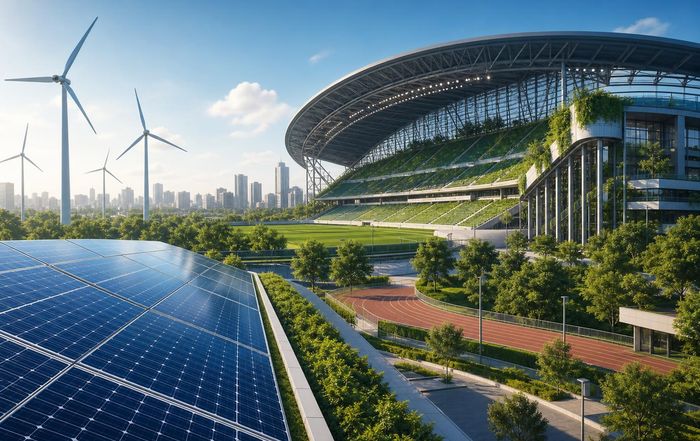
One of the most visible manifestations of green technology in sports facilities is the widespread deployment of on-site renewable energy. Roof-mounted and façade-integrated solar photovoltaic systems have become standard in new builds and major renovations across Europe, North America and Asia-Pacific, while some venues experiment with small-scale wind turbines or geothermal heat pumps. In countries such as Germany, Denmark and the Netherlands, where grid decarbonization is relatively advanced, stadium operators are now exploring how to become net exporters of clean energy to surrounding neighborhoods, effectively turning match-day destinations into urban power hubs. The International Renewable Energy Agency has documented how distributed energy resources can stabilize local grids and reduce peak loads, a dynamic that becomes particularly important during high-demand events.
In the United States and Canada, several franchises in the National Football League, Major League Soccer and National Hockey League have signed long-term power purchase agreements with off-site wind and solar farms, using these contracts to lock in energy prices and meet corporate climate commitments. These arrangements are often structured in partnership with utilities and energy developers, supported by tax incentives and green bonds. For investors and sponsors, the credibility of these initiatives depends heavily on robust measurement and verification, increasingly provided through standards such as the Greenhouse Gas Protocol and reporting frameworks aligned with the Task Force on Climate-related Financial Disclosures. Executives evaluating similar strategies can explore best practices through resources offered by the International Energy Agency, which analyzes how large venues can integrate into national decarbonization plans.
Smart Building Systems, Data Analytics and Operational Excellence
Perhaps less visible to fans but equally transformative is the integration of smart building technologies that optimize how facilities consume energy, water and materials in real time. Advanced building management systems now aggregate data from thousands of sensors tracking temperature, humidity, occupancy, lighting levels, water flow and equipment performance across concourses, hospitality areas, training facilities and back-of-house operations. Using machine learning algorithms, these platforms can anticipate demand patterns, detect anomalies and automatically adjust settings to maintain comfort while minimizing resource use. Technology providers in this space often draw on protocols promoted by organizations such as the American Society of Heating, Refrigerating and Air-Conditioning Engineers, whose standards inform energy-efficient design across climates.
Venue operators in markets like the United States, United Kingdom, Australia and Singapore increasingly benchmark their facilities against recognized certifications, including LEED from the U.S. Green Building Council and BREEAM from the Building Research Establishment. These frameworks reward integrated approaches that combine high-performance envelopes, efficient plant equipment, low-impact materials and robust commissioning and monitoring practices. For a platform like Sportsyncr, which covers the intersection of technology, science and sport, the rise of data-driven facility management represents a rich area of innovation, touching on cybersecurity, cloud infrastructure, AI-enabled analytics and the evolving role of facility managers as digital operators rather than purely physical asset stewards.
Sustainable Playing Surfaces and Athlete Health
Green technology is also reshaping the very surfaces on which athletes train and compete, with significant implications for performance, injury prevention and long-term health. Innovations in hybrid grass systems, advanced irrigation, organic turf management and low-toxicity infill materials are being adopted across football, rugby, baseball and multi-use fields. In Europe, where environmental regulations on microplastics and chemical inputs are tightening, clubs are investing in research partnerships with agronomy experts and universities to develop sustainable pitch solutions that maintain elite performance standards while reducing water, fertilizer and pesticide use. The European Chemicals Agency has played a prominent role in guiding policy on synthetic turf infill, prompting many facility operators to accelerate transitions toward more sustainable alternatives.
Indoor facilities, including basketball arenas, ice rinks and multipurpose halls, are similarly experiencing innovation in surface technology, with low-VOC materials, recyclable underlays and energy-efficient refrigeration systems gaining traction. The International Ice Hockey Federation and several national governing bodies have supported pilot projects in Scandinavia, Canada and Switzerland to test low-carbon refrigeration systems that minimize the use of high-global-warming-potential refrigerants. For athletes and medical teams, these developments intersect with growing attention to respiratory health, joint stress and long-term exposure to chemicals, themes that resonate strongly with readers who follow health and fitness coverage on Sportsyncr. Organizations such as the World Health Organization provide guidance on indoor air quality and environmental health that is increasingly referenced in facility design briefs, particularly for training centers where athletes spend extensive time.
Fan Experience, Digital Engagement and Behavioral Change
While much of the technological transformation occurs behind the scenes, leading operators understand that meaningful progress in sustainability also depends on engaging fans, members and local communities. Digital platforms, mobile apps and in-venue displays are being used to communicate environmental performance, encourage low-carbon travel choices, promote waste sorting and highlight partnerships with green brands. In the United Kingdom, Germany and Scandinavia, several football clubs now offer integrated mobility apps that guide fans toward public transport, cycling and car-sharing options, often linked with real-time occupancy and emissions data. Transport authorities such as Transport for London and Deutsche Bahn have become strategic partners in these initiatives, recognizing that major events can serve as powerful testbeds for sustainable mobility solutions.
Cashless payments and digital ticketing, which accelerated during the pandemic, have also enabled more precise tracking of concession purchases and waste streams, allowing operators to refine product offerings, reduce packaging and partner with food and beverage suppliers on low-carbon menus. The Ellen MacArthur Foundation has highlighted sport as a promising arena for circular economy practices, from reusable cup schemes to textile recycling programs for fan merchandise. For brands seeking to align with climate-conscious consumers, venues that can demonstrate credible, data-backed progress in these areas offer compelling storytelling opportunities. On Sportsyncr, the culture and social sections increasingly showcase how fan communities in markets such as the United States, Brazil, Japan and South Africa are responding positively to clubs that integrate sustainability into the match-day narrative, rather than treating it as an isolated campaign.
Sponsorship, Brand Strategy and the ESG Imperative
The transformation of sports facilities through green technology is closely intertwined with broader shifts in corporate strategy, particularly the rise of environmental, social and governance (ESG) considerations in investment and sponsorship decisions. Major sponsors in sectors such as finance, automotive, energy, technology and consumer goods now face intense scrutiny from regulators, shareholders and consumers regarding their climate commitments. Aligning with venues and properties that can credibly demonstrate sustainability leadership has become a tangible way to operationalize ESG strategies, especially in high-visibility markets like the United States, United Kingdom, Germany, Canada and Australia. The World Economic Forum has repeatedly emphasized the role of sport in shaping public norms and accelerating sustainable consumption, a message that resonates strongly with global brands seeking authentic platforms for climate communication.
For rights holders, the ability to present robust environmental performance data-covering Scope 1, 2 and increasingly Scope 3 emissions-can materially influence sponsorship valuations and partnership structures. Some organizations have begun to integrate sustainability key performance indicators into sponsorship contracts, linking bonus payments or contract extensions to progress on energy efficiency, waste reduction or community impact metrics. The Global Reporting Initiative and Sustainability Accounting Standards Board provide frameworks that many companies use to disclose such performance, and forward-looking sports entities are aligning their reporting to these standards to ensure comparability and investor confidence. Within Sportsyncr's business and sponsorship coverage, there is growing emphasis on case studies where green facility investments have directly contributed to premium sponsorship deals, illustrating that sustainability is not only a cost center but a revenue driver.
Regional Dynamics: Different Markets, Shared Direction
Although the overarching trend toward greener sports facilities is global, regional dynamics shape both the pace and form of adoption. In Europe, strong regulatory frameworks, carbon pricing mechanisms and public support for climate action have positioned countries such as Germany, the Netherlands, Denmark, Sweden and Norway at the forefront of low-carbon stadium design. The European Commission's Green Deal and related directives on energy performance, circular economy and sustainable finance have created a policy environment that rewards long-term investment in efficient, low-emission infrastructure. Clubs and venue operators in these markets often benefit from public-private partnerships, green loans and EU-backed financing instruments that reduce the cost of capital for sustainability projects.
In North America, where regulations are more fragmented, market forces, corporate ESG commitments and state-level policies have driven innovation, particularly in states and provinces with ambitious climate targets such as California, New York, British Columbia and Quebec. Major leagues including the NBA, NFL, MLB and NHL have developed league-wide sustainability programs, often in collaboration with organizations like the Green Sports Alliance, which serves as a knowledge hub and networking platform for venue operators across the United States and Canada. In Asia-Pacific, rapid urbanization and the hosting of mega-events in countries such as Japan, China, South Korea, Australia and Qatar have catalyzed investments in green infrastructure, though approaches vary widely depending on local energy mixes and regulatory frameworks. For readers tracking these regional nuances, Sportsyncr's world and environment sections provide context on how policy, culture and economics interact to shape facility decisions across continents.
Jobs, Skills and the Emerging Green Sports Workforce
As sports facilities become more technologically advanced and sustainability-oriented, the skills required to design, operate and maintain them are evolving rapidly. Traditional roles in facility management, groundskeeping and event operations increasingly require competencies in data analytics, energy management, sustainable procurement and stakeholder engagement. This shift is creating new career pathways at the intersection of sport, engineering, environmental science and digital technology, with demand for professionals who can bridge performance objectives, regulatory compliance and fan expectations. Organizations such as the International Labour Organization have underscored the broader potential of green jobs in the global economy, and the sports sector is beginning to feature in this conversation as a distinct niche.
Universities and vocational institutions in markets including the United States, United Kingdom, Germany, Canada and Singapore are launching specialized programs in sports facility management, sustainability and smart building operations, often in partnership with clubs, leagues and venue operators. For early-career professionals and mid-career switchers, this presents an opportunity to align personal passion for sport with meaningful work on climate and resource challenges. On Sportsyncr, the jobs and technology verticals are increasingly highlighting profiles of professionals who occupy these hybrid roles, from sustainability directors at major clubs to data engineers working on building performance optimization. As green technology becomes embedded in the everyday functioning of facilities, the ability to attract and retain such talent will be a decisive factor in operational excellence.
Governance, Transparency and the Trust Equation
Experience, expertise and technical innovation alone are not sufficient to secure stakeholder trust; governance structures and transparency practices play a critical role in determining whether sustainability claims are perceived as credible. In recent years, skepticism about greenwashing has grown, with fans, NGOs and regulators scrutinizing whether environmental initiatives in sport are substantive or primarily marketing-driven. This has led forward-thinking organizations to adopt more rigorous governance models, including board-level oversight of sustainability, independent advisory panels, third-party audits and public reporting aligned with recognized standards. The OECD has highlighted the importance of good governance in ensuring that ESG commitments translate into real outcomes, and these principles are increasingly applied within the sports ecosystem.
For sports facilities, transparent disclosure of environmental performance-covering energy use, emissions, water, waste and materials-helps build confidence among sponsors, investors, local communities and regulatory authorities. It also allows benchmarking across venues and regions, fostering a culture of continuous improvement. Platforms like CDP and initiatives such as the UN Sports for Climate Action Framework provide structured channels for such disclosure, and many of the world's leading clubs and venue operators now participate actively. For a publication like Sportsyncr, which positions itself as a trusted source at the nexus of sport, business and sustainability, maintaining rigorous editorial standards and highlighting both successes and challenges in this space is essential to supporting informed decision-making by industry stakeholders.
The Road Ahead: Integration, Innovation and Responsibility
Looking toward the remainder of the decade, the transformation of sports facilities through green technology appears set to deepen and broaden, moving from isolated flagship projects to systemic integration across leagues, tiers and geographies. Emerging technologies such as advanced energy storage, hydrogen-ready systems, carbon-negative materials, AI-driven predictive maintenance and immersive fan engagement platforms will further expand what is possible in terms of environmental performance and user experience. At the same time, growing awareness of climate justice and social equity will place additional emphasis on how facilities serve their surrounding communities, from providing cooling centers during heatwaves to offering shared renewable energy access and inclusive public spaces.
For stakeholders across the sports value chain-owners, executives, athletes, sponsors, policymakers and fans-the imperative is clear: green technology is no longer a peripheral consideration but a foundational element of how sports facilities are conceived, financed, built and operated. Venues that embrace this reality with seriousness, transparency and innovation will be better positioned to thrive in an era defined by climate constraints, digital disruption and evolving consumer expectations. Those that delay or rely on superficial gestures risk not only regulatory and financial penalties but also erosion of trust in markets where authenticity and accountability increasingly determine loyalty.
Within this evolving landscape, Sportsyncr aims to continue providing nuanced, evidence-informed coverage that connects developments in facility technology to broader themes in sports, business, culture and environment. As stadiums, arenas and training centers across North America, Europe, Asia, Africa and South America reinvent themselves as intelligent, low-carbon, community-anchored infrastructures, the platform's role is to illuminate not only the technologies involved but also the governance choices, financial models and human stories that determine whether these transformations deliver on their promise. The convergence of sport and sustainability is no longer a distant aspiration; it is a defining reality, and the world's sports facilities are at the forefront of demonstrating how high performance and environmental responsibility can be mutually reinforcing rather than mutually exclusive.